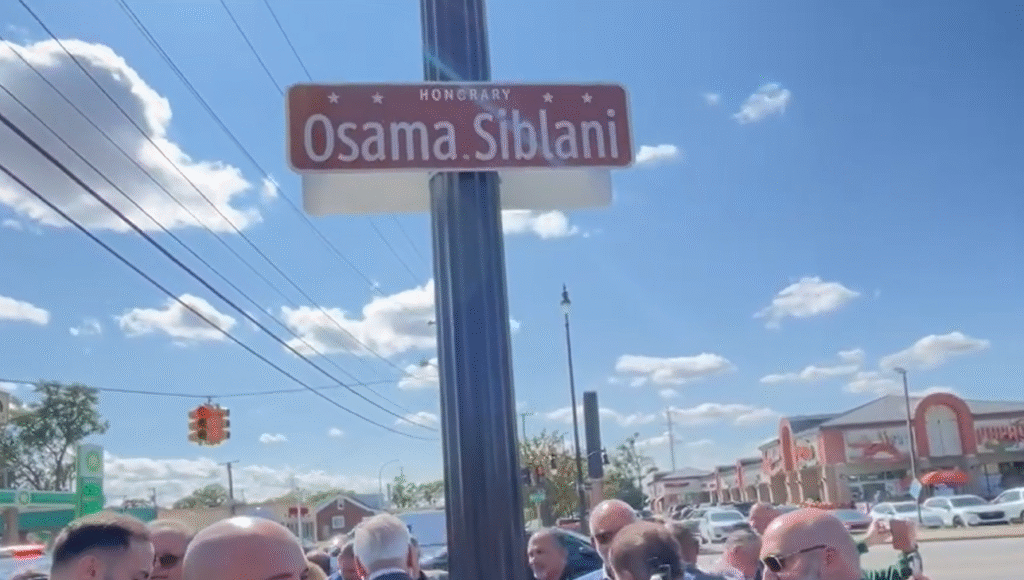
The city of Dearborn, Michigan, has become the center of a heated debate that many are now calling the Dearborn street name controversy. At the heart of the issue lies a proposal to name a street after a member of Hezbollah, a group that the U.S. government designates as a terrorist organization. Hezbollah was responsible for the 1983 Beirut barracks bombing, which killed 241 American service members — a fact that still resonates deeply in U.S. history.
The Exchange Between the Priest and the Mayor
During a public hearing, a local Christian priest voiced his concern. He suggested that naming a street after someone linked to Hezbollah was inappropriate in the United States, especially given the group’s violent past.
The priest said:
“Maybe a street Hezbollah St. Or Hamas St. I mean, Hezbollah bombed the embassy in Beirut, including many Americans. As a Christian, I would like to encourage peace.”
Rather than addressing the substance of the priest’s concerns, Dearborn Mayor Abdullah Hamoud responded sharply. The mayor accused the man of being an “Islamophobe” and declared that he was not welcome in the city. Hamoud even went as far as saying that the day the priest moved out would be celebrated with a parade.
A Clash of Values
This exchange has fueled debate far beyond Dearborn. Critics argue that the mayor’s remarks crossed the line, undermining the First Amendment right to free speech. Supporters of the priest emphasize that every citizen has the right to express their opinion, even when it challenges local leadership or sensitive cultural issues.
The controversy has also reignited broader conversations about coexistence, leadership, and the role of religion and politics in American cities. Some claim the mayor’s Lebanese Muslim background influences his political stance, comparing it to Lebanon’s shift from a Christian-majority nation to one influenced heavily by Hezbollah.
Why This Matters
The Dearborn street name controversy is not just about a name on a street sign. It touches on larger issues:
- Should public officials respect opposing views, even when they strongly disagree?
- Does dismissing a citizen’s opinion undermine democratic values?
- How do we balance cultural representation with historical memory, especially when groups like Hezbollah are involved?
The Bigger Picture
In a nation built on free expression, silencing voices — even controversial ones — sets a dangerous precedent. For many Americans, the exchange between Mayor Hamoud and the priest is about more than just Dearborn. It reflects a broader struggle over free speech, community identity, and political accountability.
As this story develops, one thing remains clear: this debate is far from over, and its outcome could shape how communities across the U.S. handle sensitive cultural and political issues in the future.
Looking for more articles? Visit our Homepage for the latest news, insights, and updates across sports, culture, and more.