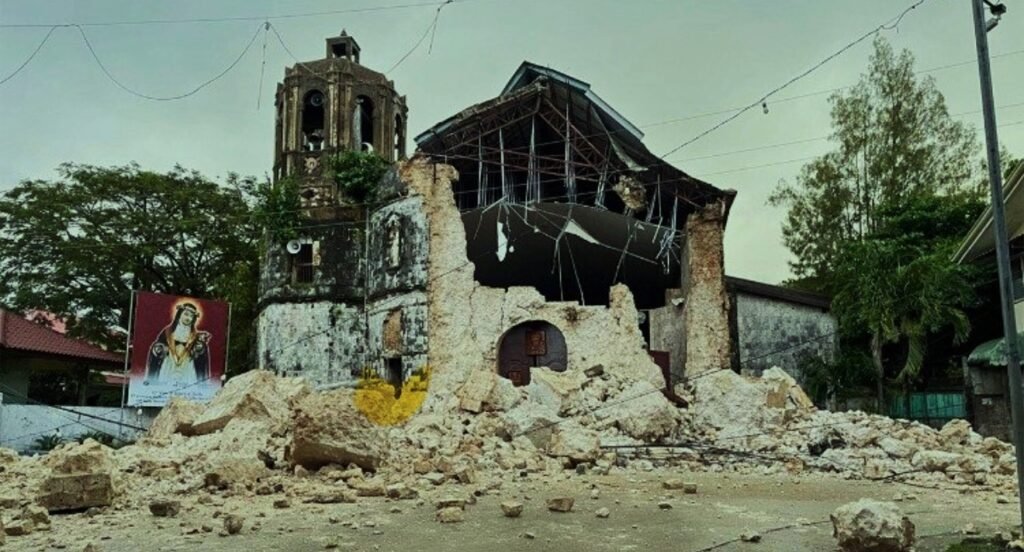
When the ground shook in Cebu on October 1, 2025, few could have imagined the devastation that would follow. The Philippines Earthquake 2025, measuring 6.9 on the Richter scale, tore through communities with brutal force, leaving behind a trail of collapsed homes, shattered infrastructure, and grieving families.
The Philippines Earthquake 2025, a sudden 6.9-magnitude tremor, struck Cebu on October 1 and changed lives in a matter of seconds. Entire neighborhoods were shaken, homes collapsed, and families were left scrambling for safety. The devastation has highlighted both the fragility of life and the resilience of a nation long tested by natural disasters.
Human Toll of the Philippines Earthquake 2025
At least 69 people lost their lives, and more than 150 others sustained injuries. The earthquake’s shallow depth—just 5 kilometers beneath the surface—magnified its destructive force. Buildings crumbled, roads cracked, and frightened residents rushed into the streets as aftershocks rattled the province.
Hospitals in Cebu are working beyond capacity to treat the injured, while power outages and water shortages have deepened the crisis. Emergency responders continue to search through rubble, hoping to save lives before time runs out.
Global Response to the Philippines Earthquake 2025
The scale of the disaster has triggered swift reactions worldwide. Indian Prime Minister Narendra Modi expressed condolences and pledged India’s support. Governments and embassies from the United States, Canada, Japan, Taiwan, Australia, Germany, and the European Union have also offered solidarity and humanitarian aid.
Philippine President Ferdinand “Bongbong” Marcos Jr. called on citizens to unite in the face of this tragedy, assuring that the government is mobilizing resources to support rescue and recovery operations.
How the Philippines Earthquake 2025 Impacts Cebu’s Future
As Cebu recovers, the focus will shift to rebuilding homes, restoring infrastructure, and addressing the needs of displaced families. Humanitarian groups are already on the ground, providing food, water, and temporary shelters.
Beyond immediate relief, the disaster has reignited debates on disaster preparedness in the Philippines—a country highly vulnerable to typhoons, volcanic eruptions, and seismic activity. The Philippines Earthquake 2025 is a stark reminder of how critical it is to strengthen infrastructure and enhance early warning systems.
Conclusion: Lessons from the Philippines Earthquake 2025
The tragedy in Cebu has left scars that numbers alone cannot measure. The 69 lives lost represent families torn apart and futures forever altered. Yet, amid grief, there is also resilience—the determination of Filipinos to rebuild and move forward.
The Philippines Earthquake 2025 stands not only as a natural disaster but also as a test of solidarity, both within the country and from the global community. How the nation responds today will shape its resilience for tomorrow.
Sources: PHIVOLCS, GOV PH, REUTERS
For more on current events, check out our full coverage of the Ladakh protests and stay updated on the latest developments.