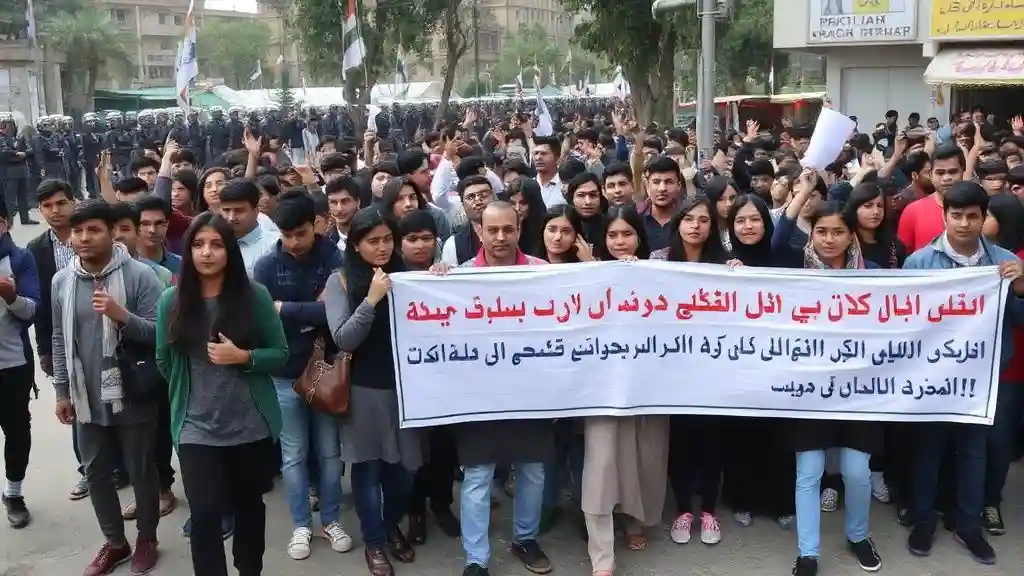
In Pakistan‑administered Kashmir (PoK), youth are leading new protests. Known as the “PoK Gen Z protests,” these demonstrations started on campuses. Students are frustrated by delayed exam results, rising fees, and a new digital assessment system. The unrest has now spread to streets and towns, turning into a broader movement.

What triggered the PoK Gen Z protests?
The protests began at a major university in Muzaffarabad. Students waited six months for exam results after a new “e-marking” system was introduced. Many complained about receiving low marks or being passed in subjects they did not sit for. In addition, re-checking fees cost Rs 1,500 per subject. On top of this, steep tuition hikes and poor campus facilities fueled anger.
How have the protests evolved?
The protests grew beyond classrooms. Students took to the streets in Muzaffarabad, Rawalakot, and Bagh. They blocked roads, burned tires, and chanted slogans. Some clashes turned violent when a gunman reportedly opened fire. Police were present but struggled to control the crowds. These events show how quickly a campus protest can expand into a wider movement.
Why the PoK Gen Z protests matter
The PoK Gen Z protests show a generational shift. Young people are now challenging governance and accountability. They do not rely on traditional student unions. The movement also highlights flaws in education policies. Analysts warn that, if ignored, the protests could spread beyond PoK and influence broader youth politics.
What do the students want?
The students’ main demands include:
- Faster release of exam results and a fair review process.
- Reduction or waiver of re-checking fees.
- Rollback of steep tuition hikes.
- Better campus infrastructure, including transport and labs.
- Broader reforms in education governance for fairness and transparency.
What’s next for the PoK Gen Z protests?
The government’s response will shape the protests. It could offer concessions, such as reviewing the e-marking system or improving campus facilities. Alternatively, authorities might take stricter measures, including arrests or campus closures. Observers are also watching whether the movement spreads to other youth groups.
Conclusion
The PoK Gen Z protests are more than a student uprising. They reflect a deep dissatisfaction with governance and opportunity in the region. Delayed results and high fees are just visible triggers. The protests may signal a shift in youth politics in Pakistan‑administered Kashmir.
Source: FirstPost
For more on current events, check out our full coverage of the Pilot Cleared of Blame: Air India Crash Update and stay updated on the latest developments.