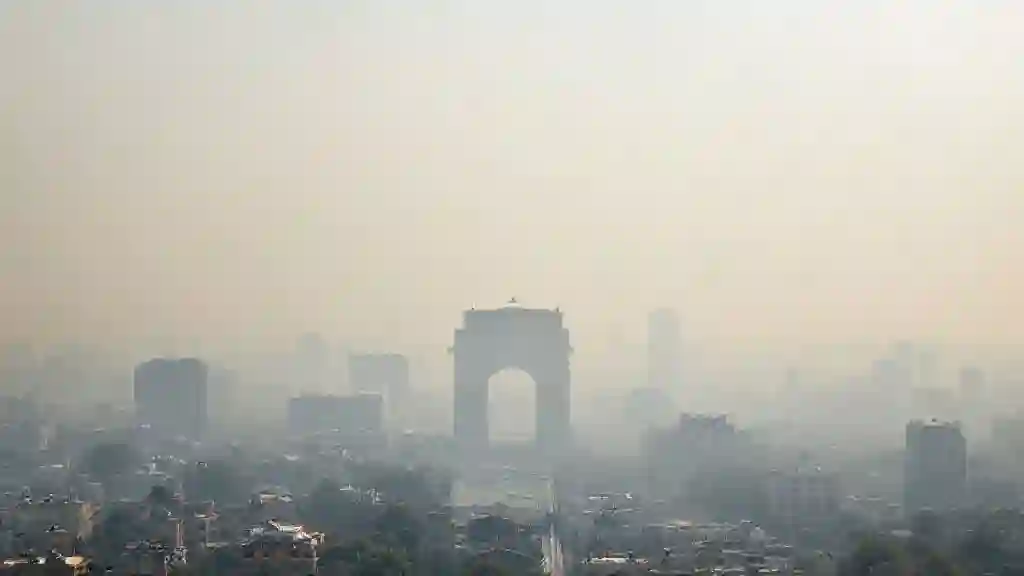
The Delhi smog crisis has once again pushed air quality in the national capital to hazardous levels, bringing daily life, public health, and economic productivity under stress. Thick layers of smog have become a seasonal reality, especially during winter, when weather patterns trap pollutants close to the ground. Consequently, this recurring situation has amplified discussions around sustainable solutions and long-term mitigation strategies. In this context, China’s recent willingness to share its clean-air experience has renewed interest in Beijing’s remarkable air quality transformation — a shift that required planning, enforcement, and sustained public investment.

Understanding the Scale of the Delhi Smog Crisis
Delhi’s pollution is influenced by several interlinked factors: vehicle emissions, industrial pollutants, dust from construction sites, coal-based power generation, and seasonal stubble burning in neighboring states. Additionally, geographical features and winter climate conditions make it difficult for pollutants to disperse. The result is a recurring environmental health emergency that affects millions of residents.
The Delhi smog crisis has severe consequences:
- Increased respiratory illnesses
- Reduced physical activity among children and the elderly
- Higher healthcare costs
- Lower worker productivity
- Visible decline in quality of urban life
These impacts make it clear that temporary emergency responses are not enough. Sustainable policy-driven solutions are required.
Beijing’s Clean-Air Transformation: A Case Study of Long-Term Planning
Beijing once faced pollution levels so severe that the city routinely disappeared behind a blanket of smoke and haze. The Chinese government recognized the economic and social cost of pollution and implemented a long-term plan that targeted both the sources of emissions and public behavior. This was not a quick fix; it took nearly a decade of coordinated effort.
Key features of Beijing’s clean-air strategy included:
- Industrial restructuring, moving factories out of city limits and enforcing emission limits
- Substituting coal with cleaner energy sources such as natural gas and renewables
- Expanding public transport infrastructure, especially metros, electric buses, and shared mobility options
- Strict vehicle emission standards, alongside incentives for electric vehicle adoption
- Public air quality monitoring, which created transparency and encouraged accountability
- Large-scale afforestation and green cover expansion within urban zones
The result was a visible and measurable improvement in air quality across the city.
What India Can Adapt from Beijing’s Example
While India cannot simply copy China’s model due to differences in governance, economic structures, and public participation systems, many technical and policy approaches are transferable. The goal is not imitation but adaptation.
Practical strategies India could adopt include:
- Industrial Emission Control
Strengthen inspection systems and enforce measurable standards for factories. Introduce stricter penalties for non-compliance and offer incentives for adopting cleaner technologies. - Transition to Cleaner Energy
To begin with, gradually reduce dependence on coal-based power in the National Capital Region. Additionally, promote renewable energy grids and support cleaner cooking and heating options to reduce household emissions. - Transport System Upgrades
Expand metro connectivity, develop last-mile public transport, promote electric mobility, and revisit vehicle rationing models during peak pollution months. - Coordinated Regional Action
The Delhi smog crisis is not confined to city limits. It demands cooperation between Delhi, Haryana, Punjab, and Uttar Pradesh. Joint task forces and unified planning frameworks could help. - Urban Greening and Dust Management
Promote green belts, vertical gardens, and roadside plantations. Enforce dust-control norms at construction sites and encourage the use of treated waste water for sprinkling dusty areas.
Public Awareness and Citizen Participation in the Delhi Smog Crisis
However, policy alone cannot resolve the Delhi smog crisis. Community participation is essential. Therefore, awareness campaigns, school programs, neighborhood monitoring groups, and citizen reporting systems can help make people active partners in maintaining air quality.
The Opportunity for Environmental Cooperation Amid the Delhi Smog Crisis
Additionally, China’s statement about sharing its clean-air journey creates space for technical cooperation. Knowledge exchange, research partnerships, city-level collaboration, and shared air quality monitoring standards could benefit the region as a whole. Moreover, environmental cooperation does not require political alignment; public health is a shared human priority.
Conclusion
The Delhi smog crisis is a complex challenge; however, it is not an unsolvable one. Moreover, Beijing’s transformation clearly demonstrates that persistent policy implementation, supported by public awareness and technological transition, can make a real difference. Likewise, India has the capacity to implement similar reforms, provided they are adapted to its own social and economic context. With long-term planning, coordinated regional action, and sustained cooperation, Delhi can ultimately move toward cleaner, healthier skies.
Source : Official handle of Yu Jing
For more on current events, check out our full coverage of the Birmingham stabbing 2025 and stay updated on the latest developments.