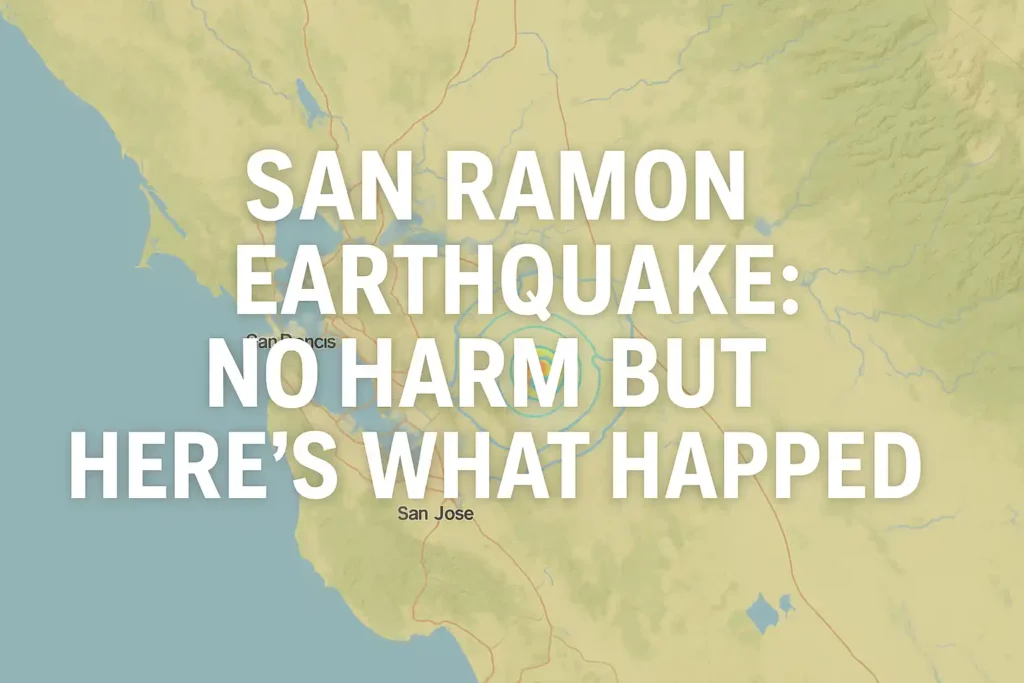
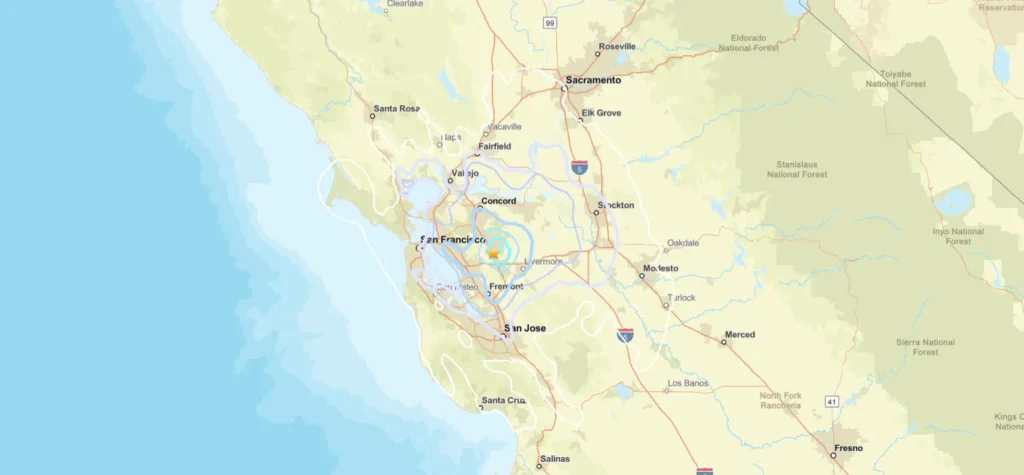
Late on Monday night, the San Ramon earthquake gave residents across the East Bay a brief moment of concern. The quake struck around 10:47 p.m. and measured magnitude 3.3. It originated a few kilometres southeast of San Ramon at a shallow depth of roughly 9 km. Because of the depth, people felt the jolt more clearly, yet the shaking remained weak. Fortunately, no structural damage or injuries were reported.
Although the quake was minor, it reminded the region of its active seismic environment. The East Bay sits on a network of major and minor faults, so residents experience small quakes several times a year. Still, each event brings renewed awareness of the importance of preparedness.
How the San Ramon Earthquake Unfolded
The San Ramon earthquake began with a fast, sharp movement beneath the Calaveras Fault. Many residents described the sensation as a quick thud or a light rolling motion. Some heard windows rattle for a second or two. Because the shaking was short, most people checked their phones immediately to confirm what happened.
Across cities like San Ramon, Danville, Dublin, Pleasanton, and Walnut Creek, people felt gentle movement. However, the intensity faded quickly as the energy dispersed. Even though this quake was small, it reached a wide radius because shallow quakes transmit waves more efficiently to the surface.
Authorities monitored the region after the event, although everything stayed calm. Emergency centers did not issue any alerts or warnings since the shaking posed no risk.
Why the Quake Occurred
The San Ramon earthquake occurred along the Calaveras Fault, one of the most active faults in Northern California. This fault runs parallel to the well-known Hayward Fault and has produced many small and moderate quakes over the years. Because of constant movement between tectonic plates, stress builds up within the Earth’s crust. Eventually, that stress releases as a quake.
In this case, the movement was minor. Moreover, scientists say these small energy releases help reduce built-up stress in local segments. That means events like this are normal and expected. They do not automatically indicate a major earthquake is coming, although continuous monitoring is always essential.
What Residents Experienced
Although the San Ramon earthquake was mild, the community reacted quickly. Social media platforms filled with short posts from people asking whether others felt the shaking. Many residents felt a single jolt, while others reported a small rolling motion that lasted less than two seconds.
In apartment buildings, some felt the vibration more strongly due to structural design. Meanwhile, people in single-story homes noted a lighter effect. Pets such as dogs and cats reacted instantly, with some barking or moving restlessly before or during the tremor.
Despite the suddenness, daily life resumed within minutes.
Is This Part of a Pattern?
Yes, the region has seen small quakes recently. The East Bay often experiences clusters of light tremors, sometimes called “micro-swarms.” Although swarms can look concerning, they are normal. They occur when deeper segments of a fault adjust their stress levels over a short period.
Furthermore, experts say this activity does not predict a larger event. Instead, it reflects the regular behaviour of the Calaveras Fault system. Still, the San Ramon earthquake reminds communities to stay alert and updated.
What You Should Do After the San Ramon Earthquake
Even though this quake caused no harm, it serves as a simple wake-up call. Here are helpful steps residents can follow:
1. Review Emergency Kits
Check water supplies, flashlights, food, medications, and batteries. Replace expired items right away.
2. Secure Heavy Objects
Bookshelves, wall frames, televisions, and kitchen cabinets should be anchored. This prevents injuries during sudden jolts.
3. Create a Family Plan
Discuss meeting points, communication methods, and safety steps. Simple planning can reduce confusion during emergencies.
4. Practice Safety Drills
The “Drop, Cover, and Hold On” technique remains the safest reaction. Practising it ensures quick action when the next tremor occurs.
5. Stay Informed
Local authorities share updates through official channels. Monitoring verified sources helps avoid misinformation.
Lessons From the San Ramon Earthquake
Although the San Ramon earthquake was small, it highlighted several important points:
- The East Bay remains a highly active seismic zone.
- Preparedness is not optional; it is essential.
- Even minor quakes can startle communities, so awareness must stay high.
- Structural readiness protects families and reduces risks during stronger events.
In short, this quake caused no harm, but it offered a valuable reminder. With consistent preparation, residents can face future seismic events with greater confidence.
Source: United States Geological Survey
For more on current events, check out our full coverage on Why Kids Are More Vulnerable in Poor Delhi Air Quality and stay updated on the latest developments.