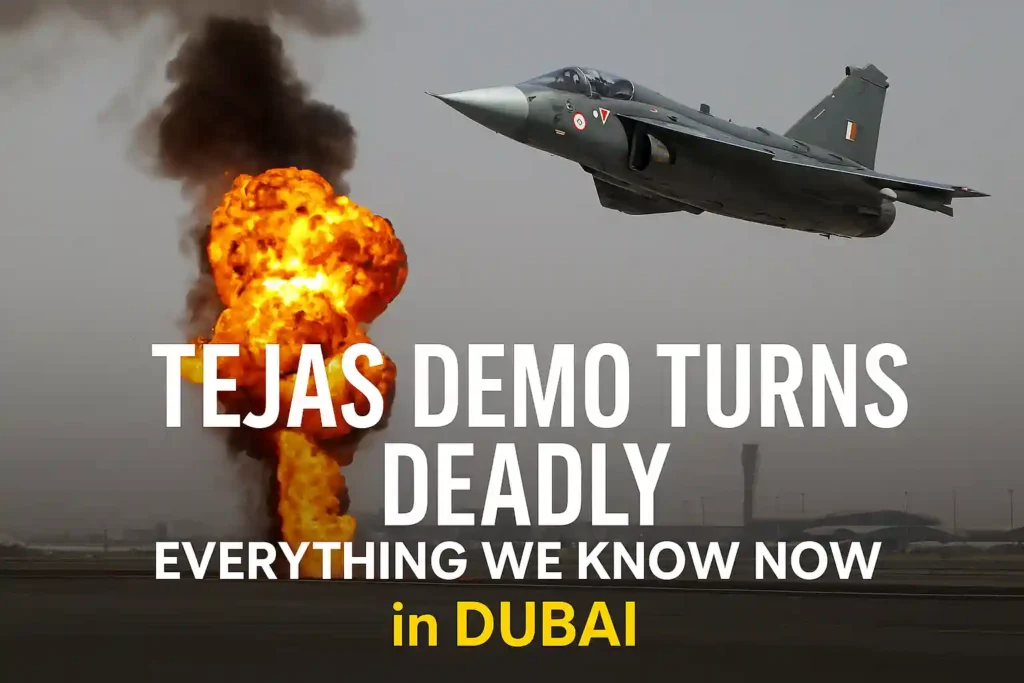
The HAL Tejas crash at the Dubai Air Show has shocked aviation enthusiasts, defence observers, and the Indian Air Force community. What was meant to be a routine aerobatic demonstration by India’s indigenous Light Combat Aircraft turned into a tragic accident, claiming the life of Wing Commander Namansh Syal. The incident has raised urgent questions about air-show safety, manoeuvre risks, and the performance of the Tejas aircraft under extreme conditions.
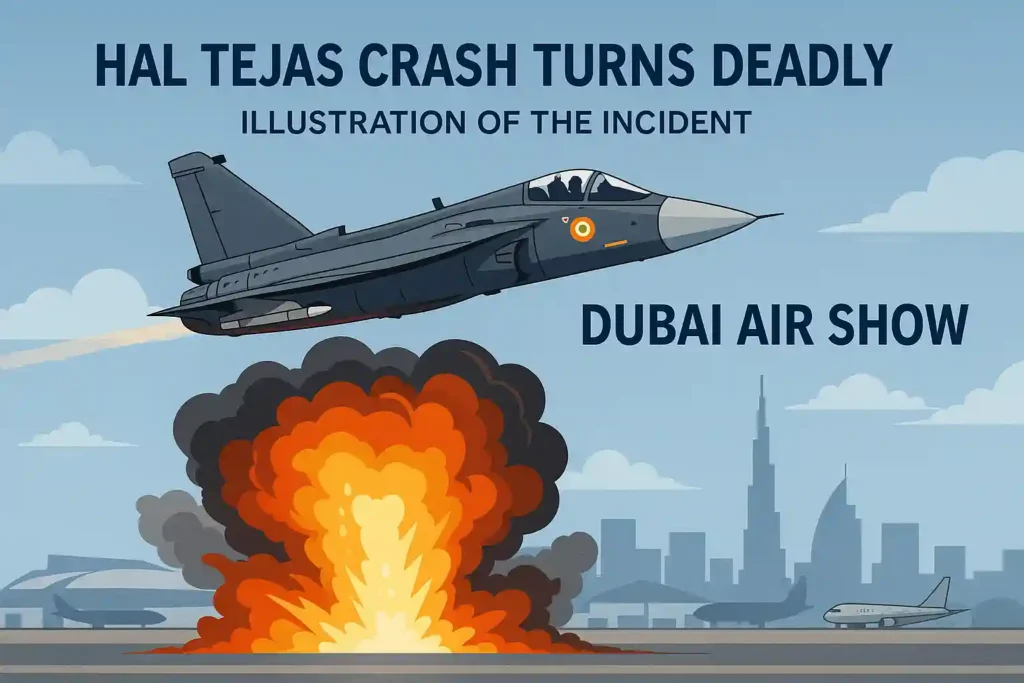
What Happened During the HAL Tejas Crash in Dubai
The HAL Tejas was performing a high-speed negative-G manoeuvre when it suddenly lost control during its mid-air sequence. Eyewitness footage shows the jet dipping sharply moments before it struck the ground near Al Maktoum International Airport. The aircraft burst into flames immediately upon impact, producing thick black smoke that was visible across the venue.
Air-show officials halted the demonstration schedule as emergency teams rushed to the crash site. Despite rapid response, the pilot could not be saved due to the severity of the impact and fire.
Pilot Identified After the Tejas Crash
The Indian Air Force confirmed that the pilot, Wing Commander Namansh Syal, lost his life in the accident. With extensive experience in fighter aircraft operations, he had previously served in multiple flying units and was considered highly skilled in aerobatic demonstrations.
His loss has deeply affected the Indian Air Force community and the broader defence ecosystem.
Initial Observations About the Tejas Crash Maneuver
The manoeuvre that preceded the HAL Tejas crash is considered one of the more challenging aerobatic sequences. A negative-G turn requires the aircraft to sustain inverted-force conditions while maintaining altitude and speed.
Early assessments indicate that the aircraft may have lost altitude faster than expected during this manoeuvre, leaving little room for recovery.
However, these observations are not final and will be studied in detail by investigators.
Why the Tejas Crash Matters for India’s Defence Program
The Tejas is India’s flagship indigenous fighter jet programme, symbolizing technological progress and defence self-reliance. The HAL Tejas crash therefore carries significant implications:
- International visibility: The Dubai Air Show is one of the world’s premier aviation events, with global defence companies and military delegations watching.
- Export potential: Tejas has been pitched to several countries as an affordable lightweight fighter, and this incident could influence short-term perceptions.
- Safety protocols: Display flights involve extreme manoeuvres; this crash may prompt a reevaluation of aerobatic demonstration guidelines.
- Technical scrutiny: Investigators will assess whether the issue stemmed from mechanical failure, human factors, environmental conditions, or a flight-envelope challenge.
Despite the tragedy, experts emphasize that one crash does not define the aircraft’s operational performance.
Official Inquiry Begins After the HAL Tejas Crash
The Indian Air Force has ordered a Court of Inquiry to identify the exact cause of the HAL Tejas crash. The investigation will examine:
- Flight data
- Cockpit recordings (if retrievable)
- Aircraft maintenance history
- Manoeuvre parameters
- Mechanical and structural components
- Pilot inputs
- Air density and local weather conditions
Authorities will also review the air show’s altitude restrictions and layout to determine whether environmental factors contributed to the outcome.
Eyewitness Accounts of the HAL Tejas Crash
Several spectators described the moment the aircraft lost control:
- Some reported that the jet appeared too low during the manoeuvre.
- Others noted a sudden dip, followed by a fiery explosion.
- Many attendees expressed shock as rescue teams rushed forward.
While eyewitness statements help build a timeline, technical analysis will ultimately determine what happened.
How Rare Is a HAL Tejas Crash?
The Tejas has had a strong safety record since its induction. Crashes involving the aircraft are extremely rare, making this incident particularly significant. Aviation analysts note that even advanced fighter jets worldwide have experienced accidents during aerobatic displays, which involve extreme stress on airframes.
The HAL Tejas crash, however, marks the first fatal air-show accident involving the aircraft.
Potential Impact of the HAL Tejas Crash on Future Demonstrations
Following the incident:
- The Indian Air Force may temporarily pause Tejas aerobatic displays.
- Organizers of international air shows may adjust performance profiles.
- Pilots may receive revised guidelines for negative-G and low-altitude manoeuvres.
- HAL may conduct additional technical inspections across the fleet.
The final recommendations will depend entirely on the inquiry’s findings.
Looking Ahead: What the HAL Tejas Crash Means for Aviation Safety
The tragedy has reignited discussions on the risks associated with advanced aerobatic demonstrations. While air shows highlight the capabilities of modern fighter jets, they also involve precision flying under demanding conditions.
As more information becomes available, aviation experts expect new insights that may improve safety protocols globally.
Source: Official X handle of Indian Air Force
For more on current events, check out our full coverage on How the Nathan Gill Bribery Case Affects Public Trust and stay updated on the latest developments.