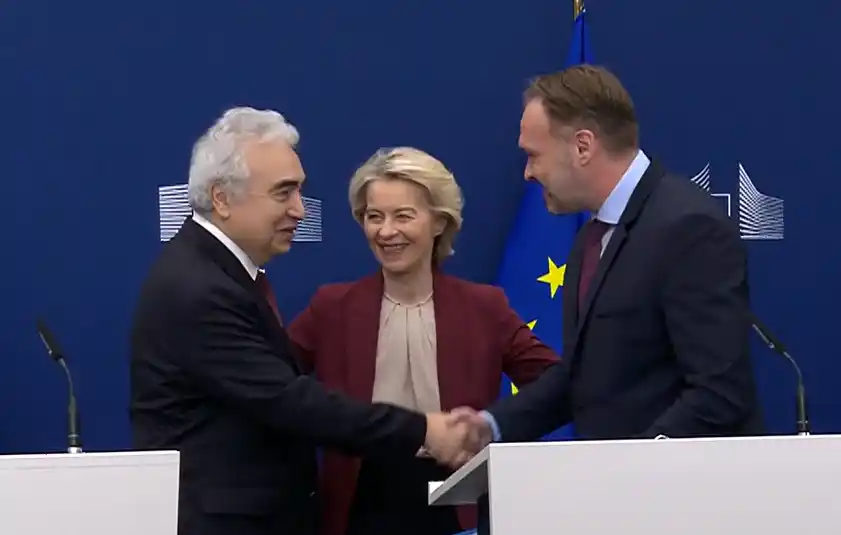
As the Russia–Ukraine war continues to reshape Europe’s geopolitical reality, the European Union is accelerating its push to end decades of energy dependence on Russia. European Commission President Ursula von der Leyen recently outlined the EU’s latest actions — both to protect Europe’s energy security and to help Ukraine rebuild its battered grid.
At the start of the war, Europe was paying Russia nearly €12 billion per month for fossil fuels. Today, that figure has fallen to €1.5 billion — a dramatic shift that reflects Europe’s determination to reduce this dependency to zero.
These details were highlighted by Ursula von der Leyen during her official statement on the EU’s evolving energy strategy, which you can read in full here: Statement by President von der Leyen.
EU Support for Ukraine’s Energy Grid
While Europe cuts its energy dependence on Russia, it’s simultaneously working to keep Ukraine’s energy system alive under constant attack. Russia has repeatedly targeted Ukraine’s infrastructure every winter, trying to freeze homes, disable hospitals, and weaken morale.
In response, the EU has stepped up with:
- Over 16,000 generators and transformers delivered
- More than 2 gigawatts of electricity exported into Ukraine
- Emergency repair missions following strikes
- Long-term grid stabilization and modernization plans
This support reflects a dual strategy: immediate crisis response and building a future-ready energy network that can withstand attacks and function independently.
A Long-Term Vision for Energy Independence
The EU’s next phase focuses on rebuilding Ukraine’s energy architecture in a way that reduces vulnerabilities, integrates renewables, and aligns with European energy standards.
By ending its own energy dependence on Russia, the EU removes a major geopolitical weapon from Moscow’s hands. At the same time, stabilizing Ukraine’s energy grid strengthens European security and pushes forward a unified, resilient energy landscape.
For more insights on how the EU plans to finance Ukraine’s recovery — including proposals to unlock frozen Russian assets — read our detailed analysis here: Why Frozen Russian Money Matters Now
The Cost and Controversy of Europe’s Energy Shift
While EU leaders frame the energy transition as a necessary and moral step, many Europeans are feeling the financial consequences first-hand. The decision to cut off cheap Russian pipeline gas has pushed Europe toward more expensive energy sources, including LNG imports bought on global markets.
For households and businesses, that shift has meant higher energy bills and rising production costs. Critics say the European Commission underestimated how disruptive the transition would be and failed to put a clear, affordable plan in place before making such a drastic move.
As a result, frustration has grown across much of Europe. For many people, the debate is no longer just about geopolitics or Ukraine — it’s about whether decisions made in Brussels properly considered the economic impact on ordinary citizens and European industry.
faq
About the Author: GRV is a digital media writer and the creator of Dumbfeed, a platform dedicated to simplifying complex global and political news into clear, engaging, and family-friendly formats. He focuses on delivering accurate, easy-to-understand explanations that help readers stay informed without the noise. When he’s not writing, GRV creates video content and short-form news updates for social media.