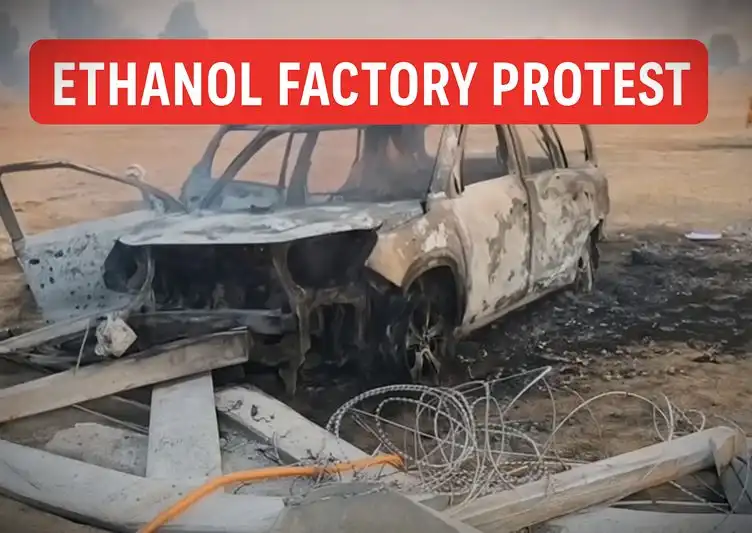
Farmers in Hanumangarh have intensified the ethanol factory protest, expressing deep anxiety over how the upcoming ethanol plant could impact their land, water, and long-term agricultural sustainability. What began as a peaceful demonstration soon escalated into a tense standoff, with protesters and police clashing near the factory site.
For local farming families, the issue runs deeper than industrial development. They fear that the ethanol plant will alter the ecological balance of the region and introduce risks that could permanently damage their farmlands — the primary source of livelihood for thousands of households.
Concerns Over Water Depletion and Soil Damage
One of the biggest fears driving the ethanol factory protest is the factory’s heavy dependence on groundwater. Ethanol production requires significant quantities of water, and Hanumangarh is an area where farmers already rely on deep tube wells due to seasonal rainfall fluctuations.
Farmers worry that:
- Groundwater levels could fall drastically, making irrigation more expensive and less accessible.
- Chemical wastewater from the plant may seep into the soil, leading to long-term contamination.
- Soil fertility could decline, impacting wheat, mustard, cotton, and other major crops grown in the region.
In many agricultural regions where ethanol plants operate, farmers have reported issues like reduced crop productivity, changes in soil texture, and pollution from distillery by-products. Hanumangarh’s farmers fear the same fate if the project continues without strong safeguards.
Local residents say the land around the proposed factory is not just farmland — it is the economic backbone of the area. Even small environmental disruptions could destabilize the region’s agricultural output for years.
Escalation at the Protest Site
Tensions spiked when protesters marched toward the construction site and were stopped by police barricades. According to reports, the situation intensified as security forces attempted to prevent the crowd from advancing, leading to heavy deployment and temporary internet restrictions in the area. Read the report here
During the confrontation:
- Protesters removed barricades and pushed down a section of the factory wall.
- Tear gas was used to disperse the crowd.
- Several police officers were injured, along with a local legislator who was present at the scene.
Farmers claim that their peaceful march was disrupted by unnecessary force, while authorities maintain that the measures were needed to prevent damage to the site.
Demand for Transparency and Environmental Accountability
Many farmers say they were not consulted before land approvals and environmental clearances were granted. They demand:
- A public environmental impact report
- Assurance that groundwater and farmland will not be affected
- Clear guidelines on waste management from the plant
- Options for compensation if agricultural loss occurs
Environmental experts also emphasize that without strict monitoring, ethanol plants can release molasses effluents, spent wash, and air pollutants, all of which can degrade farmland and affect nearby habitation.
While the government promotes ethanol as an important renewable fuel for India’s energy transition, farmers argue that sustainable development should not compromise fertile soil and water security.