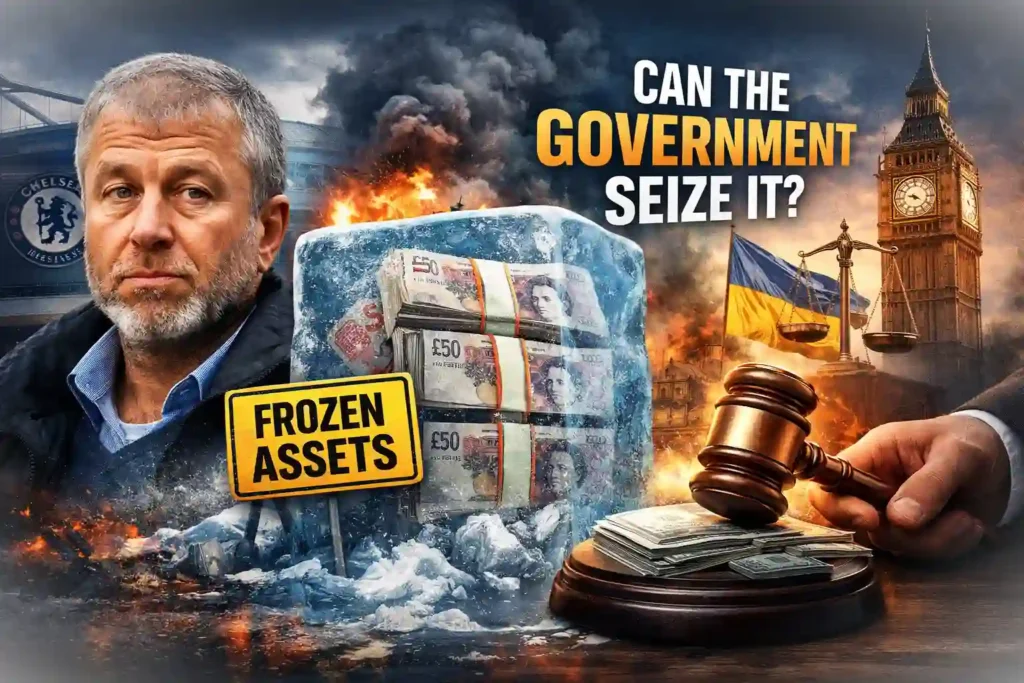
The controversy over Chelsea sale funds has thrust a complex legal and political issue into the spotlight: can governments seize frozen assets and redirect them for humanitarian purposes? At the heart of the debate is the £2.5 billion from the 2022 sale of Chelsea Football Club, proceeds that remain frozen under UK sanctions and now at the center of a high-stakes dispute between the UK government and Russian billionaire Roman Abramovich.
What Are the Chelsea Sale Funds?
When Roman Abramovich sold Chelsea FC in May 2022, UK authorities placed the roughly £2.5 billion in a UK bank account after the government sanctioned him over his ties to Russia following the invasion of Ukraine. Those sanctions froze his assets and blocked his access to the sale proceeds.
Although Abramovich pledged to use these funds to support victims of Russia’s war in Ukraine, disagreements over how and where the money should be spent have left it in legal limbo.
Does the UK Government Have Legal Authority to Repurpose Frozen Assets?
Under UK sanctions law, the government can freeze assets but cannot automatically seize them. In December, the UK government issued a licence allowing the Chelsea sale funds to be transferred for humanitarian purposes linked to Ukraine, while warning that court action could follow if commitments are not honoured, according to a UK government press release.
According to the official press release from the UK Government: the licence “permits transfer of over £2.5 billion to benefit the people of Ukraine suffering at the hands of the Russian invasion.” The government has also warned that, should Abramovich refuse to act, it is prepared to pursue court action to enforce the 2022 agreement.
The licence does not mean the UK government has simply taken ownership of the funds — it has provided a legal mechanism that, if accepted, would authorize their use for a designated purpose.
Why This Matters: Legal, Political, and Humanitarian Stakes
The dispute over the Chelsea sale funds highlights broader questions about how far governments can extend their power, how strongly the law protects private property, and how policymakers should balance those principles against urgent humanitarian needs. Supporters say governments should direct blocked assets toward helping victims of ongoing conflicts. Critics counter that redirecting private assets, even when sanctions freeze them, without consent undermines legal protections and erodes investor confidence.
Prime Minister Keir Starmer and UK officials have emphasized that the licence respects both legal process and the original intent of the pledged funds. Still, the government’s willingness to threaten court action underscores how politically charged this case has become.