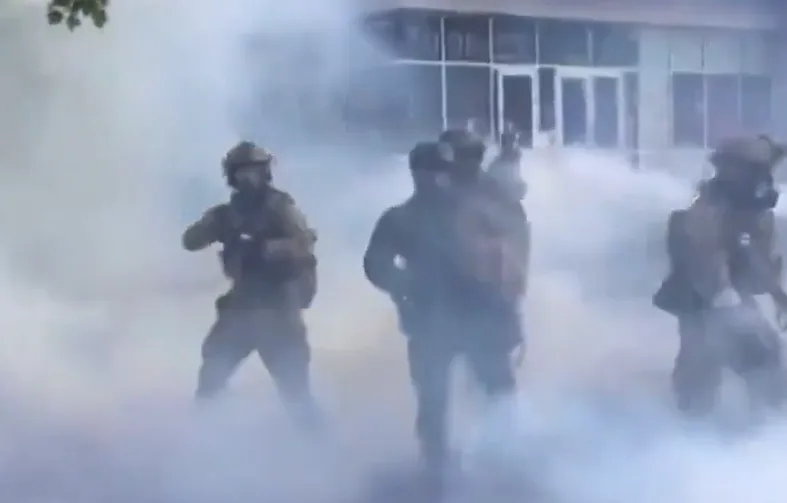
The ICE tear gas ban ordered by a federal judge in Portland has reignited a national debate over protest policing, federal authority, and judicial impartiality. The ruling, which temporarily blocks federal agents from using tear gas and crowd-control munitions during demonstrations near a U.S. Immigration and Customs Enforcement (ICE) facility, comes amid heightened political tensions and renewed scrutiny of law enforcement tactics.
At the center of the decision is Michael H. Simon, a U.S. District Judge who concluded that federal agents’ use of chemical agents against protesters raised serious constitutional concerns. The order has drawn praise from civil liberties groups and criticism from conservative voices, especially due to claims of a potential conflict of interest.
What Is the ICE Tear Gas Ban?
The ICE tear gas ban is a temporary restraining order (TRO) issued by the U.S. District Court for the District of Oregon. It prohibits federal officers from using tear gas, pepper balls, flashbangs, and similar crowd-control weapons against protesters gathered outside the Portland ICE facility—except in narrowly defined circumstances.
Under the order, federal agents may only deploy such force if there is an imminent and specific threat to life or physical safety. Even then, firing munitions at the head, neck, or torso is restricted unless deadly force would otherwise be justified.
According to court filings cited by the ACLU of Oregon, the judge noted that general property damage or the mere presence of a crowd does not justify the use of chemical agents.
Why Did the Judge Block Tear Gas Use?
Judge Simon’s ruling focuses on constitutional protections, especially the First Amendment right to peaceful protest. In his opinion, he said indiscriminate tear gas use can chill free expression and harm bystanders, journalists, and nearby residents.
The court cited testimony showing tear gas was used during protests that included families, legal observers, and members of the press. Some protesters said chemical agents were deployed without clear warnings or safe exit routes.
Simon warned that these tactics resemble responses seen in authoritarian systems. Such systems often suppress public dissent through overwhelming force. While not unusual in civil-rights rulings, the language fueled political backlash over the ICE tear gas ban.
Federal Response and Law Enforcement Concerns
The U.S. Department of Homeland Security, which oversees ICE operations, pushed back against the ruling. Federal officials argue that tear gas and crowd-control munitions are necessary tools to protect officers and federal property during volatile protests.
From DHS’s perspective, the Portland ICE facility has been the target of repeated demonstrations, some of which escalated into vandalism or confrontations with law enforcement. Officials maintain that limiting non-lethal options could force agents to choose between retreating or escalating to more serious forms of force.
Despite these objections, the court held that constitutional rights must remain paramount—even during tense or politically charged protests.
Conflict-of-Interest Claims Explained
Much of the controversy surrounding the ICE tear gas ban stems from Judge Simon’s personal connection to Suzanne Bonamici, a Democratic member of Congress who has publicly criticized ICE policies in the past.
Critics argue that this relationship creates at least an appearance of bias, particularly when the ruling directly impacts ICE operations. Conservative commentators and some legal analysts have called for the judge’s recusal.
Legal ethics experts note that judges do not face automatic disqualification in cases involving policy areas where their spouses hold opinions. So far, critics have presented no evidence that Bonamici played any role in the case or influenced the ruling.
So far, no higher court has intervened or overturned the ICE tear gas ban on conflict-of-interest grounds.
What Happens Next?
The restraining order is temporary and is expected to remain in effect for approximately two weeks unless extended. A follow-up hearing will determine whether the ICE tear gas ban should be converted into a longer-term preliminary injunction.
If extended, the ruling could set a significant precedent for how federal agencies handle protests—not just in Portland, but nationwide. It may also shape future litigation over crowd-control tactics, especially as protest movements continue to intersect with immigration policy debates.
FAQ
About the Author: GRV is a digital media writer who created Dumbfeed, a platform that simplifies complex global and political news into clear, engaging, and family-friendly formats. He delivers accurate, easy-to-understand explanations that help readers stay informed without the noise. When he’s not writing, GRV produces video content and short-form news updates for social media.