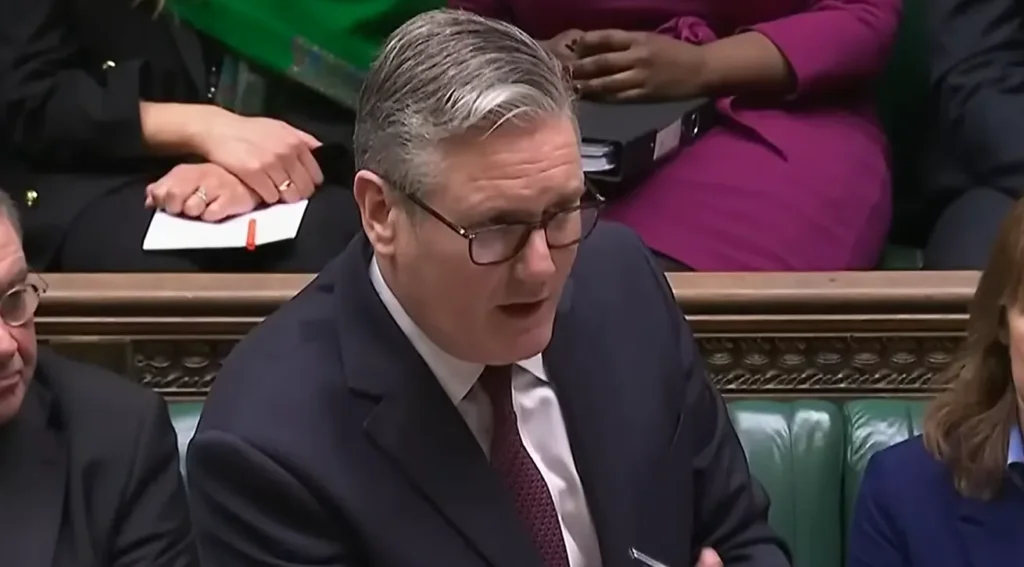
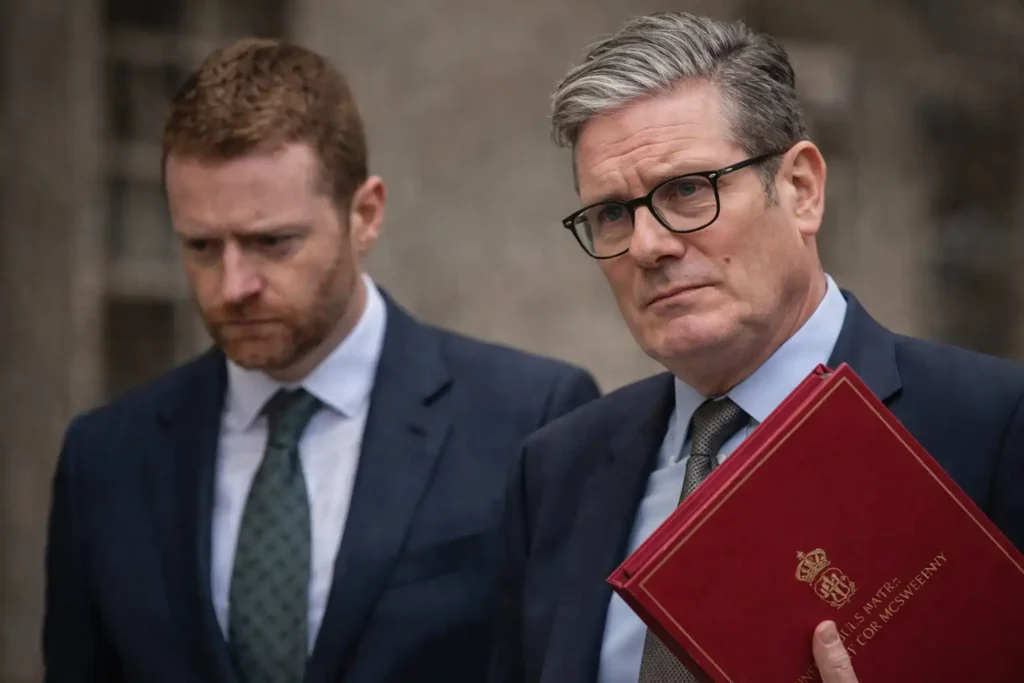
Prime Minister Sir Keir Starmer’s leadership has come under intense scrutiny following the Morgan McSweeney resignation, marking a dramatic turning point in British politics. The departure of McSweeney — long considered one of Starmer’s most influential advisers — has sent shockwaves through Westminster and ignited deep debate about judgment, accountability, and political strategy at the heart of the UK government.
McSweeney, who served as Starmer’s chief of staff at Downing Street, officially stepped down amid escalating pressure from both within the Labour Party and opposition ranks. According to initial reports, his exit followed days of mounting criticism after decisions linked to the controversial appointment of Lord Peter Mandelson as the UK’s ambassador to the United States.
The focus on McSweeney’s role intensified against the backdrop of the Mandelson affair, with critics saying his advice was central to a misjudged diplomatic appointment that quickly became one of the most damaging controversies confronting Starmer’s administration.
Why the Morgan McSweeney Resignation Matters
The Morgan McSweeney resignation is not just a personnel change — it reflects a deeper crisis of confidence in the prime minister’s inner circle. McSweeney, widely credited with being a strategist behind Labour’s 2024 election victory, had built a reputation as a key architect of Starmer’s political direction.
Yet in recent weeks, his standing had weakened amid fierce backlash over the handling of Lord Mandelson’s appointment. Though Starmer later apologized for that decision — saying Mandelson misled the government during the vetting process — critics argue the error in judgment was significant enough to necessitate accountability at the highest levels.
Sources close to Westminster say that McSweeney had been integral in championing Mandelson’s role, even as concerns within security services and among MPs grew. His close personal and professional ties to Mandelson intensified the perception that he had exercised outsized influence, ultimately at political cost.
The resignation therefore represents more than a staff reshuffle: it embodies a moment of reckoning for Starmer’s approach to governance and political stewardship.
Political Fallout and Internal Party Reactions
Within the Labour Party, reactions to the McSweeney resignation remain mixed but sharp. Some senior MPs said his influence encouraged insularity inside the prime minister’s office. They blamed it for poor decision-making at the top. Others, however, praised his long service and political skill.
Across party lines, the opposition responded quickly. They framed the resignation as evidence of weakening authority in Downing Street. Conservative figures questioned Starmer’s judgement. They demanded greater transparency over the approval of the Mandelson appointment.
Labour pressure groups and union leaders also weighed in. Some called for a political “reset.” They said such a move would restore trust in government. Others argued it would reassure both voters and party members.
What It Means for Starmer’s Leadership
While the Morgan McSweeney resignation was widely anticipated after days of speculation, it nonetheless raises significant questions about Starmer’s position. For many observers, this moment underscores a broader challenge: balancing political strategy with effective and transparent governance.
Starmer’s responses over the past week have included public apologies, pledges to release relevant government correspondence to Parliament, and efforts to reassure Labour MPs and voters alike.
Yet even as Starmer seeks to steady the ship, critics are openly debating whether his leadership approach has left him vulnerable to internal dissent and loss of public confidence — a scenario few expected when Labour returned to power.
Context Behind the Crisis
McSweeney was no stranger to political controversy. Before becoming chief of staff, he led Labour’s political strategy and played a direct role in major party decisions. He helped shape Labour’s modernisation in opposition and guided its electoral strategy in government.
However, the recent political turbulence surrounding Mandelson’s appointment and the perceived lack of due diligence have placed McSweeney — and by extension Starmer — at the centre of a political firestorm that shows no sign of dissipating.
FAQ
About the Author: GRV is a digital media writer who created Dumbfeed, a platform that simplifies complex global and political news into clear, engaging, and family-friendly formats. He delivers accurate, easy-to-understand explanations that help readers stay informed without the noise. When he’s not writing, GRV produces video content and short-form news updates for social media.