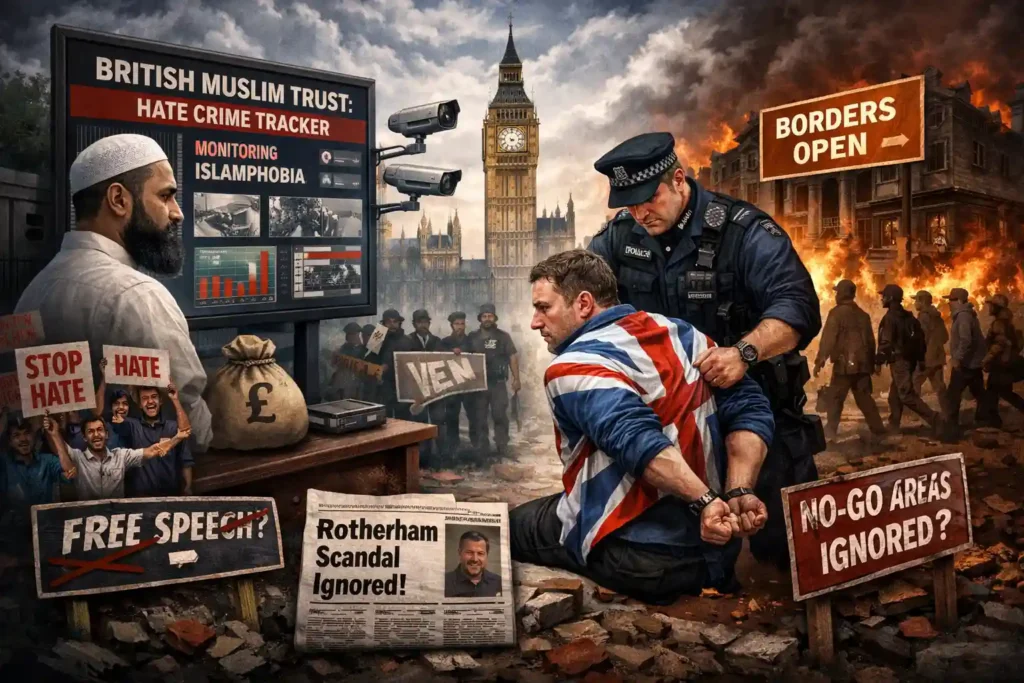
A government-backed “hate tracker” aimed at monitoring anti-Muslim incidents has ignited fierce debate across Britain, with many questioning if it unfairly shields one community while native English voices face swift legal backlash. The British Muslim Trust initiative, freshly appointed to lead this effort, promises quarterly reports on hate crimes, but critics see it as the latest symbol of lopsided diversity policies. As tensions simmer over immigration and free speech, this move raises alarms about who truly benefits from Britain’s push for inclusion.
Background on the British Muslim Trust Initiative
The British Muslim Trust (BMT), founded by the Randeree Charitable Trust and Aziz Foundation, stepped into the spotlight last year when the Ministry of Housing, Communities and Local Government selected it through a competitive grant process. Funded by the Combatting Hate Against Muslims Fund—up to £1 million annually starting 2026—the initiative tasks BMT with independent monitoring, community engagement, and publishing data-driven reports on anti-Muslim hate.
This comes after record-high anti-Muslim hate reports, like Tell MAMA’s 6,313 cases in 2024, a 43% surge linked to events such as the Southport riots. BMT leaders, including Shabir Randeree and Akeela Ahmed MBE, emphasize transparency, GDPR compliance, and victim support without duplicating legal aid. They plan grassroots events and advisory panels to build trust, positioning the tracker as a tool for “amplifying hope” in safer communities.
Yet, the timing fuels skepticism. Native English communities point to perceived double standards: strict hate speech laws jail locals for online comments defending their culture, while illegal migration strains resources with limited enforcement.
Current Developments and Public Backlash
BMT launched preparatory work this autumn, with quarterly reports slated for early 2026. Supporters like Hope Not Hate and Baroness Warsi hail it as vital for tackling “pernicious” Islamophobia, especially post-2024 riots targeting mosques. The government views it as evidence-based action for cohesion.
But pushback grows. Online, voices decry it as a “one-way street,” highlighting cases like Jordan Parlour’s 2024 jailing for Facebook posts urging attacks on asylum hotels during riots, or David Parnham’s 12-year sentence for “punish a Muslim day” letters. These swift prosecutions contrast with inaction on migrant communities’ alleged crimes or inflammatory rhetoric. Rumors of non-English-speaking mayors, like Rotherham’s Rukhsana Ismail—debunked as she speaks fluent English—underscore fears of cultural erosion, even if exaggerated.
Diversity mandates in councils and policing prioritize minorities, leaving white British feeling sidelined. A 2021 government race report noted socio-economic factors outweigh racism for many disparities, yet “strident anti-racism” dominates discourse.
Analysis: Discrimination Against Native English?
At its core, the British Muslim Trust initiative spotlights a deeper rift: does fighting one form of hate justify overlooking others? Native English face “reverse discrimination” in diversity quotas—jobs, promotions, even mayoral roles favor multicultural profiles. Mohammad Sarwar, Britain’s first Muslim MP and former Punjab governor, faced no backlash for past political maneuvers, despite community divides; his son Anas drew “racist” accusations for Reform UK’s ad questioning loyalties.
Hate speech laws, post-riots, hit hardest at working-class Brits venting on social media. Meanwhile, unauthorised migrants—barred from jobs and benefits—evade mass deportations, fostering resentment. Critics argue the tracker risks amplifying minor incidents while ignoring anti-white hostility, eroding trust in institutions.
This imbalance threatens social fabric. As BMT insists on independence, questions linger: Will it track hate against English heritage, or entrench divides?
Geopolitical Implications for Britain
Britain’s internal fractures have global echoes. The British Muslim Trust initiative aligns with EU trends in hate monitoring, like the Hatemeter tool, but amplifies transatlantic debates on multiculturalism versus assimilation. With President Trump’s 2025 reelection emphasizing borders, UK’s soft stance on illegal entries—coupled with trackers—invites comparisons, potentially straining US-UK ties if seen as weakness.
In Europe, rising populists like France’s National Rally cite UK’s model as a cautionary tale. Domestically, it bolsters Islamist networks, mirroring Pakistan’s influence via figures like Sarwar, complicating foreign policy in South Asia.
Possible Global Consequences
If unchecked, this could inspire copycat trackers worldwide, prioritizing migrant grievances over natives—fueling far-right surges, as in Germany’s AfD or Sweden’s immigration backlash. Globally, it weakens liberal democracies’ cohesion, aiding adversaries like China or Russia in narratives of Western decline.
Economic hits loom: strained services from migration deter investment, while speech curbs stifle innovation. Positively, balanced monitoring could foster unity, but bias risks radicalization on both sides.