Bangladesh protests have intensified sharply, pushing the country into a tense and uncertain phase. What began as demonstrations demanding justice after the death of activist Sharif Osman Hadi has now escalated into widespread unrest, property damage, and attacks on institutions. As a result, Bangladesh remains on edge, with authorities struggling to restore calm.
According to Reuters, protests spread rapidly across Dhaka and other cities following Hadi’s death, with crowds blocking roads, clashing with security forces, and vandalising buildings. Full Report
Why the Bangladesh Protests Began
At the heart of the Bangladesh protests lies anger over what supporters describe as a failure to deliver justice. Many protesters believe Hadi’s death reflects deeper political violence and impunity within the system. Consequently, demands have expanded beyond accountability to broader calls for political reform and governance transparency.
However, as protests grew, they also became increasingly disorganised. While many demonstrators insist their movement remains peaceful, splinter groups have turned to vandalism, arson, and intimidation.
Media Houses Targeted During Bangladesh Protests
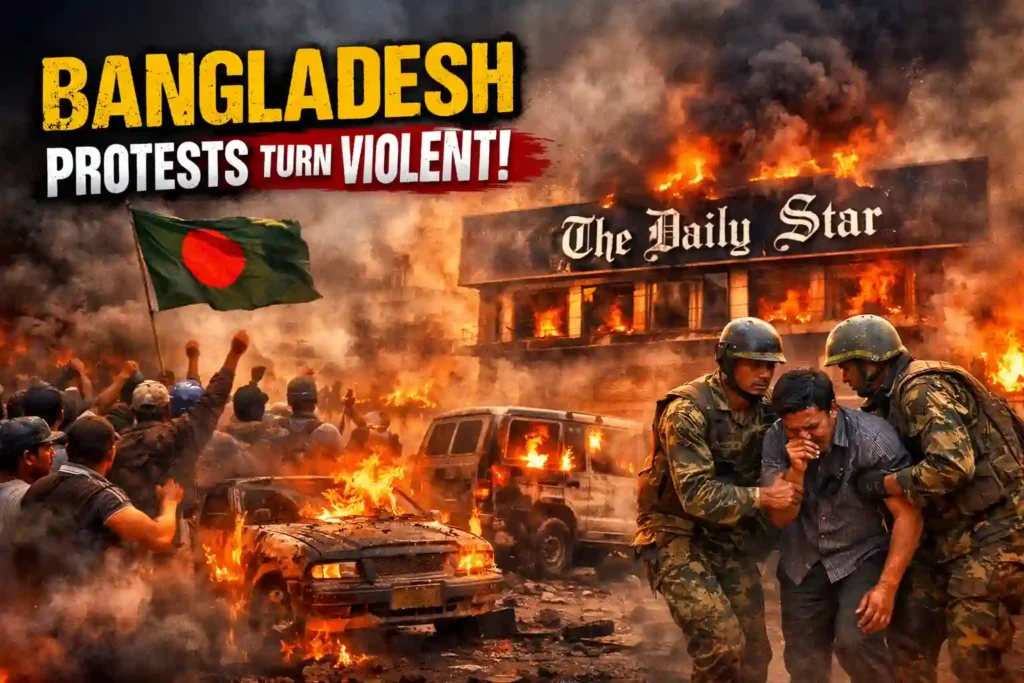
One of the most alarming developments in the Bangladesh protests has been the targeting of media organisations. Offices of leading newspapers, including the Daily Star, were attacked and set on fire, leaving journalists trapped inside before emergency services intervened.
These incidents have triggered serious concerns about press freedom. When newsrooms are attacked, critics argue, the line between protest and lawlessness has clearly been crossed. Meanwhile, shops, political offices, and private properties have also suffered damage in several areas.
Government Response and Rising Tensions
Authorities have condemned the violence and urged restraint. Security forces, including army units in some locations, have been deployed to stabilise sensitive areas. Despite these measures, Bangladesh protests continue in pockets, keeping tensions high.
Meanwhile, political leaders are under pressure to address both the immediate unrest and the underlying grievances that fuelled it. Without meaningful engagement, analysts warn that further escalation remains possible.
A Country at a Crossroads
Bangladesh protests are no longer just about a single incident. Instead, they reflect deeper frustration, unresolved political tensions, and fragile public trust. As violence overshadows peaceful dissent, the challenge ahead lies in restoring order without silencing legitimate demands.
For now, Bangladesh remains on edge, watching closely to see whether dialogue or disorder will shape the days ahead.