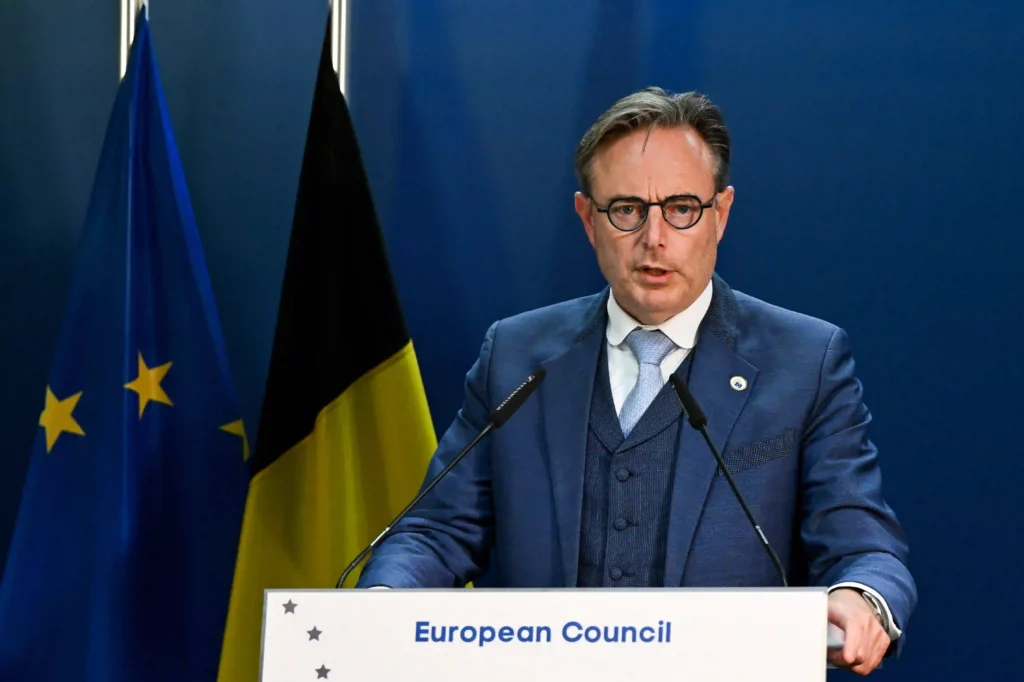
Europe is split once again — this time over what to do with frozen Russian assets, worth an estimated €90 billion, currently held across the EU. While the European Commission wants to use these funds to support Ukraine’s reconstruction, Belgium’s new Prime Minister Bart De Wever has publicly rejected the proposal, calling it risky, legally shaky, and potentially harmful to future peace efforts.
His statements have created waves across the EU, especially because Belgium — via Euroclear — holds over €200 billion of Russian central bank assets, the largest share in Europe. And that’s why De Wever’s voice matters.
According to a detailed Reuters report Belgian PM Bart De Wever said it is “best to leave the frozen Russian assets in Euroclear for now,” warning that using them could jeopardise future negotiations with Moscow.
What De Wever Said
During recent remarks, De Wever argued that the European Union’s “reparations loan” plan — a proposal to borrow €90 billion against the interest from Russia’s frozen sovereign assets — is a step too far.
He made two major points:
These funds will eventually be returned to Russia.
De Wever warned that assuming Russia will permanently lose its frozen assets is unrealistic. He said that, after the war ends, international law may require Europe to return them to Moscow — meaning any money spent now could become a massive liability.
A legal and geopolitical risk for the EU
Belgium fears being left solely responsible if Russia later sues for its funds back. According to reports, Euroclear — headquartered in Brussels — holds the bulk of the frozen €200+ billion. Using these assets unilaterally could expose both Belgium and the EU to:
- International legal challenges
- Retaliation from Moscow
- Damage to the EU’s reputation as a reliable financial centre
Why This Matters for Europe and Ukraine
While several EU nations support the idea of leveraging frozen Russian assets to finance Ukraine’s defense and reconstruction, Belgium’s opposition has slowed momentum.
Meanwhile:
- The U.S. aid package for Ukraine remains uncertain.
- The EU is racing to secure long-term financial support for Kyiv.
- Russia has signaled it will view any confiscation of its state assets as an act of “economic war.”
De Wever’s stance adds another layer of complexity to an already fragile EU consensus — and highlights how geopolitics, law, and national financial exposure collide in decisions about supporting Ukraine.
What’s Next?
EU leaders are expected to revisit the funding plan at the upcoming summit, but there is no guarantee of agreement. With billions of frozen Russian assets in question and the war still grinding on, Europe faces mounting pressure to bridge internal divisions.
For a more detailed breakdown of how Russian assets could be unlocked and the global consequences, you can read our in-depth guide here: Why Frozen Russian Money Matters Now
About the Author: GRV is a digital media writer and the creator of Dumbfeed, a platform dedicated to simplifying complex global and political news into clear, engaging, and family-friendly formats. He focuses on delivering accurate, easy-to-understand explanations that help readers stay informed without the noise. When he’s not writing, GRV creates video content and short-form news updates for social media.