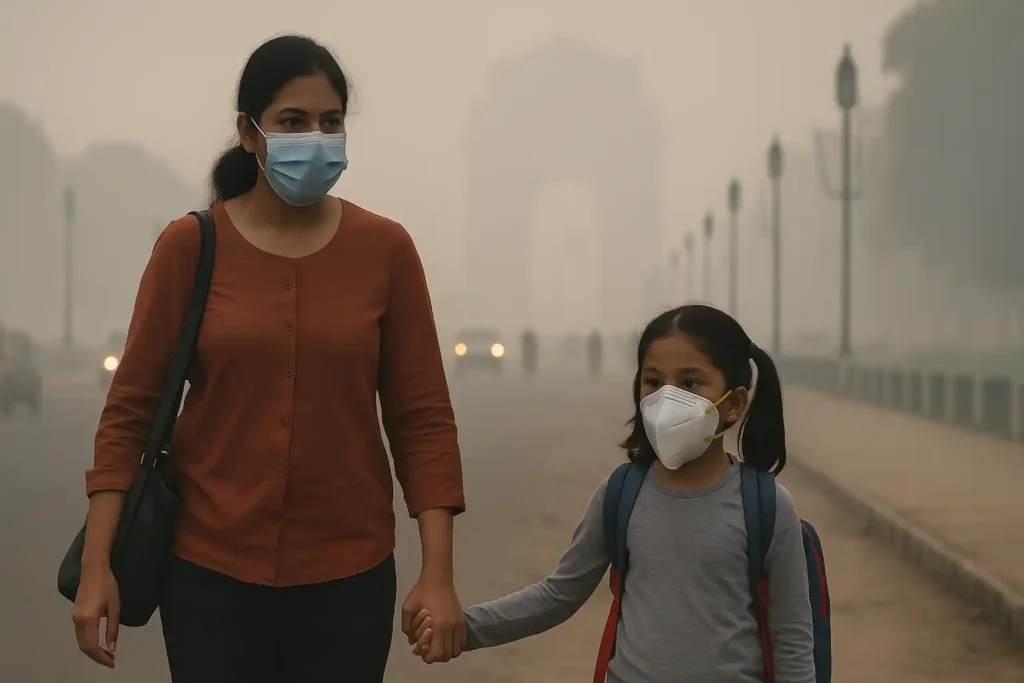
Delhi air quality has once again reached dangerous levels, pushing the city into a severe smog phase. Children are the most vulnerable, and parents must act quickly to protect them from the harmful effects of pollution. With toxic particles filling the air, safeguarding young lungs has become a daily priority.
Why Kids Are More Vulnerable in Poor Delhi Air Quality
Children breathe faster than adults and spend more time outdoors, which increases their exposure to pollutants. Their lungs are still developing, making them more sensitive to particulate matter, smoke, and toxic gases circulating in Delhi air quality during the winter smog season.
Health Effects of Toxic Smog on the Human Body
High pollution levels can affect nearly every system of the body; moreover, some of the most common effects include the following:
Short-Term Effects
- Burning or watery eyes
- Persistent coughing and sore throat
- Headaches and dizziness
- Breathing difficulty, especially during physical activity
- Worsening of asthma or allergies
Long-Term Effects
- Reduced lung development in children
- Increased risk of chronic respiratory diseases
- Higher chances of heart-related issues
- Decreased immunity levels
- Long-term fatigue and concentration problems in kids
The severe dip in Delhi air quality can also aggravate existing medical conditions, making preventive care essential.
Government Steps to Protect Children and Citizens
To tackle the alarming drop in Delhi air quality, the government has activated multiple emergency measures; furthermore, these actions include the following:
- Implementation of GRAP Stage 3 and 4 actions, restricting construction activities and emissions-heavy operations.
- Temporary closure of schools during peak smog days to reduce exposure for children.
- Ban on entry of polluting commercial vehicles into the city.
- Restrictions on diesel generators and older vehicles known to worsen pollution.
- Deployment of anti-smog guns and increased road watering to suppress dust.
- Promotion of public transport and odd-even vehicle rotation during critical phases.
These efforts aim to bring rapid relief, although improvement depends on weather conditions and overall compliance.
How to Shield Your Kids from Delhi Air Quality Threats
1. Keep Children Indoors During Peak AQI Hours
Avoid outdoor activities early in the morning and late at night when pollution levels are typically the worst.
2. Use Air Purifiers at Home
Place purifiers in bedrooms and study rooms to create safe indoor zones.
3. Make Kids Wear N95 or KN95 Masks Outdoors
These masks filter harmful particulate matter that cloth masks cannot.
4. Practice Nasal Rinsing and Hydration
Saline washes help clear pollutants, and proper hydration keeps airways moist.
5. Boost Immunity with a Balanced Diet
Add foods rich in vitamins C, E, and antioxidants to combat inflammation.
6. Avoid Intense Outdoor Exercise
Running, cycling, or sports outdoors increases lung exposure to pollutants.
7. Keep Doors and Windows Closed During High Smog
Prevent toxic air from entering your home, especially during peak AQI hours.
Sources: Press Infomation Bureau, Delhi Pollution Control Commitee
For more on current events, check out our full coverage on David Richardson resignation has pushed FEMA into a new and uncertain phase and stay updated on the latest developments.