
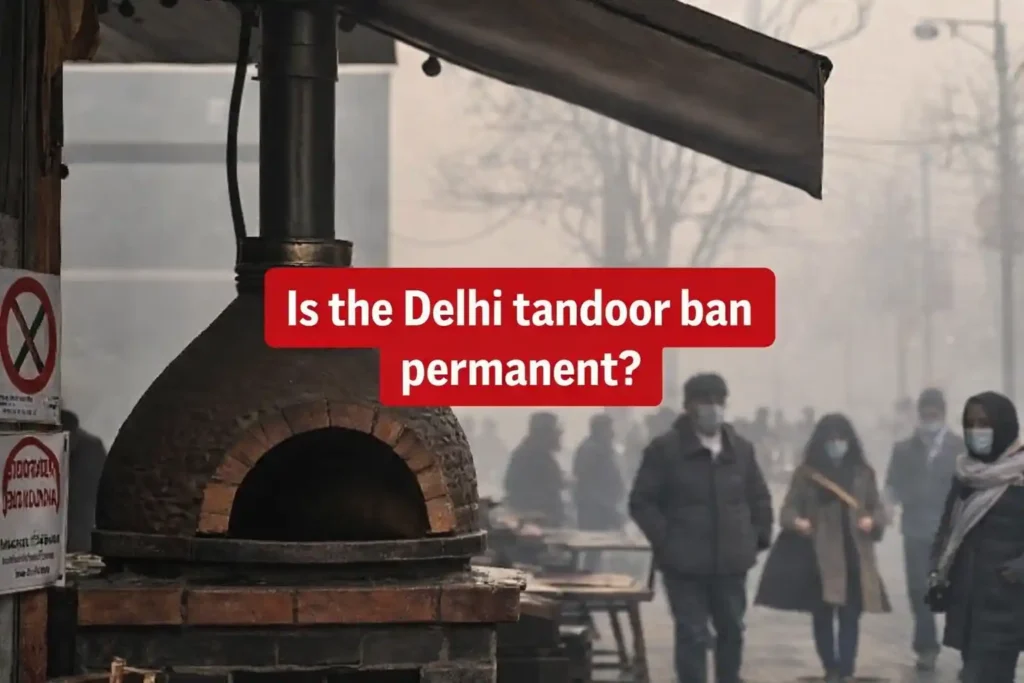
The Delhi tandoor ban has come into force as the national capital battles hazardous air pollution levels, prompting authorities to take stricter action against local sources of emissions. The Delhi government has ordered a complete ban on the use of coal and firewood in tandoors, citing their contribution to worsening air quality.
According to a Press Trust of India (PTI) report, the Delhi government has directed urban local bodies to strictly enforce the ban on the use of coal and firewood in tandoors amid hazardous air pollution
The move is part of emergency pollution control measures under the Graded Response Action Plan (GRAP), activated after air quality slipped into the very poor and severe categories.
What the Delhi Tandoor Ban Means
Under the Delhi tandoor ban, all hotels, restaurants, dhabas, and street-side eateries are prohibited from using coal- or firewood-based tandoors. Establishments have been directed to switch immediately to cleaner alternatives, such as electric or gas-based cooking systems.
According to officials, emissions from traditional tandoors add to local particulate pollution, especially during winter when low wind speed and temperature inversion trap pollutants close to the ground.
The order has been issued by the Delhi Pollution Control Committee (DPCC) under provisions of the Air (Prevention and Control of Pollution) Act.
Why the Crackdown Was Necessary
Delhi’s air quality has deteriorated sharply in recent weeks, with AQI levels repeatedly crossing hazardous thresholds. Experts say that while vehicle emissions and construction dust remain major contributors, localized sources like coal-fired tandoors significantly worsen neighborhood-level pollution.
Authorities argue that the Delhi tandoor ban is a targeted step to reduce avoidable emissions during peak smog season, alongside other restrictions such as limits on construction activity and diesel generator usage.
Impact on Restaurants and Food Businesses
The Delhi tandoor ban has forced many eateries to rethink their cooking methods. While some restaurant owners have raised concerns over costs and changes in traditional flavors, others have already begun adapting by investing in gas or electric tandoors.
Food industry associations have urged the government to provide a transition period and technical guidance, but officials maintain that public health considerations must take priority during an air pollution emergency.
Enforcement and Penalties
Authorities have warned that violations of the Delhi tandoor ban will invite strict action, including fines and possible closure of non-compliant establishments. Enforcement teams from municipal bodies and pollution control agencies have been instructed to conduct regular inspections across the city.
The government has emphasized that the ban will remain in effect as long as air quality remains dangerously high.