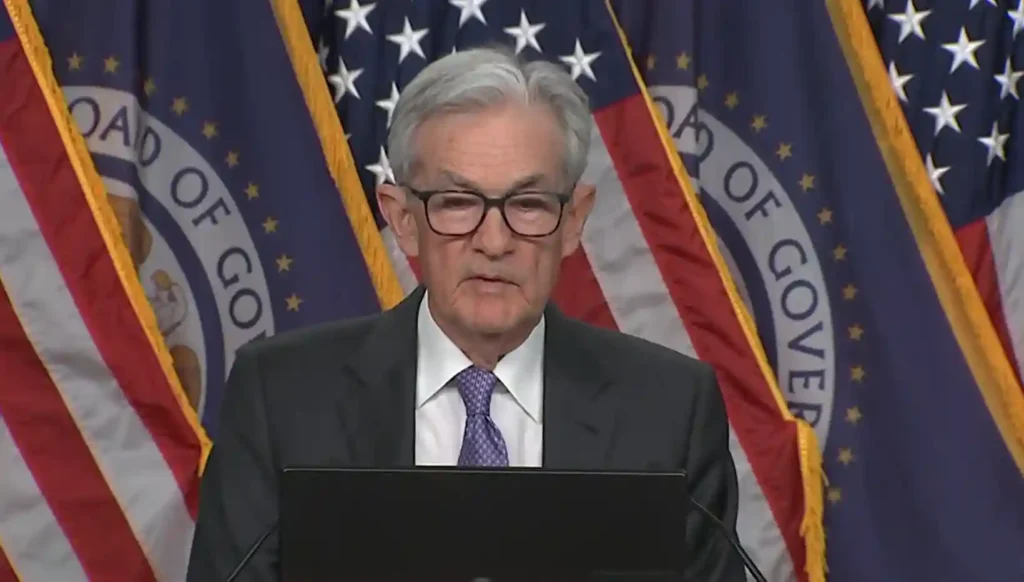
The latest Powell interest rate cut has become one of the most consequential decisions of the year, signaling a strategic shift in how the Federal Reserve views the U.S. economy’s evolving risks. In his remarks, Federal Reserve Chair Jerome Powell revealed that the labor market is “gradually cooling” while inflation remains “somewhat elevated.”
For official policy details and statements, readers may refer to the Federal Reserve’s official
Why the Fed Cut Rates by 0.25%
The Powell interest rate cut—a 0.25 percentage point reduction—arrived at a critical moment. Although inflation has improved compared to last year, it hasn’t fallen to the Fed’s comfort zone. Job growth has also slowed, with hiring becoming more cautious across several industries.
Powell explained that the decision is meant to balance two competing risks:
- The risk that inflation could remain sticky
- The risk that an overly tight labor market could weaken economic momentum
The Fed believes a slight rate reduction supports stability without fueling excessive inflation.
Cooling Labor Market: A Key Factor Behind the Move
Powell acknowledged clear signs that the labor market is losing steam. Job openings have declined, monthly job gains have slowed, and companies appear more hesitant to expand hiring.
This cooling is significant because the labor market has been one of the strongest pillars supporting the economy. A softening job market increases the urgency for the Fed to ensure borrowing conditions aren’t too restrictive.
The Powell interest rate cut aims to gently support growth without encouraging excessive risk-taking.
Inflation: Elevated, but Slowly Easing
While inflation is not at crisis levels, Powell emphasized that it is “still somewhat elevated.” Goods inflation, influenced in part by tariffs and higher import costs, has complicated the decline in consumer prices.
The Fed’s challenge is balancing caution with action. Cutting rates too aggressively risks overheating the economy; cutting too little risks deepening a slowdown. This modest reduction appears calibrated for stability.
Markets React to the Powell Interest Rate Cut
Financial markets responded quickly.
- Treasury yields dipped
- Stock indices showed cautious optimism
- Rate-sensitive sectors such as housing, autos, and banking saw immediate movements
The decision signals a potentially more flexible policy direction heading into the next quarter.
Future Policy: No Pre-Set Course
Powell was clear that the Fed is not committing to a series of further cuts. Instead, policy will remain data-dependent, meaning future moves will rely heavily on upcoming economic indicators.
This flexible stance reflects ongoing uncertainty:
- Inflation trends are uneven
- Job market strength is weakening
- Consumer spending is moderating
- Global risks remain elevated
The Powell interest rate cut opens the door to more adjustments—but only if economic conditions justify them.
What This Means for Americans
Consumers and businesses may see some near-term relief:
- Lower mortgage and loan rates
- Slightly improved business borrowing conditions
- Potential support for job retention and hiring
However, Powell cautioned that this is not a return to ultra-low pre-pandemic rates. The Fed’s primary goal remains long-term stability.
FAQ
About the Author: GRV is a digital media writer and the creator of Dumbfeed, a platform dedicated to simplifying complex global and political news into clear, engaging, and family-friendly formats. He focuses on delivering accurate, easy-to-understand explanations that help readers stay informed without the noise. When he’s not writing, GRV creates video content and short-form news updates for social media.