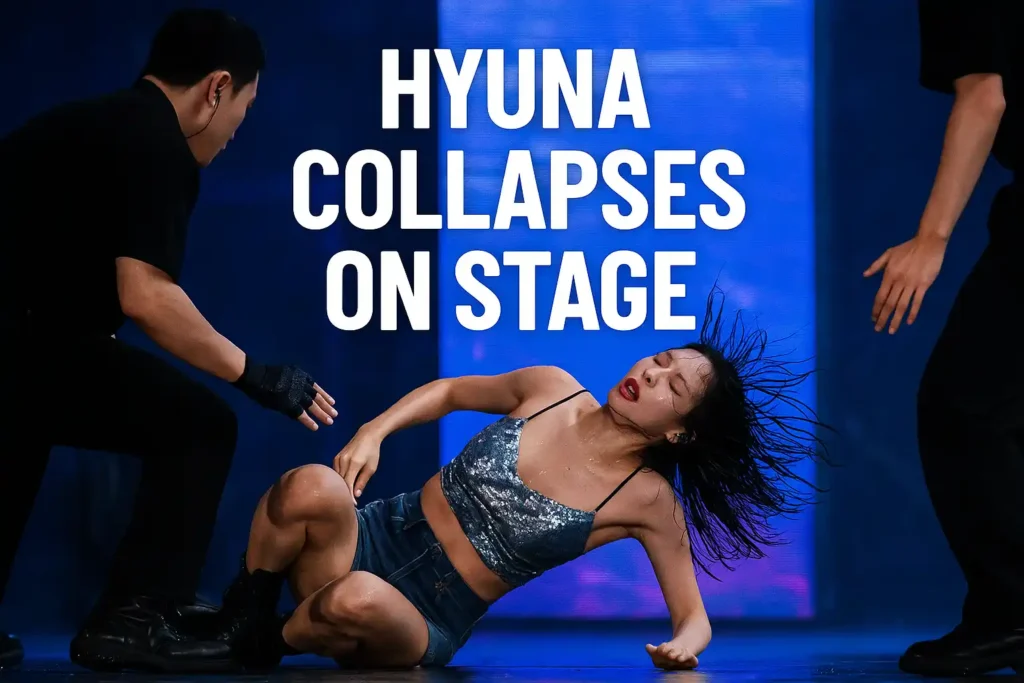
The shocking HyunA collapse on stage has once again highlighted the extreme demands placed on K-pop idols. While fans were stunned watching the moment unfold, the incident has opened up deeper conversations about the physical and emotional toll behind the glamorous exterior of the industry. For many idols, the pressure to perform flawlessly is so constant and consuming that it pushes them dangerously close to burnout.
Unrelenting Workloads Behind the Spotlight
The HyunA collapse on stage is not an isolated event—K-pop idols often endure months of nonstop workloads. They frequently rehearse until dawn, travel across countries for promotions, film back-to-back performances, and maintain strict schedules with almost no breaks. This relentless pace leaves little room for rest, and exhaustion builds up quickly.
Even when idols show signs of fatigue, they often continue performing due to contractual obligations, fan expectations, and internal pressure to maintain professionalism. These grueling routines create an environment where sudden fainting, dehydration, and collapse are not uncommon.
The Impact of Strict Beauty Standards
One major factor associated with the HyunA collapse on stage is the intense pressure on K-pop idols to maintain very low body weight. Agencies and the industry in general place enormous emphasis on flawless physical appearance, often resulting in extreme dieting, rapid weight loss, and punishing exercise routines.
Maintaining these standards while performing high-energy choreographies can be dangerous. Idol diets frequently lack the nutrition needed to support intense physical activity, making the risk of collapse significantly higher. HyunA’s incident has reignited public criticism of these harsh beauty expectations.
Physical Strain From Choreography and Live Performances
Live performances in K-pop are physically demanding, often involving fast-paced choreography, continuous movement, and strong stage presence. Performing under hot stage lighting while simultaneously singing and dancing can cause overheating, dizziness, and sudden drops in blood pressure — all of which may lead to incidents like the HyunA collapse on stage.
Combined with fatigue from packed schedules, the risk becomes even greater. Idols are trained to push through discomfort, sometimes ignoring early warning signs such as dizziness or breathlessness.
Mental Health Struggles Behind Idols’ Smiles
Beyond physical exhaustion, the mental pressure of being a K-pop idol is immense. The HyunA collapse on stage has also sparked conversations about the mental challenges that come with the job.
Idols face:
- Strict public scrutiny
- Fear of making mistakes on stage
- Online hate and criticism
- Pressure to remain “perfect” 24/7
- Stress from balancing personal life and career
These psychological burdens contribute to burnout, anxiety, and emotional fatigue. Many idols feel compelled to hide their struggles to avoid disappointing fans or appearing weak.
The Role of Agencies in Idol Health Management
However, the incident has led to renewed debate about the responsibility of entertainment agencies. Moreover, fans argue that agencies must prioritize health over performance demands. Consequently, the HyunA collapse on stage has intensified these calls, with many urging for better health monitoring, mandatory rest periods, and more balanced schedules.
While some agencies claim to provide mental health support and medical supervision, idol testimonies over the years indicate gaps that still need to be addressed.
Growing Fan Advocacy for Better Working Conditions
Following the HyunA collapse on stage, fans have rallied in support, calling for improved working conditions across the industry. Many believe that idols should not have to risk their health to meet unrealistic standards of performance and appearance.
Furthermore, global fans have taken to social media to demand structural changes, including more frequent breaks, manageable schedules, and proper medical support. This shift in perspective, therefore, reflects a growing understanding of the human cost behind the polished K-pop world.
Why This Incident Could Trigger Industry Reform
The HyunA collapse on stage may become a turning point if it leads to meaningful conversations within the industry. While change is often slow, public awareness and fan pressure can influence agencies to adopt healthier practices.
If companies begin prioritizing rest, nutrition, and mental well-being, then the culture of overworking idols may gradually shift. Additionally, incidents like this highlight the urgent need for reform and reaffirm the importance of treating idols as humans, not machines.
Source: Korea Times
For more on current events, check out our full coverage on Storm Intensifies Across Southern California and stay updated on the latest developments.