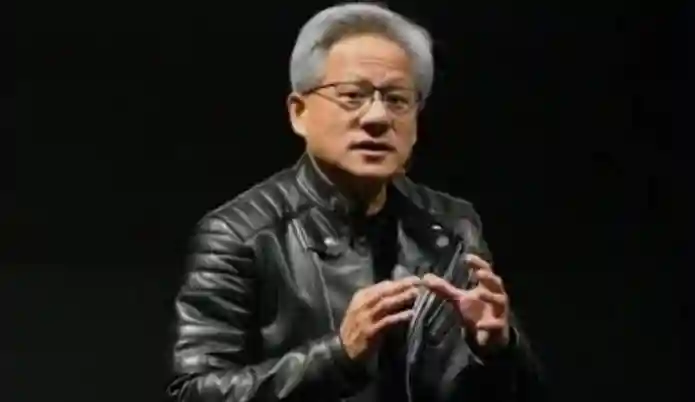
The US-China AI race is accelerating, and Nvidia CEO Jensen Huang has highlighted China’s growing advantage. According to Huang, China’s combination of low energy costs, flexible regulations, and a vast pool of AI developers is enabling it to train and deploy AI models more efficiently than ever before. While the U.S. continues to lead in foundational AI technology, these factors are helping China close the gap rapidly.

U.S. China AI Race: China’s Energy Advantage
One of the key factors giving China an edge in the US-China AI race is its lower energy costs. Training large AI models requires massive amounts of electricity, and cheaper energy allows Chinese companies and research institutions to scale their operations faster. This advantage enables them to run larger models for longer periods and experiment with new AI architectures without being constrained by high operational costs.
Regulatory Flexibility and Innovation
China’s regulatory environment also contributes to its progress in the U.S. China AI race. With fewer restrictions compared to the U.S., Chinese companies can experiment and deploy AI applications more quickly. This regulatory flexibility encourages innovation, allowing startups and established tech giants alike to test cutting-edge AI solutions in real-world environments. In the long term, this could translate into faster commercial adoption of AI technologies, giving China a notable advantage in this race.
The Role of a Large Developer Base
Another significant factor in China’s favor is its enormous pool of AI developers and researchers. With millions of skilled professionals working on AI projects, China can iterate faster, refine models, and develop practical AI applications more quickly. This large talent base complements its infrastructure and energy advantages, further strengthening its position in the US-China AI race.
Implications for the United States
While the U.S. still maintains leadership in AI research and foundational models, Huang warns that restrictive policies, such as export controls on chips, could inadvertently accelerate China’s progress in the U.S. China AI race. To maintain its competitive edge, the U.S. must focus not only on technology but also on policies that encourage domestic innovation, expand infrastructure, and attract global talent, ensuring it remains a strong contender in this race.
The Future of the US-China AI Race
The US-China AI race is not just about technological breakthroughs; it encompasses energy, policy, infrastructure, and talent. As China leverages its advantages, the global balance in AI development could shift significantly in the coming years. For both countries, the race is an opportunity to shape the future of artificial intelligence and its applications across industries, from healthcare and finance to autonomous systems and robotics.
Conclusion
Jensen Huang’s insights underscore that leadership in AI requires more than just research excellence. Countries must consider energy efficiency, regulatory frameworks, and talent cultivation. The US-China AI race is a complex, multi-dimensional competition, and the outcome will depend on how effectively each nation combines technology with strategy, infrastructure, and human capital.
Source: Financial Times
For more on current events, check out our full coverage of the U.S. Customs and Border Protection (CBP) intercepted a fake luxury watches seized worth over $8 millions and stay updated on the latest developments.