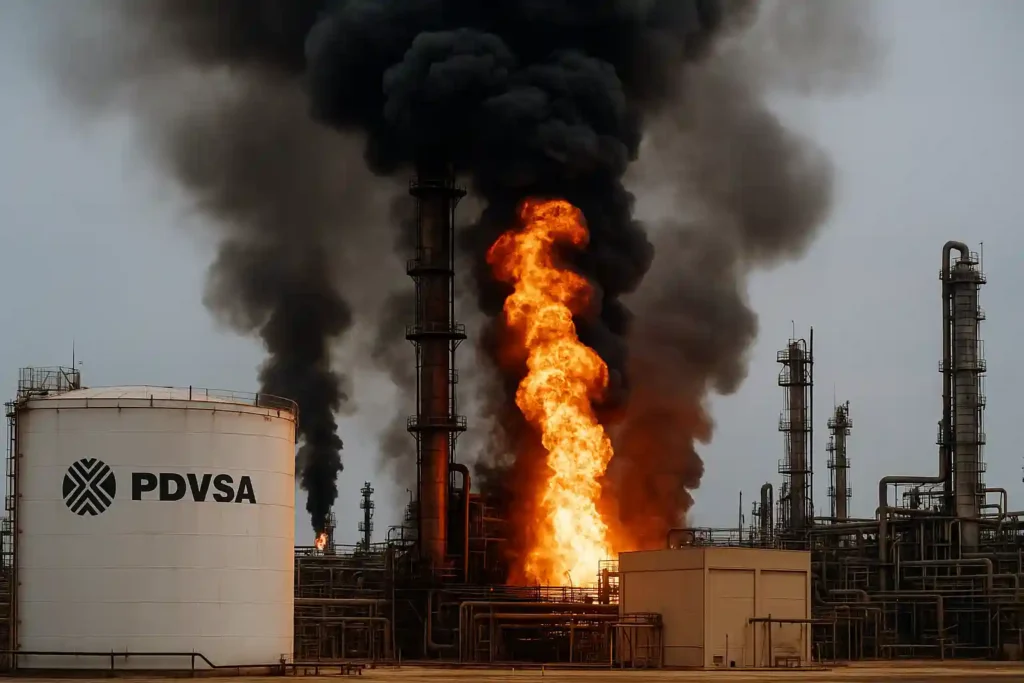
The Naphtha Plant Fire at Venezuela’s Petrocedeno facility started after a sudden explosion near a distillation tower. Thick smoke rose over the area, and people nearby saw the flames spread quickly. However, emergency teams reached the site within minutes. Because of their fast action, the fire did not reach the larger storage units.
Rapid Response Helped Contain the Naphtha Plant Fire
Right after the blast, alarms sounded across the facility. Automated systems shut down parts of the plant, and this step slowed the movement of the fire. Then, firefighters moved through the hot zone with foam and cooling sprays.
Their coordinated work kept the Naphtha Plant Fire from turning into a wider disaster.
The teams used water walls, fire foam, and pressure control tools to cut off the fuel source. As a result, they stopped the flames before they spread to critical processing lines.
The fire came under control within a few hours, and crews kept spraying the area to prevent a restart.
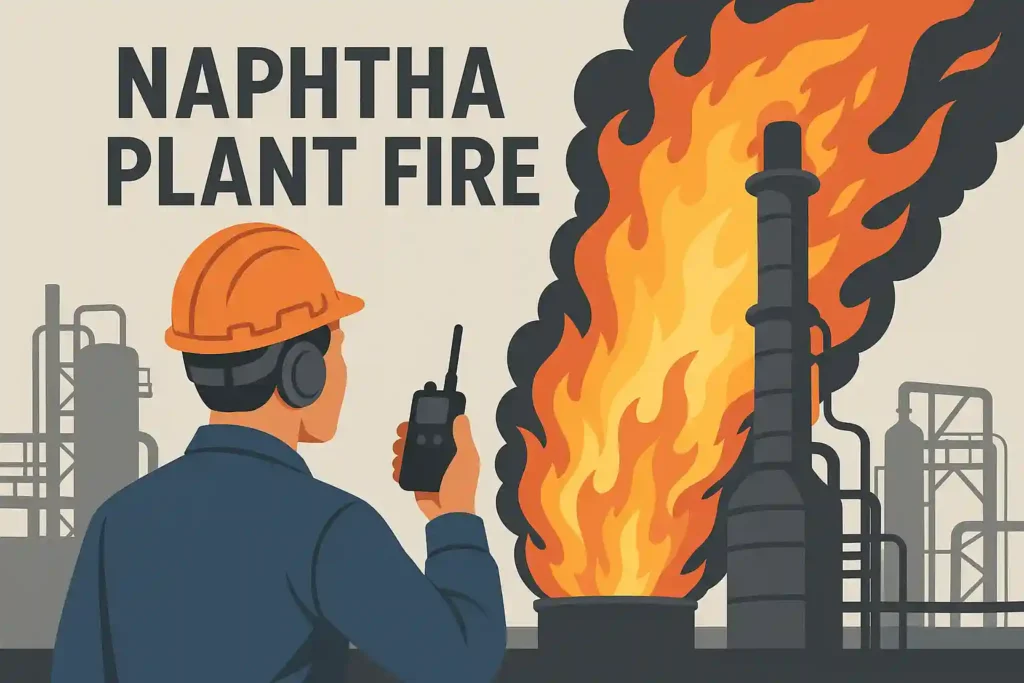
Damage Checks Begin After the Naphtha Plant Fire
Although the blaze ended fast, the shutdown continues. Engineers are checking damaged pipes, heat-affected metal, and surrounding valves.
They want to confirm that the structure is safe before restarting the plant.
At the same time, environmental teams are testing the air around nearby communities. Because thick smoke spread across part of Anzoátegui, people worry about residue and chemicals. Early reports say the risk is low, yet checks are still in progress.
Why the Naphtha Plant Fire Raises New Concerns
This event highlights ongoing issues in Venezuela’s oil sector. Many units in the Orinoco Belt are old and need regular repairs. Workers have raised concerns about worn-out lines, hot spots, and pressure problems. With this fire, the debate over safety standards has grown even stronger.
Moreover, the Petrocedeno upgrader is vital to the region. The plant turns heavy crude into lighter oil that is easier to sell. Any long shutdown may affect production and increase pressure on the national industry.
Next Steps for the Petrocedeno Facility
Officials plan a full investigation to find the exact cause of the Naphtha Plant Fire. They will also study equipment performance, emergency response timing, and maintenance logs. Once they complete the review, they will decide when the plant can reopen.
For now, the priority is safety. Teams continue to monitor heat, check remaining chemicals, and inspect electrical systems. Although the fire is out, the work is not finished yet.
Source: MIppci
For more on current events, check out our full coverage on Miss Universe 2025 ended with a clear and emotional victory for Mexico’s Fátima Bosch and stay updated on the latest developments.