Over the past few weeks, India’s skies have seen a wave of unexpected disruptions, leaving thousands of passengers stranded and frustrated. The surge in IndiGo flight delays isn’t random — it’s the result of new government regulations, crew shortages, and serious communication lapses inside the country’s biggest airline.
And while delays are a part of air travel, passengers say the silence from IndiGo is what hurts the most.
How New Crew Duty Rules Triggered IndiGo Flight Delays Across India
The biggest driver behind the current chaos is the implementation of India’s revised Flight Duty Time Limitations (FDTL) rules — a set of mandatory crew rest and scheduling regulations introduced by the Directorate General of Civil Aviation (DGCA).
These new rules rolled out in phases:
- January 2024: DGCA announces updated FDTL framework
- July 1, 2025: Phase 1 becomes active
- November 1, 2025: Full enforcement begins
With expanded night-duty definitions, stricter rest periods, and limits on weekly night landings, airlines were suddenly required to assign larger crew teams to maintain their schedules.
IndiGo — which operates the densest domestic network and relies heavily on early-morning and late-night flights — was hit the hardest. Many pilots and cabin crew began “timing out,” meaning they legally could not operate flights even if they were at the airport and ready.
The DGCA announced the revised duty-time and rest regulations in its official statement published by the Press Information Bureau.
The intention behind these rules is good: reduce fatigue and improve safety.
But the transition exposed cracks in IndiGo’s staffing and scheduling practices.
Why Crew Shortages Made IndiGo Flight Delays Even Worse
IndiGo is known for its tight turnaround times, high aircraft utilization, and ambitious daily schedule. These operational habits work well in normal conditions but collapse quickly under regulatory change.
With the new rules in force, IndiGo simply didn’t have enough standby crew to absorb these limits. As a result:
- Morning flights were delayed because night-crew exceeded duty hours
- One delay triggered another across the entire network
- Cancellations spiked because replacement crew were unavailable
- Entire airport terminals saw hour-long queues with no clarity
Reports from aviation analysts show that IndiGo underestimated how much the new FDTL rules would shrink crew availability. The airline is now scrambling to hire more pilots and restructure rosters — but it’s a slow process, and passengers are bearing the brunt.
And these disruptions aren’t happening in isolation. Indian travellers are already navigating larger economic pressures — from rising fares to shifts in global markets. We recently broke down how these factors connect, especially in our explainer on the Indian Rupee’s fall and the RBI’s new strategy.
Zero Communication: The One Failure Passengers Won’t Forgive
While operational problems can be understood, passengers say IndiGo’s biggest failure has been communication.
Across social media, people are complaining about:
- No SMS alerts for delays or cancellations
- App showing “On Time” even after delays were confirmed
- Gate staff saying “we don’t know” for hours
- No proactive rebooking options
- No meal vouchers for long delays
- No email updates or customer support responses
For many travelers, the shock wasn’t the delay — it was finding out only after reaching the airport.
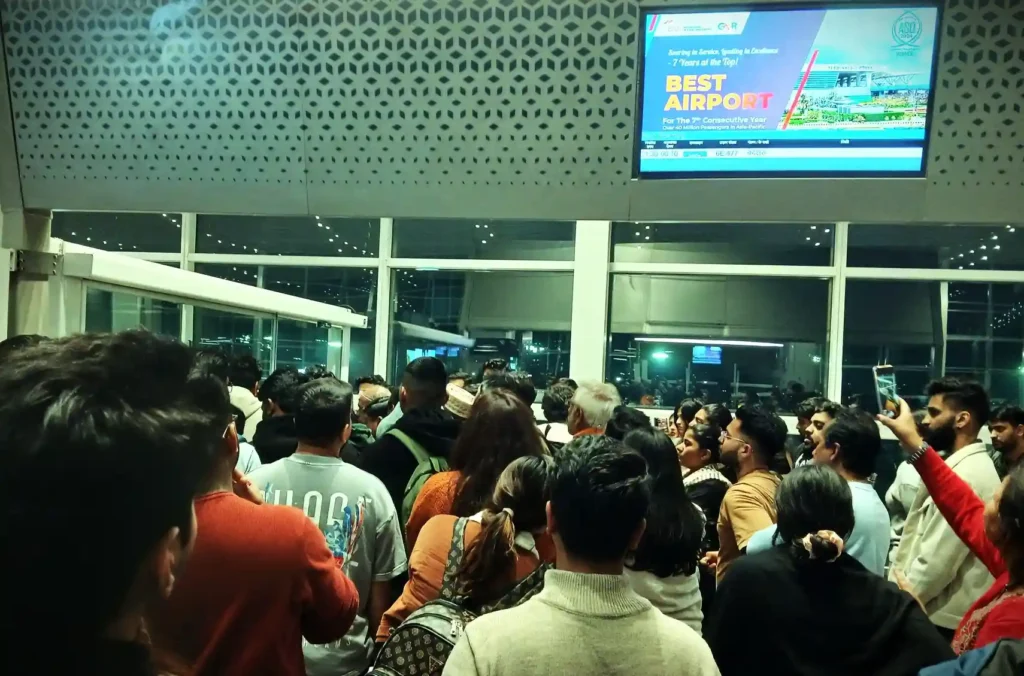
One video circulating online shows passengers at an IndiGo gate in open confrontation, demanding answers while staff struggled to offer any explanation. Many said they never received even a basic delay notification.
In moments like these, communication matters as much as the schedule.
So What Happens Next?
IndiGo is now under pressure from both DGCA and frustrated passengers. The airline is revising crew rosters, hiring aggressively, and attempting to stabilize its schedule. But until the airline rebuilds buffer capacity and improves its communication systems, IndiGo flight delays are likely to continue.
Air travel is complex, but respect and transparency are simple.
Passengers deserve both.
FAQ
About the Author: GRV is a digital media writer and the creator of Dumbfeed, a platform dedicated to simplifying complex global and political news into clear, engaging, and family-friendly formats. He focuses on delivering accurate, easy-to-understand explanations that help readers stay informed without the noise. When he’s not writing, GRV creates video content and short-form news updates for social media.