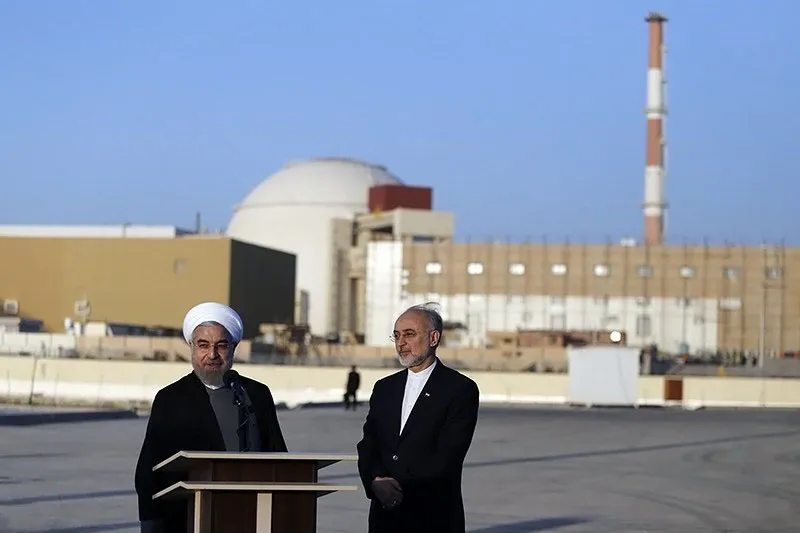
The Iran Nuclear Threat is no longer a distant geopolitical concern—it is rapidly becoming a real and immediate risk in the Persian Gulf. With missile activity reported near Iran’s Bushehr Nuclear Power Plant, fears are growing that a localized conflict could spiral into a broader environmental and geopolitical disaster. What makes this situation particularly alarming is not just the presence of a nuclear facility, but where it is located—and who stands to be affected.
Background: Why Bushehr Matters
Situated along Iran’s southern coastline, the Bushehr Nuclear Power Plant occupies a uniquely sensitive position on the Persian Gulf. Unlike many nuclear facilities built inland, Bushehr relies heavily on seawater for cooling purposes. This geographic detail carries significant implications. The Persian Gulf is not just a body of water; it is a lifeline. Countries such as Saudi Arabia, Kuwait, Bahrain, and Qatar depend extensively on desalination—converting seawater into drinking water—to sustain their populations. Any contamination in these waters could directly threaten access to potable water for millions.
Additionally, Bushehr is not solely an Iranian project. Russia’s state nuclear corporation, Rosatom, has played a central role in constructing and operating the facility, investing billions over decades. This international involvement adds another layer of complexity, turning a regional concern into a global one.
According to the International Atomic Energy Agency, the situation is being closely monitored amid rising military tensions. In a recent statement, the agency confirmed that while no radiation spikes have been detected so far, the risk remains real.
“We cannot rule out a possible radiological release with serious consequences,” the IAEA Director General warned, emphasizing the need for restraint around nuclear facilities.
The agency also noted that there has been no confirmed damage to major nuclear installations, including Bushehr, but highlighted that continued military activity increases the risk of escalation.
Iran Nuclear Threat: Rising Tensions Around Bushehr
Recent reports indicate that strikes—widely attributed to the United States and Israel—have targeted infrastructure in proximity to the Bushehr facility. While Iranian authorities maintain that the plant has not sustained critical damage, the frequency and proximity of these attacks are raising alarms. In response to escalating risks, at least one Middle Eastern country has reportedly issued radiation safety guidelines, advising residents to remain indoors and seal windows if necessary. Such precautionary measures suggest that regional actors are taking the threat seriously—even in the absence of confirmed damage.
Meanwhile, Russia has initiated multiple waves of personnel evacuation from the site. This move is particularly noteworthy. When the operator of a nuclear facility begins scaling back its on-ground presence, it signals a shift from routine risk management to heightened concern. Complicating matters further are reports that Russia and China may be assisting Iran with intelligence support. If accurate, this could provoke stronger retaliatory actions from opposing forces, increasing the likelihood of miscalculation.
Geopolitical Implications: More Than a Local Conflict
The Iran Nuclear Threat, however, extends far beyond environmental risk. In fact, it intersects directly with global energy security and broader international power dynamics. Notably, Bushehr lies near the Strait of Hormuz, a narrow maritime passage through which roughly one-fifth of the world’s oil supply flows. As a result, any instability in this region has immediate and far-reaching consequences for global markets.
A potential radiation incident could trigger multiple cascading effects:
- Disruption of shipping routes
- Sharp increases in oil prices
- Insurance and risk premiums for maritime trade
- Heightened military presence in the Gulf
Beyond economics, there is also the question of precedent. Attacks near nuclear facilities challenge long-standing international norms. The International Atomic Energy Agency has consistently warned against targeting such sites due to the uncontrollable consequences of radiation release. This raises a critical question: are we witnessing the erosion of a key global red line?
Iran Nuclear Threat: Environmental and Human Risks
One of the most under-discussed aspects of this crisis is its environmental dimension. If radioactive material were to leak into the Persian Gulf, the impact would not be confined to Iran. Ocean currents could carry contamination across national boundaries, affecting fisheries, marine ecosystems, and coastal infrastructure.
More critically, desalination plants—essential for drinking water in Gulf countries—could become compromised. While modern desalination processes can filter out many contaminants, radioactive materials present a far more complex challenge.
The result could be a dual crisis:
- A public health emergency
- A water security crisis across multiple nations
This is not without precedent. The Fukushima disaster in Japan demonstrated how nuclear incidents can have long-lasting environmental and economic consequences, even in technologically advanced settings.
Possible Global Consequences
If the situation escalates, the world could face several scenarios:
1. Controlled Escalation
Strikes continue but avoid direct damage to the plant. Tensions remain high, but catastrophic outcomes are avoided.
2. Accidental Radiation Leak
A miscalculated strike damages critical infrastructure, leading to a localized radiation release. This would likely trigger evacuations, international intervention, and market instability.
3. Wider Geopolitical Confrontation
Increased involvement from global powers such as Russia and China could transform the situation into a broader strategic conflict, further destabilizing the region. Each scenario carries significant risks, but all share a common thread: uncertainty.
Conclusion: A Crisis Defined by Risk, Not Certainty
The emerging nuclear flashpoint in the Persian Gulf is defined not by what has happened—but by what could happen. So far, the Bushehr Nuclear Power Plant remains intact. But the margin for error is shrinking. In a region already marked by geopolitical tension, the presence of a vulnerable nuclear facility introduces a new and unpredictable variable.
The Iran Nuclear Threat is no longer just a strategic concern. It is an environmental, economic, and humanitarian risk—one that transcends borders and demands global attention.