The latest Kashmir Himachal weather update has drawn widespread attention as heavy snowfall finally arrived across large parts of the western Himalayas—only after an unusually long dry spell. While snow in January is not uncommon for the region, what has raised concern among weather experts, locals, and policymakers is the timing, distribution, and intensity of the snowfall this season.
For weeks, Kashmir and Himachal Pradesh experienced below-normal precipitation during what is typically the core winter period. Ski resorts, apple growers, hydropower planners, and tourism operators were all waiting for snow that simply did not arrive. Then, almost abruptly, strong Western Disturbances triggered widespread snowfall, shutting highways, cancelling flights, and isolating hill towns.
This pattern—delayed, uneven, yet intense snowfall—is what makes the current Kashmir Himachal weather situation stand out.
According to the India Meteorological Department (IMD), the region has been affected by a series of strong Western Disturbances after a prolonged dry phase. You can track official advisories and snowfall alerts through IMD’s updates here
Kashmir Weather: Heavy Snow After a Long Silence
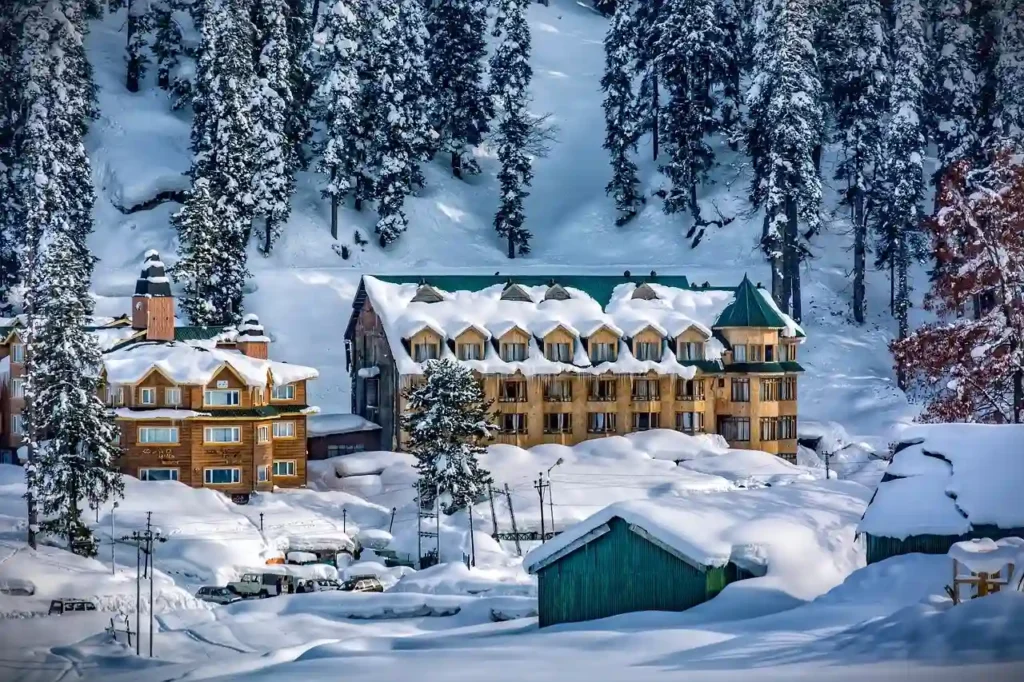
In Kashmir, fresh snowfall has blanketed both the Valley and higher reaches such as Gulmarg, Kupwara, and parts of the Pir Panjal range. The Srinagar–Jammu National Highway has faced repeated closures, while flights at Srinagar airport have been delayed or cancelled due to low visibility and runway conditions.
What is unusual is that December and early January saw very little snow, despite cold temperatures. Traditionally, this period contributes significantly to the region’s seasonal snowpack. Instead, much of the accumulation has happened within a short window, increasing the risk of avalanches, infrastructure stress, and sudden disruptions.
From a climate perspective, experts warn that such concentrated snowfall events can be more damaging than steady, evenly spread winter precipitation, especially in mountainous terrain.
Himachal Pradesh: Uneven Snowfall Across Districts
The Kashmir Himachal weather story becomes more complex in Himachal Pradesh. Popular destinations like Shimla, Manali, and Kufri have finally received snow. However, many mid-hill and lower-hill districts still report patchy or below-normal accumulation.
Lahaul-Spiti and Kinnaur have recorded sharp temperature drops and heavy snowfall. In contrast, Solan, Una, and Kangra have remained mostly dry. This uneven snowfall affects road safety, tourism, agriculture, and water planning.
Adding to the concern, multiple studies have shown a long-term decline in snow cover across Himachal’s river basins, even when short-term snowfall events appear intense. In simple terms, the snow is falling later and melting faster.
The Snow Drought Before the Storm
One of the most striking aspects of this winter’s Kashmir Himachal weather is the snow drought that preceded the current spell. For nearly three months, western Himalayan regions saw weak or absent Western Disturbances.
This had ripple effects:
- Reduced soil moisture for winter crops
- Stress on perennial water sources
- Delayed tourism season in snow-dependent regions
When snowfall finally arrived, it came in a compressed and powerful form—an increasingly common trend observed in mountain climates globally.
Why Timing Matters More Than Total Snowfall
Many people assume that heavy snowfall automatically means a “good winter.” However, climate scientists argue that when snow falls is just as important as how much falls.
Late snowfall:
- Shortens the snow-retention period
- Reduces gradual groundwater recharge
- Increases rapid melting during early spring
For regions dependent on snow-fed rivers, such as those originating in Kashmir and Himachal Pradesh, this shift can have downstream consequences for agriculture, drinking water, and hydropower generation across northern India.
Is Climate Change Reshaping Himalayan Winters?
While no single snowfall event can be directly blamed on climate change, the broader Kashmir Himachal weather trends are difficult to ignore. Scientists increasingly point to warming temperatures, altered jet streams, and changing Western Disturbance behavior as contributing factors.
Instead of long, stable winters with consistent snowfall, the Himalayas are witnessing:
- Longer dry spells
- Sudden intense snow or rain events
- Faster snowmelt cycles
These changes make disaster management more challenging and planning less predictable.
What to Expect Next
IMD forecasts suggest intermittent snowfall may continue in higher reaches, with rain or mixed precipitation in lower elevations. However, experts caution that winter patterns are becoming less reliable, making long-term forecasting more complex.
For residents, travelers, and policymakers, adapting to this new normal in Kashmir Himachal weather will require improved forecasting, better infrastructure resilience, and climate-aware planning.
FAQ
About the Author: GRV is a digital media writer who created Dumbfeed, a platform that simplifies complex global and political news into clear, engaging, and family-friendly formats. He delivers accurate, easy-to-understand explanations that help readers stay informed without the noise. When he’s not writing, GRV produces video content and short-form news updates for social media.