
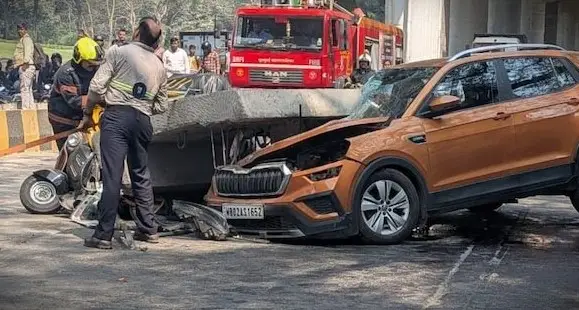
Mumbai’s ambitious metro expansion project suffered a tragic setback when a section of an under-construction metro pillar collapsed in Mulund, raising serious concerns about construction safety. The Mumbai Metro collapse not only resulted in casualties but also sparked a wave of public anxiety about infrastructure safety in India’s busiest city.
According to early reports, the Mumbai Metro collapse happened on February 14, 2026, on the Line-4 corridor near LBS Road in Mulund West. Soon after, a concrete parapet segment from the elevated viaduct suddenly crashed onto passing vehicles, including an autorickshaw. As a result, the accident killed one person and injured three others.
According to a statement posted on the official MMRDA X account, a parapet segment near Pier 196 collapsed, and a high-level inquiry committee has been formed to investigate the Mumbai Metro collapse.
The accident quickly became national news, highlighting both the speed of India’s infrastructure growth and the risks that can come with rushed construction.
What Happened in the Mumbai Metro Collapse
Initial reports indicate that workers were installing a parapet wall segment on a metro viaduct pillar when the structure failed. They were handling a precast concrete block when it suddenly came loose and fell onto the road below.
Authorities confirmed:
- 1 death
- 3 injuries
- Damage to vehicles
- Traffic disruption for hours
Emergency teams rushed to the scene, secured the area, and transported the injured to nearby hospitals. While metro construction projects are usually carried out with strict safety protocols, incidents like this remind us that even small lapses can have deadly consequences.
Arrests and Investigation
After the Mumbai Metro collapse, police arrested five project officials, including supervisors and engineers. Investigators are examining whether negligence, poor-quality materials, or safety violations caused the accident. The Mumbai Metropolitan Region Development Authority (MMRDA) imposed heavy fines on the contractors and ordered teams to stop construction in the affected section until inspectors complete a full safety review.
Investigators are focusing on:
- Quality control of concrete segments
- Installation process of parapet walls
- Safety supervision on site
- Compliance with construction standards
If negligence is proven, stricter legal action may follow.
Why Metro Construction Accidents Happen
The Mumbai Metro collapse is not the first construction accident in India’s rapidly expanding infrastructure sector. Experts say such incidents usually occur due to a mix of factors:
1. Poor Quality Control
Using substandard materials or improper curing of concrete can weaken structures.
2. Improper Installation
Heavy precast segments must be lifted and fixed with precision. Even small alignment mistakes can lead to collapse.
3. Time Pressure
Infrastructure projects often face tight deadlines. This sometimes leads to rushed work and ignored safety checks.
4. Lack of Supervision
Insufficient monitoring of workers or contractors can result in safety violations.
While India’s metro projects are essential for reducing traffic and pollution, safety must remain the top priority.
Impact on Mumbai’s Metro Expansion
Mumbai Metro Line-4 connects Wadala to Thane and is one of the city’s most important transport projects. It is expected to reduce congestion on the Eastern Express Highway and LBS Road. However, the Mumbai Metro collapse has slowed work and raised questions among residents:
- Are safety checks strong enough?
- Authorities must also ensure contractors are properly monitored.
- Are workers adequately trained?
Public trust in infrastructure projects depends heavily on safety records. Authorities have promised stricter inspections and better safety audits across metro projects to prevent similar incidents.
Public Reaction
After videos of the Mumbai Metro collapse spread online, social media users expressed shock and anger. At the same time, many people demanded accountability and stronger safety measures. Since Mumbai residents depend heavily on metro expansion for daily commuting, incidents like this remind everyone that development must never come at the cost of human lives.
Experts are now calling for:
- Independent safety audits
- Transparent investigation reports
- Better worker training
- Stronger contractor accountability
Lessons from the Mumbai Metro Collapse
Every major accident carries lessons. The Mulund tragedy highlights several key takeaways:
- Safety inspections must be strict and frequent
- Contractors should be held accountable
- Worker training must improve
- Public infrastructure projects must prioritize safety over speed
India’s metro systems are symbols of modern progress. Ensuring their safety is essential to maintaining public trust.
What Happens Next
Currently, investigators continue to probe the Mumbai Metro collapse and review construction records, contractor practices, and engineering reports. If they uncover violations, authorities may make more arrests or impose stricter penalties. Meanwhile, officials have tightened supervision on metro construction across Mumbai, and they say they will prevent similar tragedies in the future.
For Mumbai’s commuters, the hope is clear: faster transport—but safer construction.
FAQ
About the Author: GRV is a digital media writer who created Dumbfeed, a platform that simplifies complex global and political news into clear, engaging, and family-friendly formats. He delivers accurate, easy-to-understand explanations that help readers stay informed without the noise. When he’s not writing, GRV produces video content and short-form news updates for social media.