
The NDA win in Bihar during the 2025 Assembly Elections marks one of the most decisive political shifts the state has seen in recent years. With the alliance crossing the 200-seat threshold in the 243-seat assembly, the verdict clearly reflects the public’s trust in the NDA’s governance, leadership, and forward-focused agenda. The high voter turnout, strong ground-level coordination, and strategic campaigning helped the alliance secure a sweeping mandate across Bihar.
Massive Turnout Signals Strong Voter Engagement
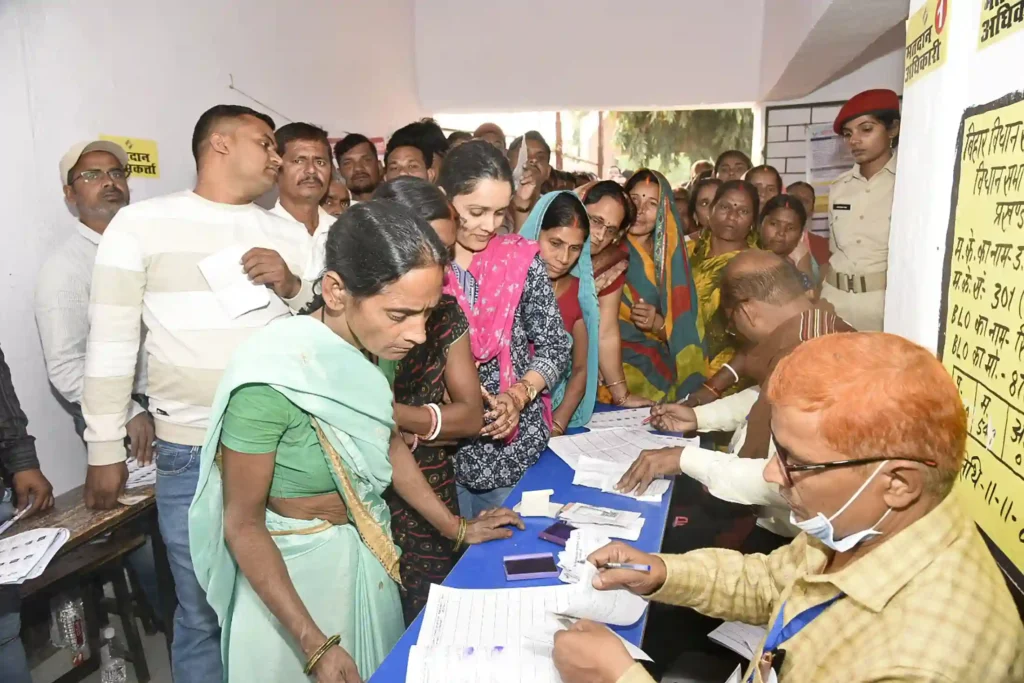
This year’s election saw an impressive voter turnout of 67.1%, signaling a high level of public engagement. A major portion of this enthusiasm was driven by women, first-time voters, and migrant returnees, many of whom played a critical role in the NDA win in Bihar. The high turnout reflected a desire for continuity, stability, and development, particularly in sectors like education, employment, infrastructure, and healthcare.
Why the NDA Win in Bihar Became Inevitable
Several political, social, and demographic factors converged to create a favorable landscape for the NDA. The alliance’s meticulous booth-level management and coordinated seat-sharing helped avoid internal vote splits. Additionally, consistent messaging by national and state leaders helped establish a cohesive narrative around development and stability.
1. Strong Alliance Coordination
In previous election cycles, internal conflicts and poor communication often cost alliances crucial seats. However, this time, the NDA allies showed unusual unity. The JD(U), BJP, and smaller allies aligned seamlessly, increasing their credibility and contributing significantly to the NDA win in Bihar.
2. Development and Welfare Schemes
Government initiatives related to housing, road connectivity, women’s empowerment, and digital inclusion resonated strongly with voters. Moreover, programs encouraging education for girls, skill development, and household support gained traction among rural families, ultimately improving the NDA’s acceptance across districts.
3. Youth and Women Voting Patterns
Women voters, in particular, emerged as a decisive force. Many credited the NDA government for improving safety, welfare, and economic opportunities, leading them to vote in higher numbers. Youth voters, who have long been concerned about migration and unemployment, saw renewed hope in the promises made by the alliance, further boosting the NDA win in Bihar.
Opposition’s Struggle: What Went Wrong for the MGB
While the Mahagathbandhan (MGB) mounted a spirited campaign, several challenges emerged that prevented them from turning momentum into votes.
1. Lack of Cohesive Messaging
Unlike the NDA, the opposition struggled to maintain a consistent message. Their campaign often focused on criticism rather than presenting a unified development roadmap, which weakened their position among undecided voters.
2. Internal Coordination Challenges
Seat-sharing disputes, candidate selection issues, and local-level disagreements created confusion within the MGB ranks. This fragmentation significantly limited their ability to compete with the NDA’s well-organized ground strategy.
3. Shift in Caste Dynamics
Bihar’s traditional caste-driven voting patterns saw noticeable shifts, especially among backward communities and women. These shifts weakened the opposition’s conventional support bases, further contributing to the NDA win in Bihar.
Regional Voting Trends Across Bihar
Different regions displayed varied but clear leanings toward the NDA. Urban regions responded strongly to the alliance’s development pitch, while rural areas appreciated welfare benefits and governance stability. The NDA won key constituencies in both north and south Bihar, reflecting widespread acceptance of its leadership.
Northern Bihar
Districts like Muzaffarpur, Darbhanga, and Sitamarhi saw high voter participation, with the NDA winning a large share of seats due to infrastructure improvements and proactive local outreach.
Southern Bihar
This region—which includes Gaya, Aurangabad, and Nalanda—showed strong support for Nitish Kumar and the NDA’s development agenda.
Central Bihar
Here, the alliance’s welfare programs, local job creation efforts, and education schemes contributed significantly to the NDA win in Bihar.
Impact of the NDA Win in Bihar on Future Governance
With an overwhelming mandate, the NDA is now positioned to implement long-term policy decisions confidently. The government is expected to prioritize:
- Rural and urban road expansion
- Job creation programs across districts
- Skill development initiatives for youth
- Safety and empowerment schemes for women
- Strengthening healthcare infrastructure
- Boosting digital access for remote regions
The results point to a period of political stability that could propel Bihar’s economic and social development.
National Impact: Bihar’s Role in India’s Political Landscape
The NDA win in Bihar will influence national political strategies, especially as major parties assess the dynamics of voter behavior ahead of future state and national elections. Furthermore, with Bihar being a politically significant state, the mandate provides significant momentum to the ruling alliance at the central level.
For the opposition, the election offers critical lessons in alliance-building, messaging, and grassroots mobilization. Many analysts believe that Bihar’s electoral trends could serve as a blueprint for future political strategies across the country.
Conclusion: A Defining Moment in Bihar’s Political Journey
The 2025 election verdict marks a defining shift in Bihar’s political equation. The NDA win in Bihar reflects a strong alignment between voter aspirations and government policy. As the alliance prepares for its next term, expectations are high for accelerated development and improved governance across the state.
Source: Election Commission of India
For more on current events, check out our full coverage on What Happened on Navale Bridge and stay updated on the latest developments.