
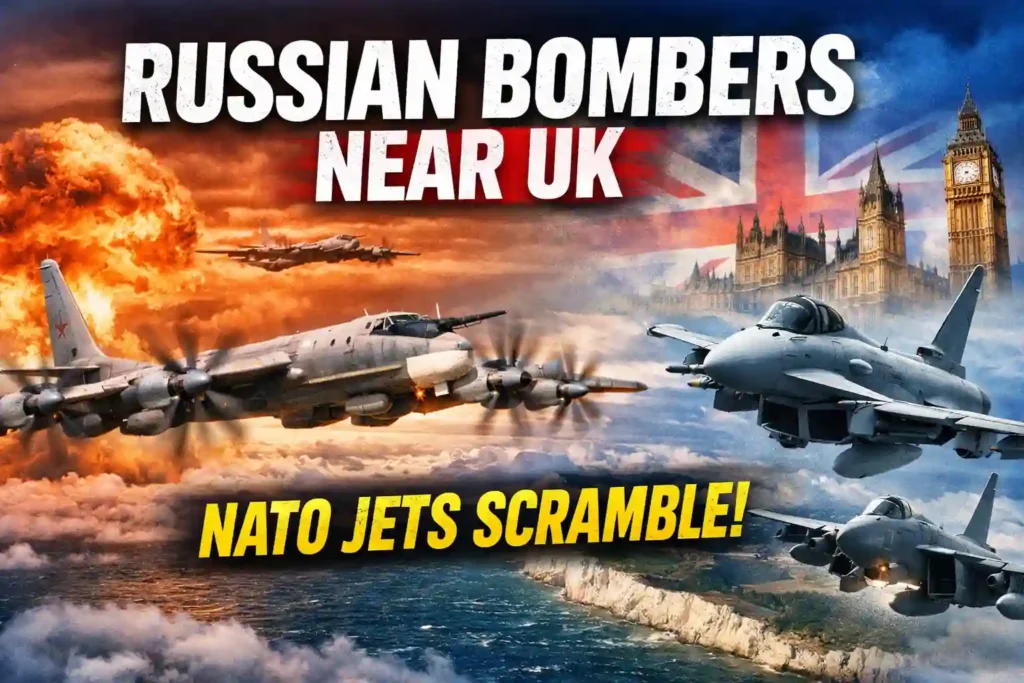
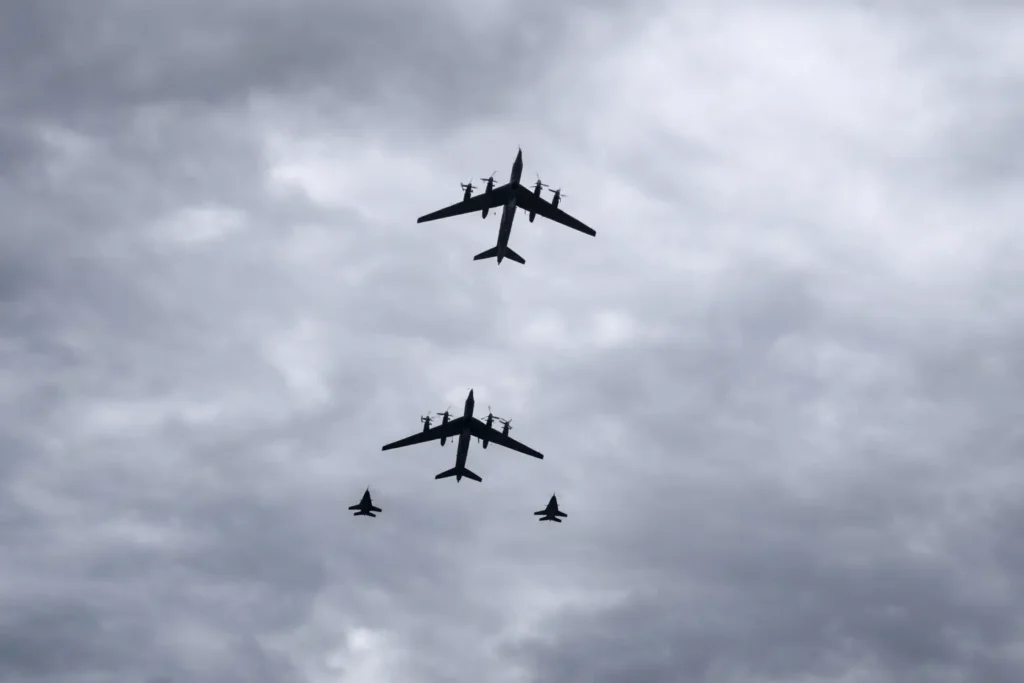
The sighting of Russian bombers near UK airspace on Christmas Day quickly sparked headlines and concern across Europe. As a result, strategic Tu-95 bombers—aircraft capable of carrying nuclear weapons—were detected flying near NATO’s northern approaches, prompting alliance fighter jets to scramble and closely monitor the situation.
According to official statements, however, the Russian aircraft remained over international waters and did not violate UK sovereign airspace. In such cases, interceptions are a routine part of NATO’s air-policing mission, which is designed to identify, track, and escort unidentified military aircraft approaching alliance boundaries.
According to reporting by UNN, NATO forces intercepted and monitored Russian nuclear-capable bombers over the Norwegian Sea as part of routine air-policing operations, underscoring how the alliance tracks and responds to military aircraft approaching NATO airspace without violating national boundaries.
Why NATO closely monitors Russian bomber flights
Security officials closely watch incidents involving Russian bombers near UK regions because of what the aircraft represent, not what they do in a single flight. Russia often uses the Tu-95—an aging but still operational long-range bomber—to demonstrate strategic reach and military readiness.
For NATO, intercepting these aircraft serves several purposes. Alliance forces confirm the aircraft’s identity, ensure flight safety, and send a clear signal that NATO protects its airspace. NATO officials repeatedly stress that these missions remain defensive and precautionary.
Military signaling, not an imminent threat
Security analysts say flights involving Russian bombers near UK airspace are best understood as military signaling. By flying long-range missions during symbolic periods like Christmas, Moscow highlights its strategic capabilities without crossing legal boundaries.
So far, investigators have found no evidence that the bombers carried nuclear weapons or prepared for an attack. NATO radar systems detected the aircraft early, and alliance fighters tracked and escorted them until they left the region.
What this means for NATO security going forward
The latest episode underscores how tense relations between Russia and NATO remain, even in the absence of direct confrontation. For the United Kingdom and its allies, the priority remains vigilance, coordination, and transparency to prevent miscalculation.
As long as geopolitical tensions persist, encounters involving Russian bombers near UK approaches are likely to continue. NATO’s response strategy aims to deter escalation while keeping communication channels open and avoiding unnecessary conflict.
faq
About the Author: GRV is a digital media writer and the creator of Dumbfeed, a platform dedicated to simplifying complex global and political news into clear, engaging, and family-friendly formats. He focuses on delivering accurate, easy-to-understand explanations that help readers stay informed without the noise. When he’s not writing, GRV creates video content and short-form news updates for social media.