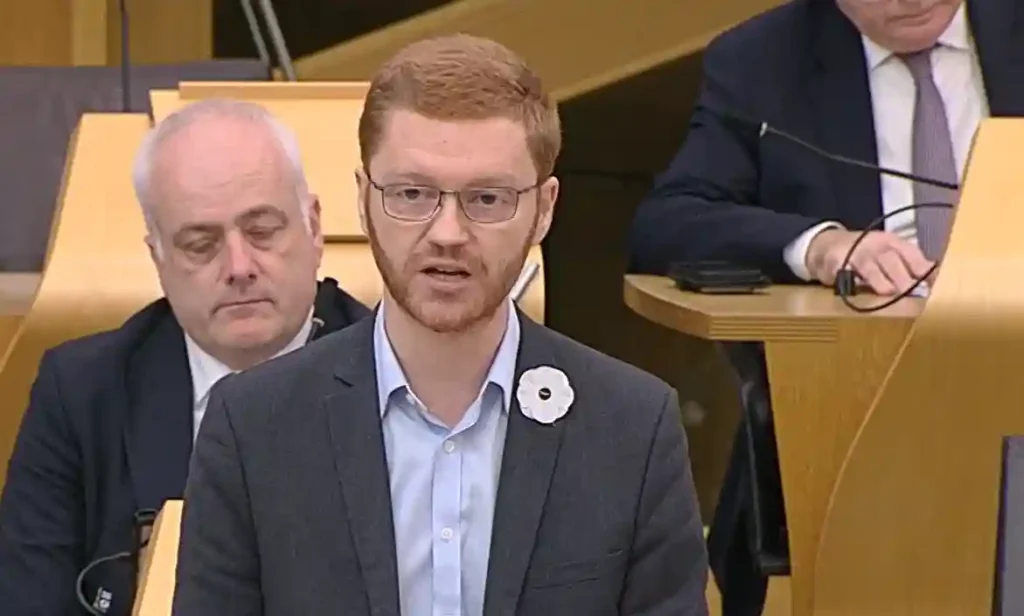
Scotland’s ongoing debate over Scotland wealth inequality intensified during a recent session of the Scottish Parliament, when Ross Greer of the Scottish Greens confronted First Minister John Swinney. As a result, the exchange drew renewed attention to a long-standing issue: the concentration of land and wealth in the hands of a very small number of individuals, while many households continue to struggle with basic living conditions. Consequently, the moment underscored how deeply inequality shapes everyday life across the country.
A Concentration of Land Ownership and Scotland Wealth Inequality
Ross Greer pointed out that around 420 landowners control nearly half of Scotland’s private land. In fact, this level of concentrated ownership has deep roots in Scotland’s history, shaped by aristocracy, inherited estates, and modern investment trusts. As a result, the significance of this concentration goes far beyond land use — it also symbolizes power, cultural influence, and long-standing generational privilege.
For many, Scotland wealth inequality is not only an economic reality, but also a structural one. Moreover, land ownership affects housing availability, rural development, environmental management, and even local decision-making. When so much land is held by so few, communities often feel excluded from shaping their own futures, therefore reinforcing generational disadvantage.
Childhood Poverty and Everyday Impact
Greer further contrasted this concentration of wealth with the lived reality of thousands of Scottish households. He argued that while a small elite hold assets they could not spend in multiple lifetimes, meanwhile, children are still going to school hungry. Additionally, reports from the Scottish Government highlight that the top 2% of wealth holders possess roughly the same amount of wealth as more than half of the population combined, which illustrates the scale of the imbalance.
As a result, this imbalance shapes health outcomes, educational access, and long-term opportunities. Ultimately, Scotland’s wealth inequality is not an abstract policy issue — it affects daily life, particularly for working-class families.
The Debate Over Wealth Taxation and Scotland Wealth Inequality
Greer criticized the Scottish Government for declining to implement several potential measures, despite having devolved tax powers. Among the proposals rejected were:
- Ending tax breaks for large private landholdings
- Introducing a mansion tax on high-value properties
- Removing personal tax exemptions granted to the monarchy
According to Greer, the government’s reluctance stems from fear of alienating influential landowners and high-income groups. As a result, he argued that meaningful reform requires an active willingness to shift political power away from entrenched wealth.
Swinney’s Position
John Swinney responded by emphasizing the need for balance and stability, noting that the government is currently reviewing its tax structures. However, Greer continued to push for clarity, asking the First Minister to name at least one confirmed and actionable measure to tax wealth before the next election — a question that, so far, remains unanswered.
The exchange highlights broader tensions in Scottish politics. On one hand, leaders aim to maintain economic competitiveness; on the other, they face growing demands for greater social fairness. At the same time, they must manage public pressure for reform without destabilizing key political alliances.
The Future of Scotland’s Wealth and Land Reform Debate and Scotland Wealth Inequality
Although the issue is not new, momentum is increasingly building. Younger voters, grassroots land rights organisations, and anti-poverty campaigners have begun to more actively prioritise Scotland wealth inequality in public debate. As conversations shift toward fairness, redistribution, and long-term sustainability, pressure continues to grow for the Scottish Government to commit to clear and enforceable reform.
Source: Official Scottish Parliament Session
For more on current events, check out our full coverage of The Iran Drinking Water Crisis at a Critical Point and stay updated on the latest developments.