
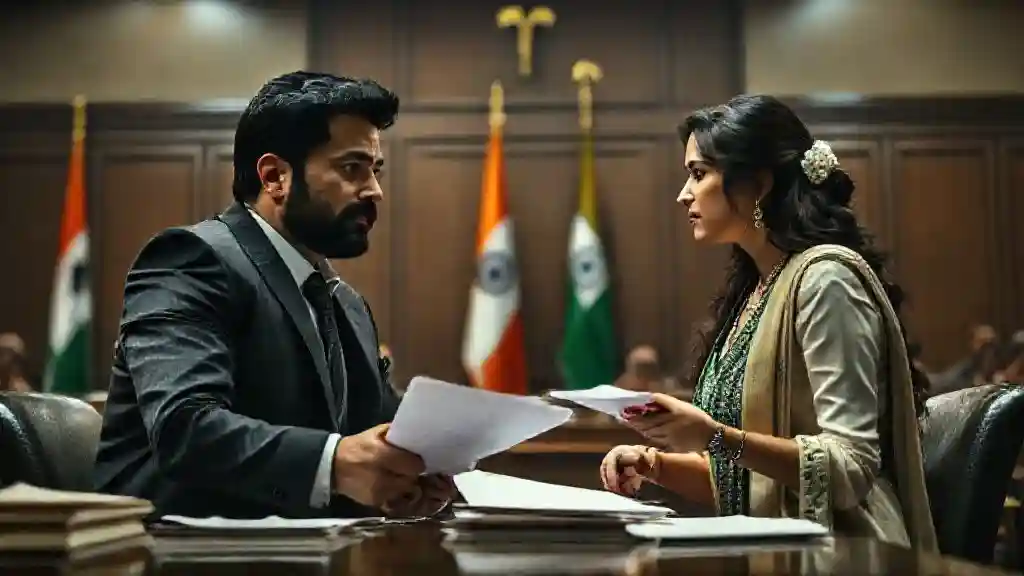
The Shah Bano Case movie Haq has sparked considerable discussion even before its official release. Directed by Suparn S. Varma and starring Emraan Hashmi and Yami Gautam, the film is billed as a fictionalised drama “inspired by” the landmark Mohd. Ahmed Khan v. Shah Bano Begum judgement of 1985.
What the Film Claims
The teaser and promotional material clearly state that, while the story draws from real‑life events, the filmmakers dramatized the characters, names, and some sequences for cinematic effect. For example, the lead female character goes by “Shazia Bano”—a fictionalised counterpart of Shah Bano Begum. This approach identifies the film as a Shah Bano Case movie without presenting it as a strict biopic.
What the Real Story Was in the Shah Bano Case Movie
The real case began in 1978 when Shah Bano Begum, a 62‑year‑old Muslim woman, filed for maintenance from her divorced husband. In 1985, the Supreme Court ruled under Section 125 of the Criminal Procedure Code that divorced women, including Muslims, could claim maintenance, prioritizing secular law over personal law. This Shah Bano Case movie draws inspiration from these events, highlighting key legal and social issues surrounding women’s rights.
Where Fiction Meets Fact
While the legal anchor is real, the film takes creative liberties in portraying characters, dialogues and narrative arcs. The disclaimer emphasises the story is an adaptation—not a documentary account. In other words, the film presents a dramatized version of a historic moment, rather than a line‑by‑line reenactment.
For viewers and critics, this means:
- Expect the central theme of the Shah Bano Case movie to be fairly accurate (i.e., a woman demanding equality through the courts).
- But anticipate fictionalised scenes, composite characters, and cinematic storytelling devices to heighten drama.
- Understand that certain personal details (character names, family situations, conversations) will not map exactly to real‑life persons or events.
Why the Shah Bano Case Movie Matters
As a Shah Bano Case movie, Haq is arriving at a time when questions about gender justice, uniform civil code, personal law vs. secular law are still relevant in India. The film’s resonance lies not just in recounting the past but in highlighting ongoing legal and social debates.
Legal & Ethical Considerations
Before its release, legal scrutiny targeted the Shah Bano Case movie. Shah Bano’s daughter filed a plea seeking to stay the film, claiming it misrepresented her mother’s life. The Madhya Pradesh High Court dismissed the petition, citing the film’s disclaimer and noting that the petitioner had alternate remedies under the Cinematograph Act. This highlights the importance of using disclaimers when adapting real‑life events, especially sensitive ones, in a Shah Bano Case movie.
Final Word on the Shah Bano Case Movie
If you’re planning to watch the Shah Bano Case movie Haq, go in with both appreciation and awareness: appreciate the courage to bring a landmark case to mainstream cinema; be aware that dramatic embellishments are part of the storytelling. The core truth remains—the fight for equal rights continues—but the film uses art to bring it alive.
Source: The Print
For more on current events, check out our full coverage of the Supreme Court ruled that Same-Sex Marriage is a constitutional right and stay updated on the latest developments.