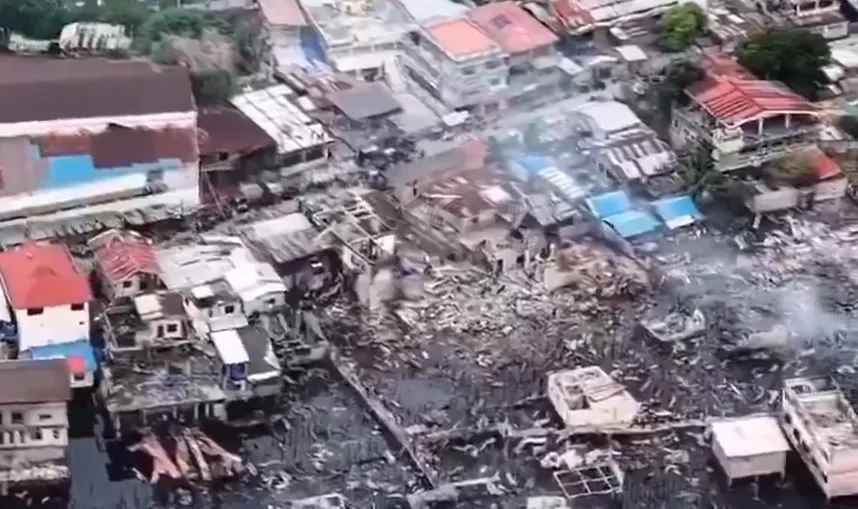
The Tawi-Tawi fire incident has left a deep scar on Barangay Lamion in Bongao, after a massive blaze tore through the coastal community and destroyed more than 1,000 homes in a matter of hours. Families were forced to flee with little more than the clothes they were wearing, as flames rapidly spread through densely packed houses.
While no fatalities have been officially reported, the scale of destruction has displaced thousands of residents and wiped out livelihoods built over decades. The incident is now being described as one of the most devastating fire disasters in Tawi-Tawi’s recent history.
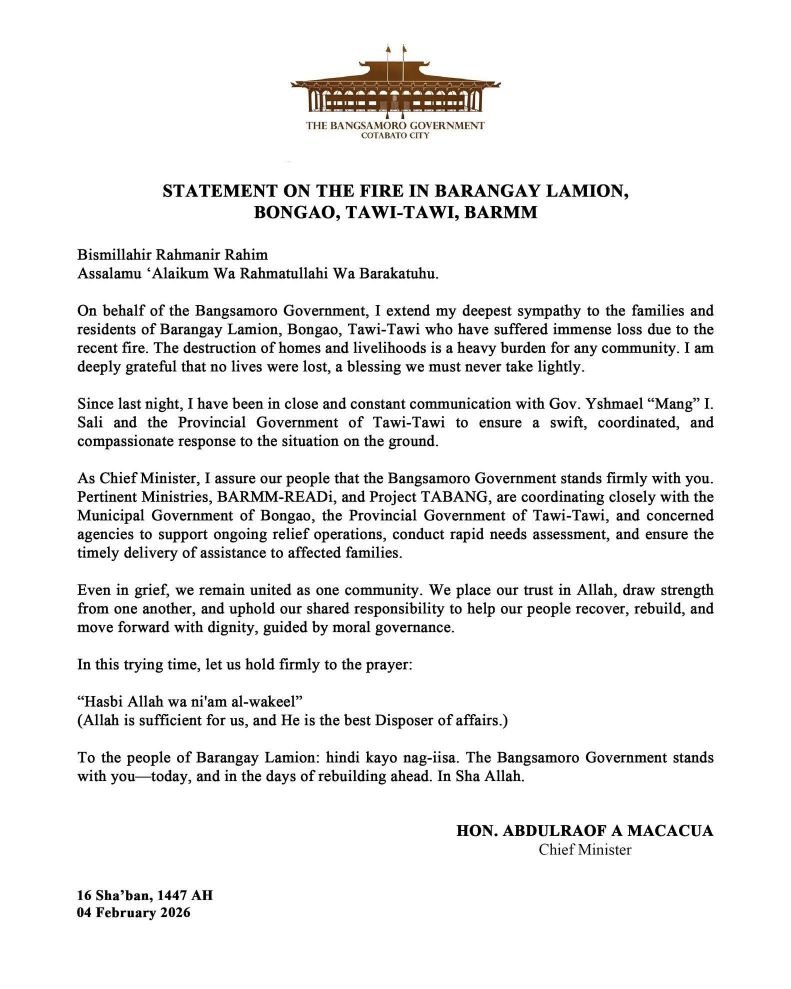
According to an official statement released by the Bangsamoro Government, authorities immediately coordinated with local and provincial officials to respond to the crisis and assist affected families.
What happened during the Tawi-Tawi fire incident?
According to initial reports, the fire broke out in Barangay Lamion, a residential area in Bongao, the capital municipality of Tawi-Tawi. As a result, strong winds, closely built wooden houses, and limited access routes allowed the flames to spread rapidly, eventually overwhelming local firefighting efforts.
According to residents, scenes of panic unfolded as flames jumped from house to house within minutes. In many cases, people fled without salvaging belongings, documents, or valuables. Eventually, firefighters managed to contain the blaze; however, by then, it had already reduced entire blocks to rubble and ash.
Authorities have not yet confirmed the exact cause of the Tawi-Tawi fire incident and are investigating whether an electrical fault, an open flame, or another source triggered the fire.
Government response and relief operations
Following the Tawi-Tawi fire incident, the Bangsamoro Government issued an official statement expressing deep sympathy to affected families and confirming that no lives were lost, a fact described as a blessing amid the devastation.
Key actions taken include:
- Immediate coordination with the Provincial Government of Tawi-Tawi and the Municipal Government of Bongao
- Activation of relief and emergency response teams
- Deployment of BARMM-READi and Project TABANG to assist in relief distribution
- Conducting rapid needs assessments for food, shelter, and medical support
The government assured residents that assistance would continue not just during the emergency phase, but throughout the recovery and rebuilding process.
Human impact: families displaced, livelihoods destroyed
Beyond the numbers, the Tawi-Tawi fire incident represents thousands of personal tragedies. The fire reduced homes that once sheltered generations to ashes. Families lost small businesses, fishing equipment, household savings, and important documents.
As a result, many affected families are now staying in temporary shelters or with relatives, while remaining uncertain about when or how they will rebuild. Meanwhile, for daily wage earners and informal workers, the fire has also meant an abrupt loss of income.
Community leaders and aid groups have emphasized the urgent need for:
- Temporary housing and shelter materials
- Food and clean water
- Clothing and hygiene kits
- Psychosocial support, especially for children
Why fires are especially dangerous in coastal communities
The Tawi-Tawi fire incident highlights a long-standing vulnerability in many coastal and island communities across the Philippines. Factors that increase fire risk include:
- Densely packed housing made of light materials
- Limited fire hydrants and water access
- Narrow pathways restricting emergency vehicles
- Electrical connections that may be unsafe or overloaded
Experts say addressing these risks requires not just emergency response, but long-term urban planning, fire safety education, and infrastructure investment.
What happens next after the Tawi-Tawi fire incident?
In the coming weeks, authorities are expected to release a full damage assessment and outline rehabilitation plans. This may include:
- Housing reconstruction programs
- Financial aid or livelihood assistance
- Review of local fire safety regulations
- Disaster preparedness training at the barangay level
For now, relief efforts remain focused on meeting the immediate needs of families affected by the Tawi-Tawi fire incident.
FAQ
About the Author: GRV is a digital media writer who created Dumbfeed, a platform that simplifies complex global and political news into clear, engaging, and family-friendly formats. He delivers accurate, easy-to-understand explanations that help readers stay informed without the noise. When he’s not writing, GRV produces video content and short-form news updates for social media.