US Venezuela Tensions Escalate at Sea
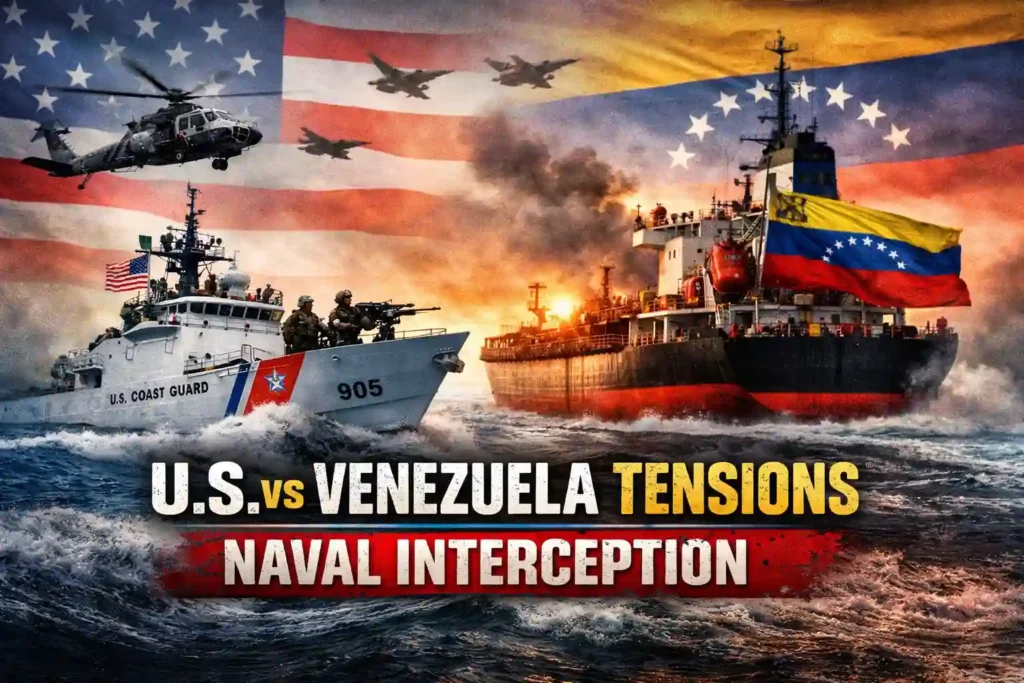
US Venezuela tensions have escalated sharply after the United States intercepted and took control of a third vessel operating near Venezuela’s coast. U.S. officials say the interception occurred in international waters and forms part of a broader effort to enforce sanctions targeting Venezuela’s oil exports.
American authorities say the vessel attempted to bypass U.S. sanctions targeting Venezuela’s energy sector. The interception follows two similar maritime actions earlier in the week, signaling a deliberate and coordinated enforcement strategy rather than an isolated move.
U.S. officials have publicly defended the move, stating that sanctions enforcement at sea is necessary to prevent revenue flows that, in Washington’s view, support Venezuela’s current leadership. Statements released by U.S. officials said the interception was part of ongoing sanctions enforcement targeting vessels suspected of transporting Venezuelan oil, as confirmed by the U.S. Department of Homeland Security in an official statement shared on its verified X account.
Why the Third Interception Matters
The interception of a third vessel significantly deepens US Venezuela tensions because it signals a shift toward more assertive maritime enforcement. While sanctions on Venezuelan oil have existed for years, physically boarding or taking control of vessels represents a higher-risk step that carries diplomatic and security implications.
Shipping and energy analysts warn that repeated interceptions could disrupt commercial shipping routes in the Caribbean and northern South America. Authorities may subject even vessels with no direct links to Venezuela to greater scrutiny, higher insurance costs, and operational delays. As a result, the broader maritime industry is closely monitoring whether these enforcement actions become routine.
From Venezuela’s perspective, the incident reinforces long-standing accusations that the United States is exceeding its authority. Venezuelan officials have condemned the interception, labeling it an act of maritime aggression and warning that such actions could destabilize the region. These competing narratives continue to fuel US Venezuela tensions both at sea and in diplomatic channels.
Legal, Diplomatic, and Regional Fallout
Beyond the immediate seizure, US Venezuela tensions now extend into complex legal and diplomatic territory. The fact that the interception reportedly occurred in international waters has prompted debate among legal experts about the limits of unilateral sanctions enforcement. While the United States argues that sanctions laws allow such actions, critics question whether international maritime law fully supports them.
Diplomatically, the situation could draw in regional actors and international organizations. Venezuela has hinted that it may raise the issue at global forums, while some neighboring countries urge restraint to prevent escalation. At the same time, U.S. officials have signaled that they may carry out further interceptions if vessels violate sanctions.
Taken together, the third vessel interception suggests that US Venezuela tensions are entering a more volatile phase. Unless diplomatic channels reopen or enforcement strategies shift, similar incidents could continue, increasing the risk of miscalculation and long-term regional instability.