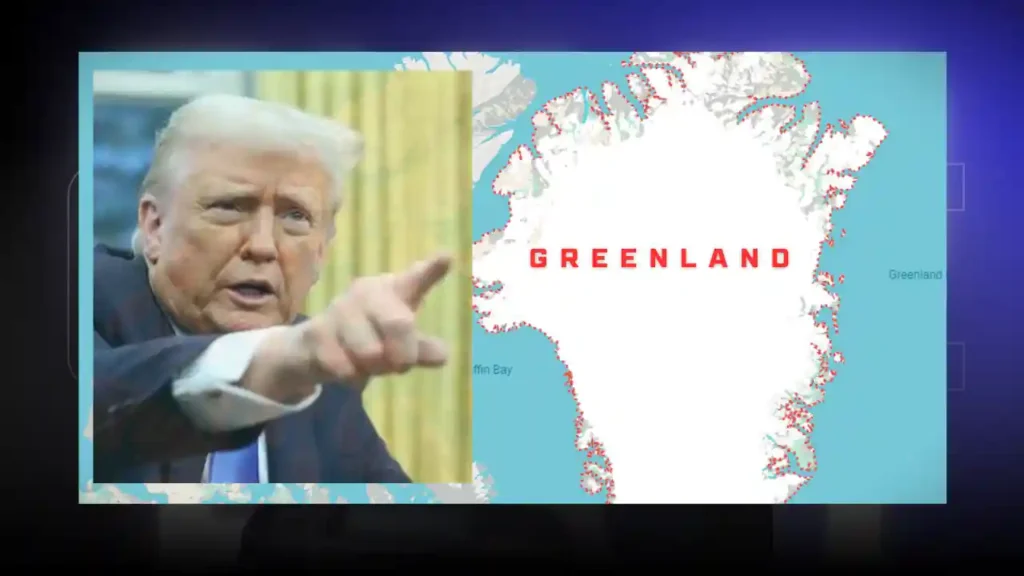
The Greenland strategic importance debate has moved from the background of geopolitics to the center of global security discussions. Once seen mainly as a remote, ice-covered island, Greenland now sits at the intersection of military strategy, resource competition, and shifting international power dynamics.
This growing attention is not accidental. It reflects deeper changes in how major powers view the Arctic, global supply chains, and long-standing alliances.
Greenland’s Political Status and Strategic Geography
Greenland is a self-governing territory within the Kingdom of Denmark. It controls most domestic matters. Denmark retains authority over foreign policy, defense, and currency. Despite its small population, Greenland’s strategic importance comes mainly from geography, not demographics.
Greenland lies between North America and Europe. It sits along key transatlantic air and maritime routes. During the Cold War, this position made Greenland vital for missile early warning systems. That relevance has returned as Arctic security concerns grow. Melting ice is opening new sea lanes. This shift is increasing military and commercial activity across the region.
Security analysts say Greenland stands at the center of Arctic geopolitics. Its location links North American defense with European security frameworks. As a result, NATO has reinforced Greenland’s role in strategic planning. Rising tensions between major powers have added urgency to this focus.
A detailed analysis of Greenland’s role in Arctic geopolitics and global security can be found in this explainer by the Belfer Center at Harvard University.
Military Presence and Arctic Security
In practice, the United States operates key defense infrastructure in Greenland. These facilities, established under long-standing agreements with Denmark, play a critical role in regional security. For example, they include radar systems used for missile early warning and space surveillance.
As tensions between major powers rise, the Arctic has re-emerged as a strategic arena. Russia has expanded military infrastructure along its Arctic coastline. China has declared itself a “near-Arctic state.” It has also increased research and economic engagement in the region.
Greenland itself remains lightly militarized. However, its role within NATO’s defense architecture is critical. This position makes it central to Arctic and transatlantic security planning.
Rare Earth Minerals and Economic Leverage
Beyond military considerations, Greenland’s mineral potential adds another layer to its strategic value. The island is believed to hold significant deposits of rare earth elements used in renewable energy technologies, electronics, and defense systems.
At a time when many countries seek to reduce dependence on Chinese supply chains, Greenland’s resources have attracted interest from Western governments and private investors alike. While mining projects face environmental, political, and economic hurdles, the long-term implications remain substantial.
This resource dimension reinforces why Greenland strategic importance is no longer limited to defense alone—it also intersects with economic security and technological independence.
Greenland Strategic Importance Behind US Interest and Diplomatic Tensions
Meanwhile, the debate over Greenland gained global attention when Donald Trump openly expressed interest in acquiring the territory during his presidency. Although Denmark and Greenland firmly rejected the idea, the episode nonetheless highlighted a shift in how major powers view Greenland’s strategic importance.
European leaders viewed the rhetoric less as a literal proposal and more as a signal of changing geopolitical behavior—one that prioritizes strategic assets, leverage, and national interest over traditional diplomatic norms.
This moment contributed to broader European concerns about predictability and trust within transatlantic relations, particularly when security interests overlap with sovereignty issues.
What Greenland Strategic Importance Represents in Today’s Global Security Landscape
Ultimately, Greenland’s role reflects a larger global trend. Strategic geography, once considered stable, is being re-evaluated as climate change, technological competition, and great-power rivalry reshape international priorities.
Greenland is not just about ice, population size, or historical ties. Instead, it reflects how global security thinking is evolving. As a result, even remote regions are becoming central to future power dynamics.
FAq
About the Author: GRV is a digital media writer who created Dumbfeed, a platform that simplifies complex global and political news into clear, engaging, and family-friendly formats. He delivers accurate, easy-to-understand explanations that help readers stay informed without the noise. When he’s not writing, GRV produces video content and short-form news updates for social media.