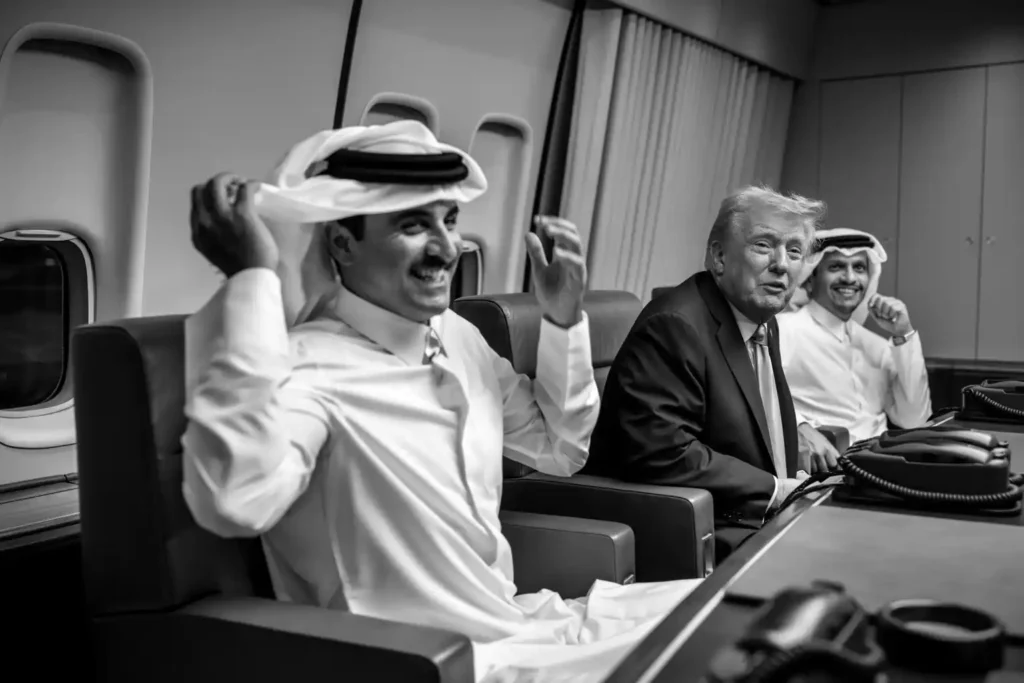
Over the past two decades, Qatar influence in America has grown quietly but significantly. From billion-dollar investments and defense deals to university funding and lobbying efforts in Washington, the small Gulf state has built an outsized presence in the United States. Supporters call it normal economic partnership. Critics argue it represents one of the most sophisticated foreign influence campaigns operating in plain sight.
So what is really happening? Is Qatar simply investing in the U.S. economy — or strategically shaping American politics, institutions, and public discourse?
A Growing Debate Around Qatar Influence in America
The debate intensified after investigative reporting suggested that Qatar has directed tens of billions of dollars into the U.S. ecosystem through a mix of business investments, political advocacy, academic partnerships, and media outreach. One widely circulated investigation estimated that when all channels are combined, Qatar-linked spending connected to the United States approaches $100 billion, though this figure is not an official government total.
Importantly, that number blends direct influence activities with legitimate commercial investments, which has fueled disagreement about how the spending should be interpreted.
According to an investigative report by The Free Press, Qatar has spent nearly $100 billion across lobbying, universities, media, and corporate spending in the United States — fueling debate over Qatar’s influence in America.
Lobbying and Political Access in Washington
One of the most direct forms of Qatar influence in America, however, is lobbying. Under U.S. law, for this reason, foreign governments are required to register their lobbying and public relations efforts under the Foreign Agents Registration Act (FARA). Accordingly, public filings indicate that Qatar has spent hundreds of millions of dollars over recent years on registered lobbying firms, law firms, and strategic communications agencies. As a result, these disclosures provide insight into how foreign governments legally seek political access and policy engagement in Washington.
These efforts focus on:
- Maintaining strong defense and security ties
- Shaping U.S. policy toward the Middle East
- Countering criticism related to terrorism financing allegations
- Managing diplomatic disputes with regional rivals
While the amounts are substantial, they remain far below the multi-billion-dollar figures sometimes cited in public debates. However, critics argue that formal lobbying is only one layer of influence.
Universities and Academic Funding
Among the various channels of influence, perhaps the most controversial aspect of Qatar influence in America involves higher education. In particular, over the past several years, Qatar has steadily emerged as one of the largest foreign funders of U.S. universities, largely through grants, academic partnerships, and overseas campus programs.
Several elite American universities operate branch campuses in Doha under long-term funding arrangements backed by Qatar-based foundations. Additionally, U.S. Department of Education data shows that American universities have reported billions of dollars in Qatari-linked funding over the past two decades.
Supporters say these partnerships expand global education and research opportunities. Critics worry that:
- Large donations may shape research priorities
- Universities may self-censor criticism of Qatar
- Some foreign funding has been under-reported or disclosed late
These concerns have prompted congressional inquiries and calls for tighter transparency rules.
Think Tanks, Media, and Soft Power
Beyond academia, Qatar influence in America also extends into think tanks, conferences, and media engagement. In particular, funding for policy research, expert panels, and public events allows Qatar to participate directly in shaping elite foreign-policy discussions. Moreover, these platforms offer opportunities to influence narratives among policymakers and experts. At the same time, critics argue that such involvement blurs the line between open dialogue and strategic soft-power projection.
Media influence is more indirect. Rather than buying U.S. outlets outright, Qatar relies on:
- Strategic communications firms
- Sponsored content and advertising
- High-profile partnerships and interviews
- Global media networks that reach U.S. audiences
This approach reflects a broader soft-power strategy, aimed at shaping narratives rather than passing legislation.
Investment vs. Influence: Where Is the Line?
A critical question in the debate over Qatar influence in America is whether investment itself equals influence.
Qatar’s sovereign wealth fund has invested heavily in:
- U.S. real estate
- Energy infrastructure
- Financial institutions
- Technology and manufacturing
These investments support American jobs and markets, and U.S. officials often welcome them. However, critics argue that when economic ties become deep enough, they can:
- Create political reluctance to confront Qatar
- Encourage favorable policy decisions
- Limit scrutiny of controversial actions
The truth likely lies somewhere in between: not all investment is influence, but sustained financial presence can create leverage over time.
Why U.S. Authorities Are Paying Attention
U.S. lawmakers and regulators have increasingly focused on foreign influence, not just from Qatar but globally. Recent efforts include:
- Stronger enforcement of FARA rules
- Increased scrutiny of foreign donations to universities
- Calls for transparency in think-tank funding
Qatar is not unique in pursuing influence abroad — many nations do — but the scale, coordination, and diversity of its U.S. engagement have made it a focal point.
The Bigger Picture
Ultimately, Qatar influence in America reflects a changing global order where money, media, and diplomacy increasingly intersect. For Qatar, influence functions not merely as outreach but as a form of long-term security. However, for the United States, the challenge lies in balancing openness to foreign investment while, at the same time, protecting its political institutions from undue external sway. Therefore, the debate is less about whether engagement should exist and more about how transparency and oversight are maintained.
As scrutiny grows, transparency — not speculation — will determine whether Qatar’s expanding footprint is viewed as partnership, pressure, or something in between.
FAQ
About the Author: GRV is a digital media writer who created Dumbfeed, a platform that simplifies complex global and political news into clear, engaging, and family-friendly formats. He delivers accurate, easy-to-understand explanations that help readers stay informed without the noise. When he’s not writing, GRV produces video content and short-form news updates for social media.