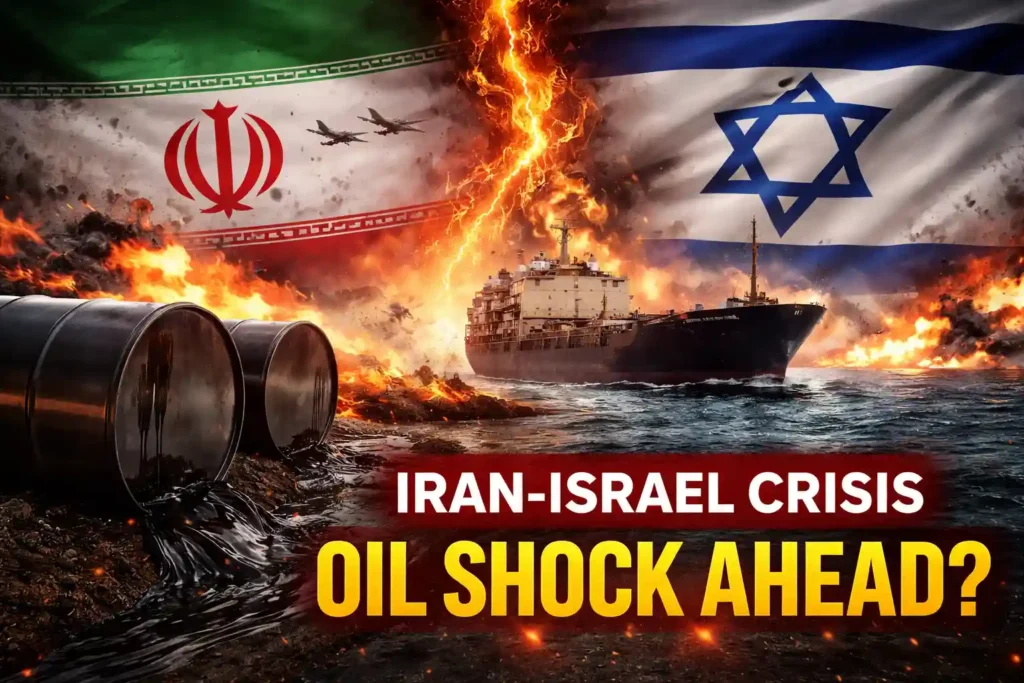
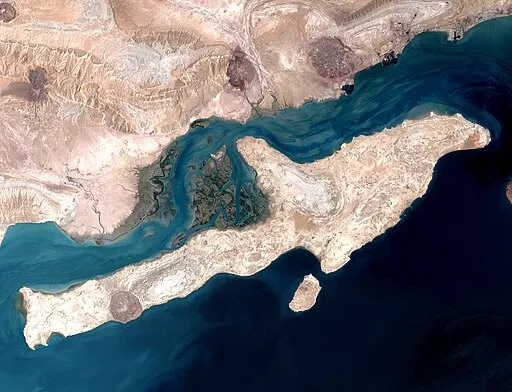
Few places on Earth hold as much power over the global economy as a narrow stretch of water between Iran and Oman. The Strait of Hormuz, only about 33 kilometers wide at its narrowest point, carries nearly a fifth of the world’s oil supply every single day.
This is precisely why, whenever tensions rise in the Middle East, energy markets and world leaders immediately begin watching this chokepoint closely. More importantly, any disruption here would not remain a regional issue; instead, it could rapidly ripple through global energy prices, shipping routes, and geopolitics within days.
What Is the Strait of Hormuz and Why Is It Important?
The Strait of Hormuz connects the Persian Gulf with the Gulf of Oman and the wider Arabian Sea, serving as the primary maritime gateway for oil exports from major producers such as Saudi Arabia, Iraq, Kuwait, the United Arab Emirates, and Iran.
According to the U.S. Energy Information Administration, roughly 20% of global petroleum consumption passes through the strait daily. Because of this, the strait is often described as the world’s most critical oil chokepoint.
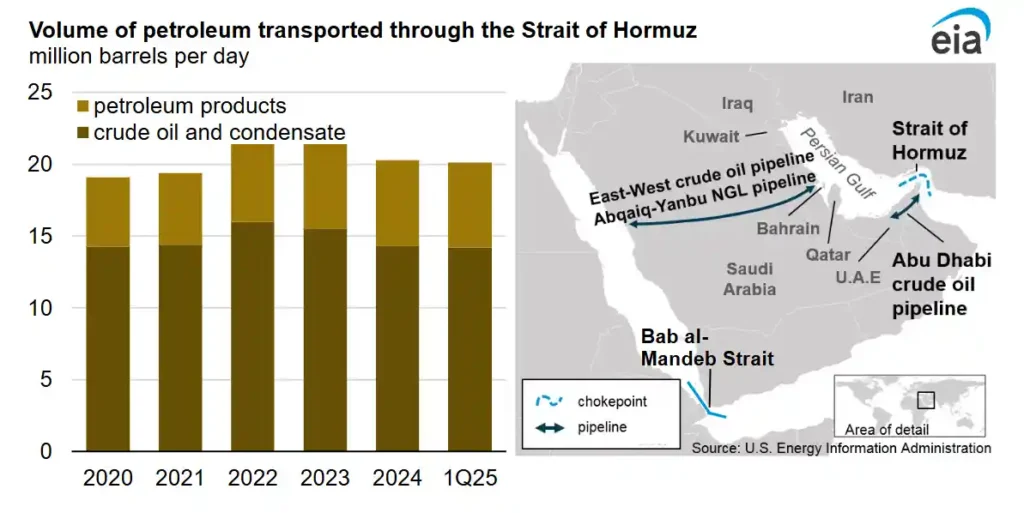
Source: U.S. Energy Information Administration (EIA)
Tankers transporting crude oil, liquefied natural gas (LNG), and other energy resources rely on this narrow corridor. Even small disruptions — such as tanker seizures or military confrontations — can send oil prices surging. Beyond energy, the strait also carries commercial shipping linking Asia, Europe, and the Middle East.
Who Controls the Strait of Hormuz?
Geographically, the Strait of Hormuz lies between Iran to the north and Oman and the United Arab Emirates to the south. However, control of the strait is far more complicated than simple geography. Several powers influence the region:
Iran
Iran controls the northern coastline and has historically threatened to close the strait during periods of heightened tension.
Gulf Arab States
Countries like Saudi Arabia and the UAE rely heavily on the strait for exporting oil, making its security vital for their economies.
The United States and Western Navies
For decades, the United States Navy and its allied forces have maintained a significant presence in the region to ensure freedom of navigation. However, despite this military presence, the strait is not controlled by any single country. Instead, it operates under widely recognized principles of international maritime law.
Legal Status Under International Law
The Strait of Hormuz is classified as an international strait under the United Nations Convention on the Law of the Sea (UNCLOS). This classification is crucial because, under international law, ships and aircraft from all nations therefore retain the right of “transit passage” through straits used for global navigation. Consequently, commercial and military vessels are allowed to move through the passage without obstruction.
This means:
- Countries bordering the strait cannot block international shipping.
- Military and civilian vessels are allowed to pass continuously and quickly.
- Coastal states may regulate safety but cannot obstruct transit.
Interestingly, Iran has not fully ratified UNCLOS, which sometimes complicates legal interpretations. However, most maritime powers still consider transit rights through the strait to be customary international law.
Can Iran Legally Block the Strait?
Legally speaking, Iran cannot close the Strait of Hormuz to international shipping under widely accepted maritime law. However, legality and reality in geopolitics are often two different things. Iran has repeatedly threatened to block the strait during conflicts or sanctions disputes. Historically, it has used other tactics instead:
- Harassing oil tankers
- Seizing vessels
- Deploying naval mines
- Conducting military exercises near shipping lanes
These actions stop short of a formal closure but can still disrupt traffic and create uncertainty in energy markets.
Practical Reality: Power vs Law
Even though international law protects navigation through the Strait of Hormuz, enforcement ultimately depends on military power. The region hosts one of the world’s most heavily militarized maritime zones.
Key actors include:
- The U.S. Fifth Fleet based in Bahrain
- Iranian Revolutionary Guard naval forces
- Gulf Arab naval patrols
- European maritime security missions
If Iran attempted to physically block the strait, it would likely trigger a rapid international response. Western naval forces maintain the capability to reopen shipping lanes, though such a confrontation could escalate into a wider regional conflict.
Because of this, most analysts believe a complete closure of the strait is unlikely, but partial disruptions remain a constant risk.
Why the Strait Matters Geopolitically
The strategic importance of the Strait of Hormuz goes far beyond shipping routes. It sits at the center of several overlapping geopolitical rivalries:
Iran vs Gulf Arab States
Regional competition between Iran and Saudi Arabia shapes much of the tension surrounding the strait.
Iran vs the United States
Sanctions, nuclear negotiations, and military incidents often spill into maritime security in the Gulf.
Global Energy Security
Major economies such as China, India, Japan, and South Korea depend heavily on oil shipments passing through Hormuz. Any disruption could cause immediate energy shocks worldwide. This is why the strait often appears at the center of discussions about global energy security and strategic chokepoints.
Possible Global Consequences of a Hormuz Crisis
A serious disruption in the Strait of Hormuz could trigger several cascading effects:
Oil price spikes
Energy markets could see dramatic price surges within hours.
Shipping insurance surges
Insurance costs for tankers traveling through the Gulf would skyrocket.
Global economic pressure
Energy-importing nations could face inflation and supply disruptions.
Military escalation
Naval confrontations in the Gulf could draw multiple powers into a broader conflict.
Even the threat of closure can rattle markets and political alliances.
Conclusion
The Strait of Hormuz remains one of the most strategically important waterways on the planet. Indeed, its narrow geography concentrates immense economic and political power into a small maritime corridor. As a result, even minor tensions in this region can quickly trigger global economic and geopolitical consequences.
Legally, no country has the right to close it. In practice, however, the strait sits at the crossroads of regional rivalries, military power, and global energy dependence. That combination is precisely why every escalation in the Middle East raises the same question in capitals around the world:
What happens if the Strait of Hormuz is disrupted? For the global economy, the answer could be immediate and far-reaching.