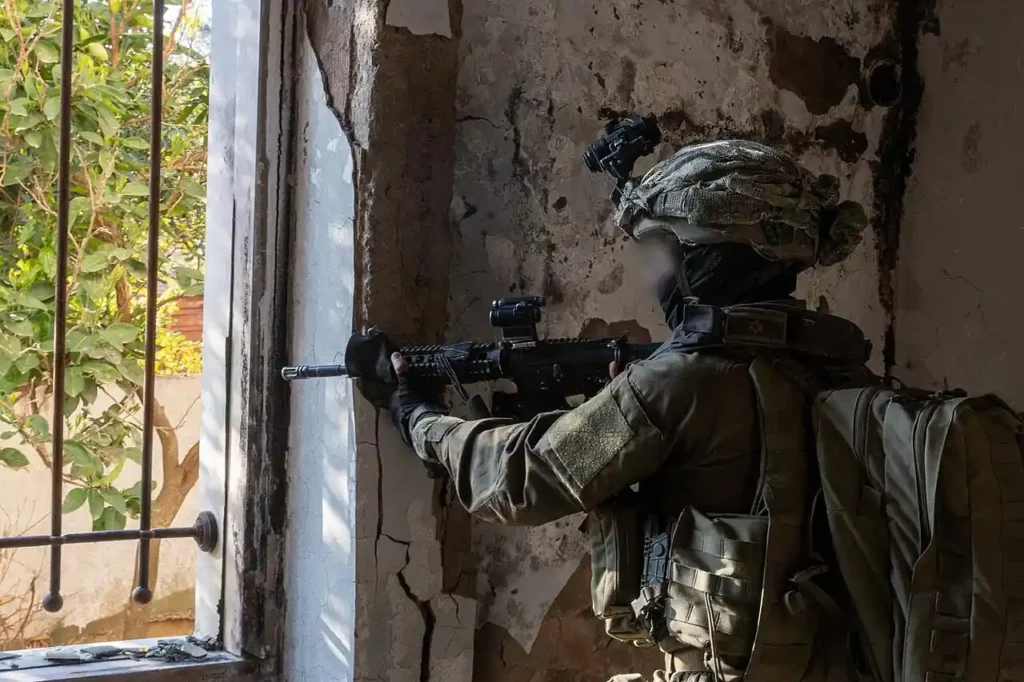
For years, tensions between Washington and Tehran have simmered just below the boiling point. But the moment “boots on the ground” enters the conversation, everything changes. A US Iran war is no longer a distant geopolitical risk—it becomes a global turning point with consequences far beyond the battlefield. This is not just another Middle East conflict. It is a scenario that could reshape alliances, disrupt economies, and redraw the strategic map of the 21st century.
According to analysis by the Atlantic Council, the consequences of the US Iran war are likely to extend far beyond Iran, impacting the entire region and global stability. You can read the full expert breakdown here:
Background: A Long Road to Confrontation
The hostility between the United States and Iran stretches back decades, rooted in ideological rivalry, sanctions, and proxy conflicts across the Middle East. From nuclear tensions to maritime incidents in the Persian Gulf, both sides have carefully avoided full-scale war—until now.
Iran has built a strategy centered on asymmetric warfare, relying on regional allies and proxies rather than conventional military parity. Meanwhile, the United States has maintained overwhelming technological and air superiority.
However, analysts have long warned that a ground invasion would fundamentally alter this balance. According to a report by the Atlantic Council, occupying Iran would require a massive military commitment and could trigger prolonged insurgency dynamics.
Current Developments: The Shift to Ground War
A shift toward ground operations signals a decisive escalation in the US Iran war. Airstrikes and naval maneuvers, while dangerous, remain limited in scope. Ground troops, on the other hand, represent intent to control territory—something Iran is prepared to resist at all costs.
Iran’s geography alone presents a formidable challenge. Its mountainous terrain, dense urban centers, and vast landmass make rapid occupation unlikely. Even if initial objectives are achieved, holding territory would require sustained deployment and long-term commitment.
At the same time, Tehran is unlikely to confine the conflict within its borders. Its military doctrine emphasizes expanding the battlefield, ensuring that any invasion triggers consequences across the region.
Regional Escalation: A Multi-Front Conflict
The most immediate impact of a ground invasion would be the activation of Iran’s regional network. Groups aligned with Tehran across Iraq, Lebanon, Syria, and Yemen could open multiple fronts simultaneously.
This transforms the US Iran war into a broader Middle East conflict:
- Armed groups in Iraq could target U.S. bases
- Hezbollah could escalate tensions with Israel
- Houthi forces could intensify attacks on shipping routes
- Syria could become another active theater
The result is a cascading conflict where a single invasion sparks multiple wars, stretching military resources and increasing unpredictability.
Economic Shock: The Strait of Hormuz Factor
No analysis of this conflict is complete without considering the Strait of Hormuz—a narrow waterway through which a significant portion of global oil supply passes. Iran has repeatedly signaled its ability to disrupt this route. Even limited interference could send oil prices soaring, triggering inflation and economic instability worldwide. For energy-dependent economies, including India and much of Europe, the consequences would be immediate. Supply chains would tighten, fuel costs would spike, and global markets could face sustained volatility.
Global Power Dynamics: Beyond the Middle East
A ground invasion would not occur in a vacuum. Major powers such as Russia and China would closely monitor—and likely influence—the trajectory of the conflict. While direct military confrontation remains unlikely, indirect involvement is a different story:
- Diplomatic backing for Iran
- Economic support to offset sanctions
- Strategic positioning to exploit U.S. distraction
This introduces a broader geopolitical dimension, where the US Iran war becomes part of a larger contest between global powers.
Hybrid Warfare: Beyond Conventional Battlefields
Modern conflicts are rarely confined to physical battlegrounds. In this case, cyber warfare, drone attacks, and covert operations would play a critical role. Iran has demonstrated capabilities in cyber operations and asymmetric tactics. U.S. infrastructure, allied networks, and critical systems could all become targets. This expands the war into a multi-domain conflict, where economic systems, digital infrastructure, and civilian life are directly affected.
The Nuclear Shadow
Although still a low-probability scenario, the risk of nuclear escalation cannot be ignored. Any perception of existential threat could push actors toward extreme measures. Even without actual use, the mere possibility of nuclear escalation would heighten global tensions and force rapid diplomatic intervention.
Possible Global Consequences
If ground forces are deployed, the consequences would extend far beyond Iran:
- Global recession risk due to energy disruption
- Rising inflation driven by oil price spikes
- Supply chain breakdowns affecting multiple industries
- Long-term military entanglement for the U.S.
What begins as a regional conflict could quickly evolve into a global crisis with lasting economic and political effects.
Conclusion: A War That Won’t Stay Contained
The introduction of ground troops into Iran is not just a tactical shift—it is a strategic turning point. It signals a move from limited confrontation to full-scale conflict with global implications. A US Iran war involving boots on the ground would likely resist quick resolution. Instead, it risks becoming a prolonged, multi-front conflict with no clear endpoint. In geopolitics, some lines, once crossed, cannot be uncrossed. A ground invasion of Iran may be one of them.