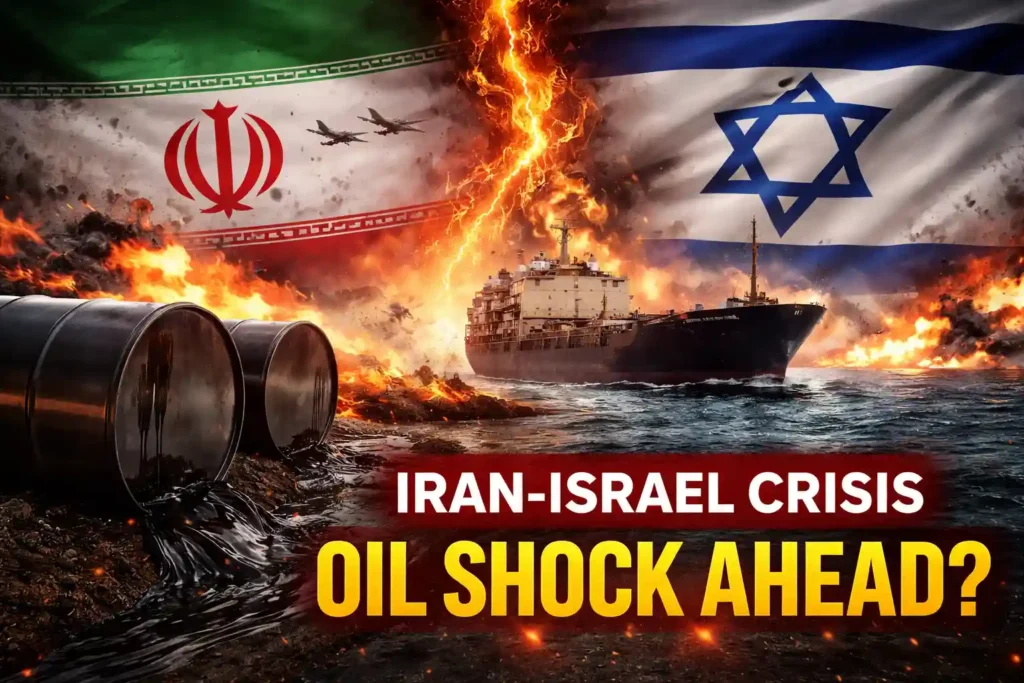
The possibility of an Iran war oil crisis is once again haunting global energy markets. As tensions between Iran and Israel intensify, analysts and policymakers are increasingly asking a troubling question: could this confrontation trigger a major disruption in global oil supply? History shows that conflicts in the Middle East rarely stay confined to the battlefield — they often spill into the world’s most sensitive energy markets.
With nearly a third of global oil production located in the region, even the risk of escalation can send oil prices soaring. If the current confrontation between Iran and Israel spirals further, the consequences could ripple through economies from Europe to Asia.
Why the Iran War Oil Crisis Is a Real Concern
The term Iran war oil crisis is being discussed more frequently among energy analysts because the Middle East remains central to the global oil system. The region produces a huge share of the world’s crude, and any conflict involving Iran — one of the region’s most strategically positioned countries — carries global implications.
One of the biggest concerns is the Strait of Hormuz, a narrow maritime corridor through which about 20% of the world’s oil supply passes every day. Because of this strategic importance, any escalation in regional tensions immediately raises alarm in global energy markets. If shipping through this route were disrupted, even temporarily, oil markets could react rapidly, pushing prices upward and increasing volatility across global energy trading.
According to energy market data from the International Energy Agency (IEA), geopolitical risks in the Persian Gulf have historically caused major volatility in global oil prices.
Iran has repeatedly suggested that it could restrict traffic through the Strait of Hormuz if its national security is threatened. As a result, energy markets closely monitor Iranian statements and military activity in the region. Even the possibility of such action, however, is often enough to trigger speculation, causing traders to factor geopolitical risk into oil prices long before any actual disruption occurs.
Background: Iran–Israel Rivalry and Regional Tensions
The conflict between Iran and Israel is not new. In fact, for decades the two countries have engaged in a shadow war across the Middle East. This rivalry has included cyber operations, intelligence activities, and proxy confrontations in multiple countries. Consequently, the relationship between the two states has remained one of the most volatile geopolitical tensions in the region.
Recent years have seen an increase in direct and indirect confrontations, including:
- Israeli strikes targeting Iranian-linked military infrastructure
- Iranian support for armed groups across the region
- cyber operations between both countries
- rising political rhetoric and military warnings
Although these confrontations have mostly remained limited in scope, analysts warn that the situation could escalate rapidly if a direct military clash occurs.
Such an escalation could involve multiple actors across the region, including Hezbollah in Lebanon, militias in Iraq and Syria, and naval forces in the Persian Gulf. In that scenario, the Iran war oil crisis risk becomes far more serious.
Current Developments Raising Energy Market Fears
Recent geopolitical developments have raised concerns that tensions may be entering a more dangerous phase.
Military analysts point to several warning signs:
- Increased military activity in the Persian Gulf
- heightened rhetoric between Iran and Israel
- regional proxy groups becoming more active
- growing international concern over the conflict’s escalation
Oil markets are extremely sensitive to these developments. Traders often react to geopolitical risk even before actual supply disruptions occur.
As a result, the possibility of an Iran war oil crisis has already begun influencing energy market expectations.
Why Oil Markets React So Quickly to Middle East Conflicts
Energy markets operate heavily on risk perception. Even the possibility of supply disruption can push oil prices upward.
There are several reasons why a conflict involving Iran has such a strong impact on global oil markets.
1. The Strait of Hormuz Risk
The Strait of Hormuz is one of the world’s most important oil shipping routes. Millions of barrels of crude oil travel through it every day toward Asia, Europe, and other regions.
If Iran were to restrict shipping in response to military pressure, tanker traffic could drop dramatically. Insurance costs for vessels would also surge, reducing shipments and tightening supply.
2. Vulnerable Oil Infrastructure
The Middle East contains some of the world’s largest oil facilities. These installations could become targets if a regional war expands.
Past attacks on oil facilities in the Gulf have shown how quickly production can be disrupted.
3. Regional Escalation
A conflict between Iran and Israel could quickly involve several other countries and armed groups. If multiple oil-producing states are affected at the same time, the resulting supply shock could push oil prices sharply higher.
All of these risks contribute to fears of a possible Iran war oil crisis affecting the global economy.
Geopolitical Implications of an Iran War Oil Crisis
The potential consequences extend far beyond oil prices.
U.S. Strategic Involvement
The United States maintains a strong naval presence in the Persian Gulf to protect shipping routes and regional stability. If tensions escalate further, Washington could increase military deployments to safeguard energy transport.
However, the U.S. must balance this role with other global priorities, including tensions with China and the ongoing war in Ukraine.
Russia’s Position
Higher oil prices often benefit large exporters like Russia. A global Iran war oil crisis could shift energy market dynamics and affect geopolitical relationships between major powers.
China’s Energy Security Concerns
China imports large quantities of oil from the Middle East. A disruption in regional supply routes would pose serious challenges for Beijing’s energy strategy and economic stability.
Possible Global Economic Consequences
If the Iran war oil crisis scenario becomes reality, the impact could be felt worldwide.
Oil Prices Could Surge
A major disruption in Middle Eastern oil shipments could push crude prices significantly higher. Even temporary disruptions could send prices above $100 per barrel.
Inflation Could Rise Again
Higher energy costs tend to increase the price of transportation, manufacturing, and food production. This could reignite inflation pressures across many economies.
Financial Market Volatility
Stock markets, currencies, and commodity markets often react strongly to geopolitical crises affecting energy supply.
Pressure on Developing Economies
Countries heavily dependent on imported energy would face the most severe economic consequences if oil prices spike.
Could This Become the Next Global Oil Shock?
The world has seen several oil shocks triggered by geopolitical conflict. The 1973 oil embargo, the Iran–Iraq war in the 1980s, and the Gulf War in 1990 all caused dramatic disruptions in energy markets.
Today’s global energy system is somewhat more diversified due to increased production in countries such as the United States. However, the Middle East still plays a critical role.
That means the Iran war oil crisis scenario cannot be dismissed.
Even if a full-scale war does not occur, prolonged tension in the region could continue to drive volatility in oil markets and energy prices.
Conclusion
The risk of an Iran war oil crisis highlights how deeply global energy markets are tied to geopolitical stability in the Middle East. While the current confrontation between Iran and Israel has not yet disrupted oil supply, the potential for escalation remains a major concern.
Energy markets are watching closely. If tensions intensify or shipping routes become threatened, the economic consequences could spread quickly across the world.
For now, global leaders and energy markets alike are hoping diplomacy can prevent the next major oil shock. But as history has shown, when geopolitics and energy intersect, the ripple effects can be felt far beyond the region itself.