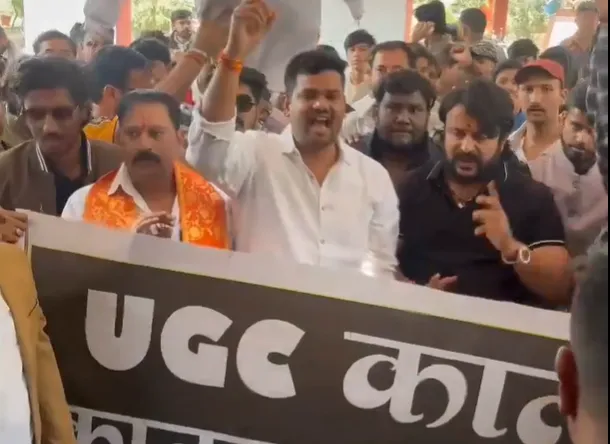
The UGC new rules have sparked widespread protests across Indian universities, triggering heated debates among students, faculty members, and policymakers. While the rules are officially described as a step toward promoting equity and preventing discrimination in higher education, critics argue that they are unbalanced and open to misuse.
For many students, especially from general or unreserved categories, the concern is not just about policy changes but about how these rules may reshape campus dynamics, academic freedom, and due process. To understand why the protests are growing, it’s important to first understand what the UGC is, what exactly has changed, and why these changes have become so controversial.
What Are the UGC New Rules?
The UGC new rules, formally titled the UGC (Promotion of Equity in Higher Education Institutions) Regulations, 2026, were notified by the University Grants Commission in January 2026. These regulations replace the earlier 2012 anti-discrimination guidelines and are legally binding on all UGC-recognised institutions.
According to the UGC, the aim of the new rules is to address caste-based discrimination and promote inclusive campuses, particularly for students from Scheduled Castes (SC), Scheduled Tribes (ST), and Other Backward Classes (OBC).
Key Provisions Under the UGC New Rules
The UGC new rules introduce several structural and procedural changes across universities and colleges.
1. Mandatory Equity Bodies
Every institution must establish:
- Equal Opportunity Centres (EOCs)
- Equity Committees
- Equity Squads
These bodies are tasked with preventing discrimination, spreading awareness, and handling complaints related to caste and social exclusion.
2. 24×7 Discrimination Helpline
Institutions are required to operate a round-the-clock helpline where students can report discrimination-related issues. The intent is to ensure immediate access to grievance redressal mechanisms.
3. Expanded Definition of Discrimination
The UGC new rules broaden the definition of discrimination to include unfair treatment based on:
- Caste
- Religion
- Gender
- Disability
- Place of birth
- Social background
However, critics point out that the operational focus of the rules largely centers on historically reserved categories.
4. Mandatory Compliance
Unlike earlier guidelines, these regulations are not advisory. Institutions that fail to comply risk penalties, including loss of grants or UGC recognition.
Why Are Students Protesting the UGC New Rules?
Despite the stated intent of promoting equity, the UGC new rules have faced strong resistance from various student groups and faculty members.
1. Alleged Exclusion of General Category Students
One of the biggest criticisms is that the rules do not explicitly protect general or unreserved category students. Protesters argue that equity mechanisms should be neutral and inclusive, rather than focusing on select groups.
Many students fear this creates an implicit assumption of guilt, where certain groups are viewed as potential offenders rather than equal stakeholders.
2. Fear of False or Vague Complaints
Another major concern is the lack of safeguards against misuse. Students and teachers worry that loosely defined terms like “indirect discrimination” could lead to complaints based on perception rather than evidence.
Without strong procedural checks, critics say the rules may encourage harassment through false allegations.
3. Impact on Academic Freedom
Faculty members have raised concerns that the UGC new rules could restrict:
- Open classroom discussions
- Academic critique
- Merit-based evaluation
There is anxiety that fear of complaints may lead to self-censorship among teachers.
4. Legal and Constitutional Concerns
Several legal experts argue that selective protection may violate Article 14 of the Indian Constitution, which guarantees equality before the law. A Public Interest Litigation (PIL) challenging aspects of the UGC new rules has already been filed, adding a legal dimension to the protests.
UGC’s Stand on the Protests
The UGC has defended the new regulations, stating that:
- Complaints of caste discrimination have risen in recent years
- Courts have repeatedly asked institutions to strengthen grievance redressal
- The rules are preventive, not punitive
According to the commission, the UGC new rules are meant to protect vulnerable students, not target any group unfairly.
What’s at Stake for Indian Higher Education?
The controversy surrounding the UGC new rules goes beyond protests. It raises deeper questions about:
- How equity should be implemented in diverse campuses
- Whether grievance mechanisms can be both sensitive and fair
- How to balance social justice with due process
If implemented without revisions or clarifications, critics warn the rules could intensify campus divisions instead of resolving them.
FAQ
About the Author: GRV is a digital media writer who created Dumbfeed, a platform that simplifies complex global and political news into clear, engaging, and family-friendly formats. He delivers accurate, easy-to-understand explanations that help readers stay informed without the noise. When he’s not writing, GRV produces video content and short-form news updates for social media.