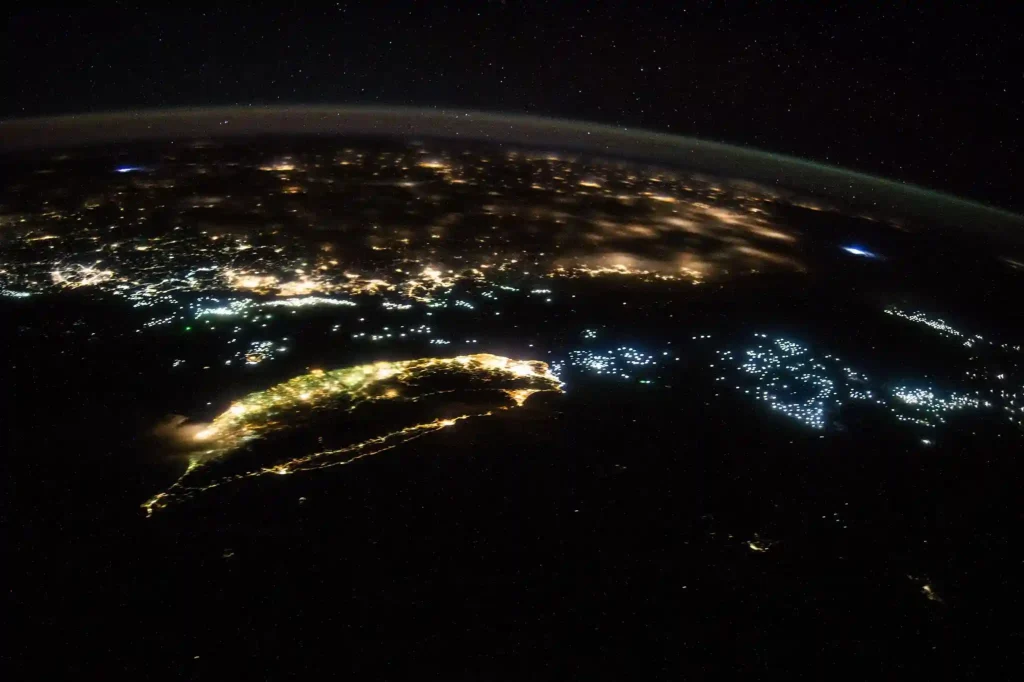
The world’s attention may currently be fixed on the war involving Iran and the United States, but China–Taiwan tensions may be quietly intensifying into the next major geopolitical crisis. In the Taiwan Strait, military activity, diplomatic pressure, and strategic maneuvering are raising uncomfortable questions about whether the global order is sliding toward a new Cold War.
What makes the situation more dangerous today is the broader geopolitical context. If Washington justifies military interventions around the world in the name of security, could Beijing eventually use the same logic to justify a move against Taiwan? And if that moment comes, the biggest question may not only be what China does—but how the United States responds.
Background: Why Taiwan Is the Most Dangerous Flashpoint
At the heart of China Taiwan tensions is a long-standing dispute over sovereignty. Beijing considers Taiwan a breakaway province that must eventually reunify with mainland China, while Taiwan operates as a self-governing democracy with its own political system and military. According to the Council on Foreign Relations, the United States has historically supported Taiwan’s ability to defend itself while maintaining diplomatic recognition of Beijing—a delicate balance often described as “strategic ambiguity.”
The issue has been one of the most sensitive geopolitical disputes since the end of the Chinese civil war in 1949. Over the decades, the United States has maintained a policy of “strategic ambiguity”—supporting Taiwan’s ability to defend itself while officially recognizing Beijing as the government of China.
However, tensions have intensified significantly over the last decade. China has expanded military exercises around the island, conducted air and naval patrols, and increased pressure on Taiwan’s political leadership. A series of large-scale Chinese military drills near Taiwan in late 2025 demonstrated the possibility of blockade-style operations around the island.
For many analysts, the Taiwan Strait has now become the most likely place for a major conflict between the United States and China.
Current Developments in the China–Taiwan tensions
Recent developments suggest the strategic environment is becoming even more complex. Chinese military aircraft frequently operate near Taiwan’s air defense identification zone, although activity has fluctuated in recent weeks. Analysts say the temporary reduction in flights may be linked to diplomatic maneuvering ahead of a potential meeting between Chinese President Xi Jinping and U.S. President Donald Trump.
At the same time, Taiwan continues to strengthen its defenses. The island is also expanding military cooperation with the United States as China Taiwan tensions continue to grow. Taipei has increased procurement of U.S. weapons systems. These include surveillance drones used to monitor Chinese military movements.
The broader region is also responding to rising China Taiwan tensions. Japan, the Philippines, and the United States are working on coordinated missile deployments. These systems are meant to deter Chinese military expansion in the Indo-Pacific.
None of these moves signal an immediate war. However, they reveal a rapidly militarizing strategic environment around Taiwan. As a result, China–Taiwan tensions continue to intensify.
The Strategic Question: Is China Preparing Something Bigger?
One of the most debated questions among geopolitical analysts is whether China is preparing for a long-term scenario involving Taiwan. Some U.S. defense planners believe China may aim to develop the capability to invade or blockade Taiwan by the late 2020s. The Pentagon has previously suggested that Beijing could be ready for such an operation by around 2027. But military invasion is not the only option.
China could pursue other strategies, including:
- A naval blockade of Taiwan
- Economic pressure and cyber warfare
- Limited military strikes
- Political coercion
These approaches could weaken Taiwan without triggering a full-scale war.
However, the geopolitical environment complicates things further. If Washington continues to justify military operations elsewhere—such as interventions linked to Iran or other regions—Beijing could argue that its actions toward Taiwan are similarly driven by security concerns. In that context, China–Taiwan tensions could increasingly be framed by Beijing as a defensive response rather than an expansionist move. Such arguments would not necessarily be accepted internationally, but they could shape China’s diplomatic narrative and influence how the global community interprets rising China Taiwan tensions.
The U.S. Factor: Would Washington Intervene?
The biggest strategic uncertainty in the Taiwan crisis is the United States. Washington remains Taiwan’s most important security partner and primary arms supplier. Yet the United States has never explicitly guaranteed that it would deploy troops to defend Taiwan.
In recent years, public opinion in the United States has gradually shifted. Surveys show rising support for helping Taiwan in the event of a Chinese attack, including potential military intervention. Still, several factors could complicate the American response:
- ongoing conflicts elsewhere
- depleted weapons stockpiles
- economic pressure
- political divisions
Some defense analysts have warned that conflicts in other regions—including the Middle East—could strain U.S. military resources and affect deterrence in the Pacific. This raises a sensitive geopolitical question: if a crisis erupted tomorrow, would Washington respond decisively—or hesitate?
Global Consequences of CHINA–TAIWAN tensions
A conflict in the Taiwan Strait would not resemble most regional wars. Taiwan plays a critical role in the global semiconductor industry, producing the majority of the world’s most advanced microchips. Disruption to this supply chain could trigger massive economic shockwaves across the global economy.
Estimates suggest a Taiwan conflict could cost the world economy trillions of dollars annually and disrupt everything from smartphones to advanced military systems. Additionally, a war involving China and the United States would risk drawing in regional powers including Japan, Australia, and possibly NATO allies.
The Taiwan Strait is also one of the busiest global shipping routes. Any blockade or military confrontation there would affect global trade immediately. In short, a Taiwan crisis would not remain regional—it would become global.
Conclusion
The Taiwan Strait has long been considered one of the world’s most dangerous geopolitical flashpoints. Today, however, the stakes appear higher than ever. China is expanding its military power. Taiwan is strengthening its defenses. And the United States is increasingly involved in the region’s security architecture.
Against the backdrop of other global conflicts—from the Middle East to Eastern Europe—China–Taiwan tensions now carry the weight of a potential superpower confrontation. Whether the coming years bring deterrence, diplomacy, or escalation remains uncertain. But one thing is clear: if China Taiwan tensions continue to rise, the Taiwan Strait could become the defining geopolitical crisis of the 21st century.