The Alliance No Longer Looks the Same
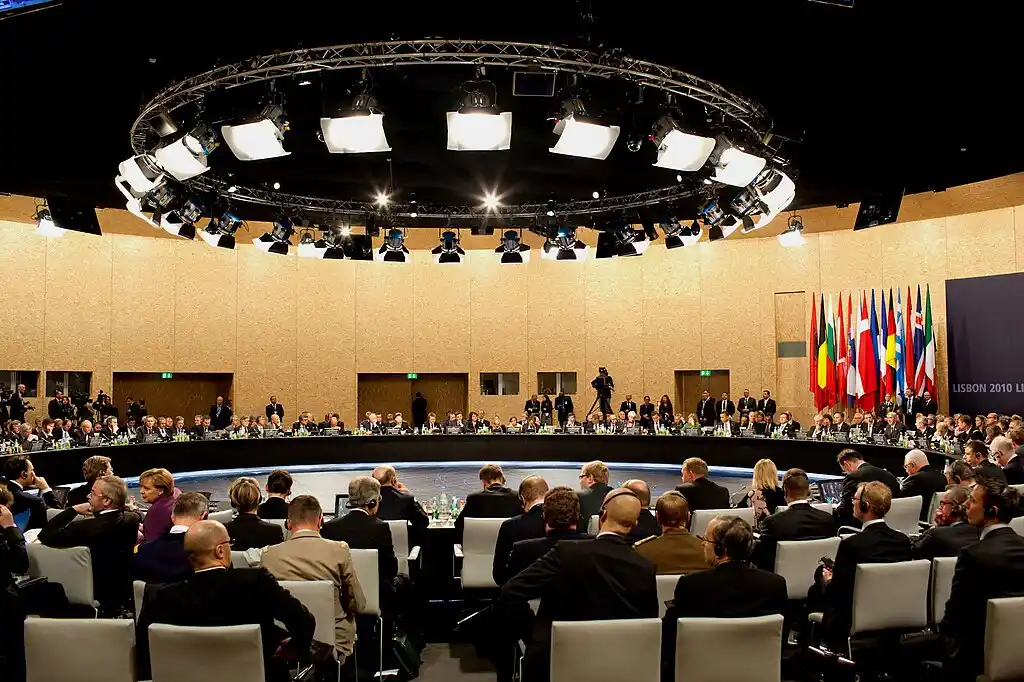
For decades, NATO operated under one central assumption: the United States would lead and sustain the alliance’s global security role. Today, that assumption is being openly challenged as a significant NATO power shift unfolds. Since the 2024 U.S. election, Washington’s changing priorities—particularly its reduced willingness to fund overseas commitments—have begun reshaping the alliance, forcing European members to reconsider their reliance on American leadership, a debate increasingly discussed in Western security policy circles and outlined in NATO’s own strategic framework
The Background: A Long History of U.S. Leadership
Since its creation in 1949, NATO has largely relied on American political leadership, military strength, and financial support. During the Cold War, the alliance functioned as a unified deterrent against the Soviet Union. After the Soviet collapse in 1991, NATO expanded eastward while the United States continued to serve as the alliance’s primary security guarantor.
Over the past three decades, NATO’s structure increasingly depended on U.S. resources—from troop deployments to intelligence capabilities and strategic nuclear deterrence. But that model began facing serious scrutiny long before the latest political shift in Washington. Many American policymakers argued that European countries were underinvesting in their own defense while relying heavily on U.S. protection.
The Policy Shift After the 2024 Election
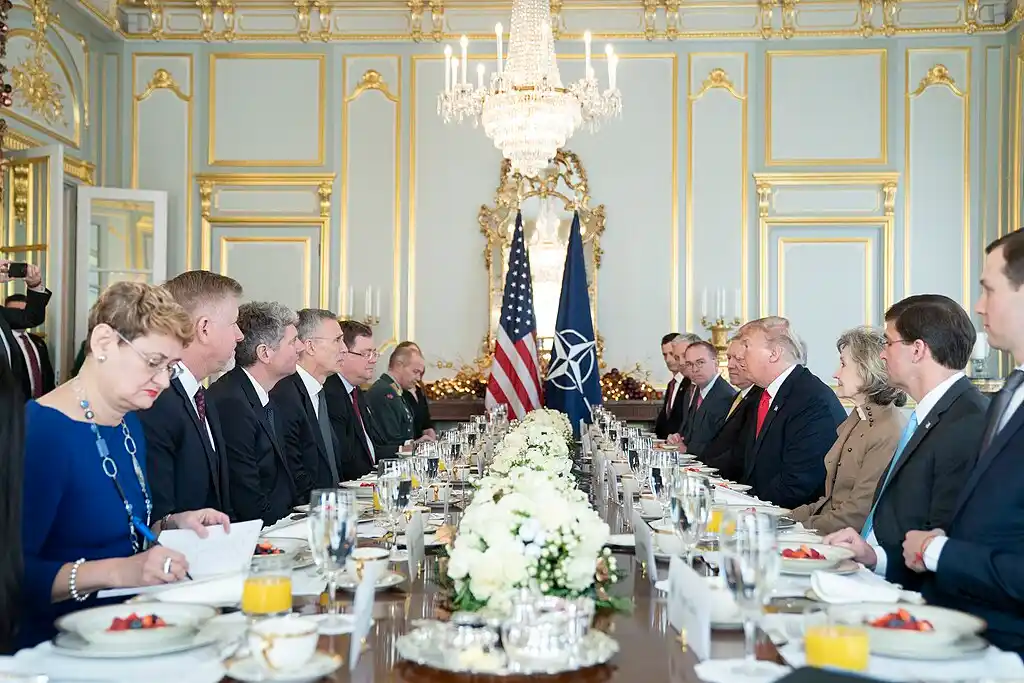
The turning point came after the 2024 U.S. election. Since returning to the presidency, Donald Trump has repeatedly emphasized that U.S. security commitments abroad must be reconsidered if allies are not contributing enough to their own defense.
Trump has openly criticized NATO members for failing to meet defense spending targets and has suggested that the United States should not automatically defend allies who do not pay their “fair share.” One of the clearest examples of this shift emerged in the debate over support for Ukraine.
Washington significantly reduced its financial and military assistance packages, arguing that European countries must take a larger role in supporting Ukraine’s defense. The policy signaled something deeper than a temporary disagreement—it revealed a fundamental shift in how the United States views its role within NATO.
Growing Friction Inside the Alliance
The change in Washington’s posture has triggered a wave of uncertainty across the alliance. For many European governments, the question is no longer whether NATO remains important, but whether the United States will remain as committed as it once was. Several issues are now fueling tension inside the alliance.
Funding Disputes
NATO has long struggled with disagreements over defense spending. The alliance’s target requires members to spend at least 2% of their GDP on defense. For years, only a handful of countries met that benchmark. The renewed pressure from Washington has intensified debates about financial contributions, with some European leaders questioning whether the alliance is becoming overly transactional.
Ukraine Aid Divisions
The war in Ukraine exposed differences between NATO members regarding military support, sanctions policy, and long-term strategy. While some countries remain committed to sustained assistance, others have become increasingly cautious about escalating the conflict. The reduction in U.S. aid has amplified these divisions, forcing European governments to reconsider how much responsibility they are willing—or able—to assume.
Europe’s Strategic Response
Faced with growing uncertainty about U.S. involvement, many European countries are beginning to rethink their security strategies. Rather than relying entirely on NATO’s traditional framework, governments across Europe are investing more heavily in their own military capabilities.
Germany has announced major increases in defense spending. France continues to promote the idea of a stronger European defense identity. Other countries are accelerating military modernization programs. This trend reflects a broader realization: Europe may need to become more strategically independent.
The shift does not necessarily mean NATO will disappear, but it suggests that the alliance could evolve into something very different from the structure that existed for the past seventy years.
The Geopolitical Implications
The NATO power shift is not only a European issue—it could reshape global geopolitics. If the United States reduces its leadership role within NATO, several major consequences could follow. First, Europe may begin developing parallel security structures outside NATO’s traditional command system.
Second, rival powers could interpret the alliance’s internal disagreements as a sign of weakening cohesion.
Third, global alliances may become more fluid, with countries adjusting their strategic relationships depending on shifting political priorities in Washington.
In this sense, the transformation of NATO reflects a broader change in international politics. The era of predictable alliance structures may be giving way to a more uncertain geopolitical environment.
Possible Global Consequences
Fragmentation of Western Security Policy
Without strong U.S. leadership, NATO members may pursue different strategic approaches, weakening the alliance’s collective voice.
Rise of European Strategic Autonomy
European governments could accelerate efforts to build independent defense capabilities.
Changing Global Alliances
Countries around the world closely watch NATO dynamics. Any signs of internal division may influence how other nations approach security partnerships.
Increased Strategic Uncertainty
The shifting balance within NATO could create a period of instability as governments adjust to the new geopolitical landscape.
Conclusion
NATO is not collapsing, but it is clearly changing. The alliance that once revolved around unquestioned U.S. leadership is entering a new phase defined by negotiation, uncertainty, and strategic recalibration. The emerging NATO power shift reflects a broader transformation in global politics—one in which alliances are being reshaped by domestic political priorities, economic pressures, and evolving security threats. Whether NATO adapts successfully to this new reality will depend on how its members balance national interests with the collective security principles that originally defined the alliance.