The Rise of the Smart Port Revolution
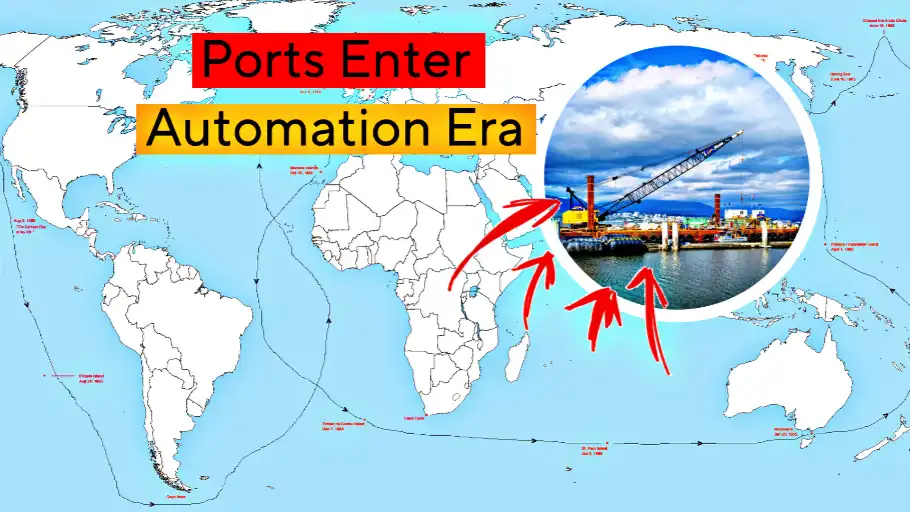
Global trade depends heavily on maritime logistics. Nearly 90% of world trade travels by sea, making ports among the most strategically important assets in the modern economy. For decades, port operations relied on conventional cranes operated manually by dock workers. Today, that model is changing rapidly. The new generation of smart port cranes combines automation, sensors, artificial intelligence, and remote operation systems. These cranes can identify containers, optimize loading sequences, and reduce human error while operating around the clock with minimal interruption.
According to the official maritime technology insights shared by the International Maritime Organization, ports worldwide are accelerating investments in digital and environmentally sustainable infrastructure as shipping industries face pressure to modernize operations and reduce carbon emissions.
This shift is not only about technology. It reflects a broader transformation in how nations view logistics infrastructure as a strategic asset tied directly to economic security and geopolitical leverage.
Why Major Ports Are Upgrading Fast
The COVID-era supply chain crisis exposed how fragile global shipping systems had become. Congestion at major ports caused widespread delays, shortages, and rising transportation costs. Governments and shipping companies realized that outdated infrastructure could no longer support the speed and scale of modern commerce. As a result, major ports are now investing billions into automation projects.
Faster Cargo Movement
Smart port cranes dramatically reduce loading and unloading times. AI-assisted systems can coordinate container movement more efficiently than traditional manual operations. In some highly automated terminals, turnaround times for vessels have been cut significantly, allowing ports to handle larger cargo volumes without expanding physical space. This matters because shipping delays affect entire economies. When containers remain stuck at ports, factories face shortages, retailers lose inventory, and inflationary pressures increase globally.
Reducing Pollution and Energy Consumption
Another major reason behind the transition is environmental pressure. Traditional diesel-powered port machinery contributes heavily to emissions in coastal regions. Many next-generation cranes now operate using electric systems or hybrid technologies that significantly lower fuel consumption and pollution levels.
Governments in Europe and Asia are especially pushing for greener shipping infrastructure as part of broader climate targets. Ports are increasingly being evaluated not only by efficiency, but also by environmental sustainability standards. The shift toward cleaner cranes is therefore becoming both an economic necessity and a political priority.
Automation Is Becoming a Geopolitical Tool
The smart crane revolution is also becoming deeply geopolitical. China currently dominates much of the global port equipment manufacturing sector. Chinese firms have played a major role in supplying advanced crane systems and infrastructure to ports across Asia, Africa, Latin America, and parts of Europe. For several Western governments, this has triggered growing strategic concerns.
The United States and some European nations increasingly view port automation systems as part of critical national infrastructure. Questions are now being raised over cybersecurity risks, foreign technological dependence, and the possibility of strategic vulnerabilities inside major shipping hubs. This debate reflects a larger global trend where infrastructure is no longer viewed as politically neutral.
Ports as Strategic Influence Zones
Modern ports are now seen as gateways of geopolitical influence. Nations that control shipping infrastructure gain economic leverage, logistical advantages, and stronger positions in international trade networks. Countries across the Indo-Pacific are especially investing in advanced port upgrades as maritime competition intensifies. India, the UAE, Singapore, and Saudi Arabia are all expanding smart port initiatives to strengthen their role in global supply chains.
Meanwhile, Europe is attempting to balance technological modernization with tighter oversight of foreign infrastructure involvement. The result is an emerging contest over who controls the future architecture of maritime trade.
The Human Cost: Growing Concerns Over Jobs
While automation promises efficiency, it is also raising serious social concerns. Dock workers and labor unions in several countries fear that increasing automation could reduce demand for traditional port labor. Remote-operated cranes require fewer on-site workers, while AI systems are replacing many repetitive operational tasks.This has already triggered labor disputes in some major shipping hubs.
Critics argue that rapid automation risks widening inequality inside industrial economies. Ports have historically provided stable middle-income jobs for thousands of workers. If automation accelerates without workforce transition programs, entire labor communities could face long-term economic disruption. Supporters of automation counter that smart ports will create new categories of technical and engineering jobs linked to robotics, AI maintenance, cybersecurity, and logistics management. However, the transition remains politically sensitive, especially at a time when many economies are already facing employment uncertainty due to broader technological disruption.
A New Global Competition for Port Dominance
The smart crane era is creating a new hierarchy among ports. Countries that modernize faster are likely to attract more shipping traffic, investment, and strategic influence. Ports that fail to upgrade may struggle with congestion, inefficiency, and declining competitiveness. This is particularly important in Asia and the Middle East, where governments are positioning ports as pillars of long-term economic strategy.
Saudi Arabia’s logistics expansion plans, India’s maritime modernization programs, and Singapore’s fully automated terminal ambitions all point toward one reality: ports are becoming central to national power projection. The competition is no longer simply about geography. It is about technological capability.
What Could Happen Next?
Several long-term consequences are now becoming increasingly visible.
Supply Chains Could Become More Resilient
Smarter ports may help reduce global shipping disruptions by improving cargo flow efficiency and predictive logistics management.
Cybersecurity Risks Could Increase
As ports become more digitalized, they also become more vulnerable to cyberattacks targeting shipping infrastructure and logistics systems.
Strategic Rivalries May Intensify
Competition over port technology, maritime corridors, and infrastructure financing could deepen geopolitical rivalries between major powers.
Labor Politics Could Shift
Governments may face growing pressure to balance automation with worker protections and retraining programs.
Conclusion
The rise of smart port cranes marks more than a technological upgrade. It represents a structural transformation in global trade, industrial strategy, and geopolitical competition. Ports are no longer passive gateways for cargo movement. They are becoming intelligent infrastructure hubs tied directly to national security, economic resilience, and strategic influence. As automation accelerates across the maritime world, the countries that adapt fastest may gain enormous advantages in the future global economy. Yet the transition also brings difficult questions about labor, sovereignty, cybersecurity, and control over critical infrastructure. The smart crane era has officially begun and its impact will extend far beyond the docks.
By Sahil Koul | Geopolitical Analyst