Introduction: A Silent Threat in Open Waters
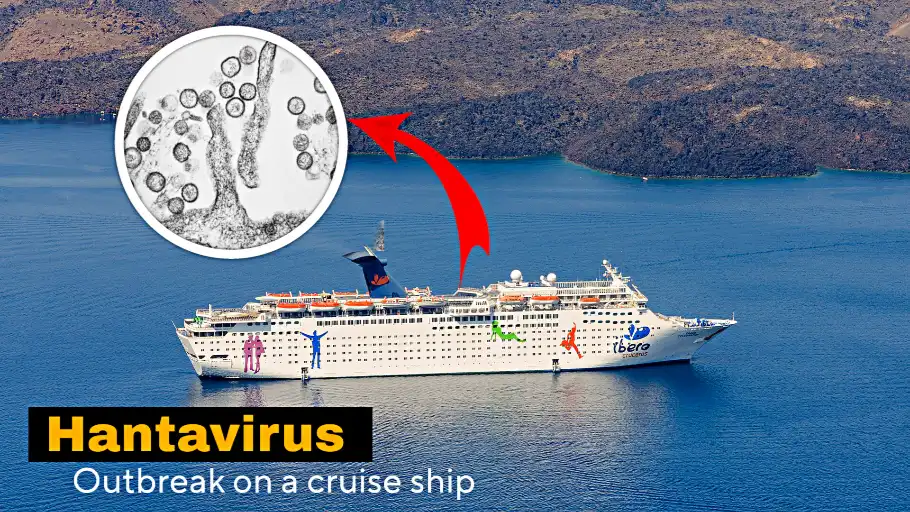
What began as a routine transatlantic voyage has quickly turned into a global health concern. A suspected Hantavirus cruise outbreak aboard a ship traveling from Argentina has triggered alarm across health agencies and governments alike. While not a fast-spreading virus like COVID-19, its sudden appearance in a confined maritime environment raises deeper questions about preparedness, surveillance, and global health security.
Background: What Happened on the Atlantic Voyage
The incident began aboard a cruise ship departing from Argentina and crossing the Atlantic with around 147 passengers and crew onboard. During the journey, several individuals developed severe flu-like symptoms, later linked to hantavirus infection, an uncommon but potentially deadly disease typically associated with rodent exposure.
Early reports indicate that multiple passengers required urgent medical attention, with confirmed fatalities raising the seriousness of the situation. The ship was subsequently placed under strict monitoring protocols, with some ports initially denying docking permission due to fears of contagion.
Read the WHO outbreak report for more on hantavirus transmission
Current Developments: Containment and Uncertainty
Health authorities have confirmed 3 deaths linked to the outbreak, with a total of 7 cases identified so far, including one critically ill patient and several mild infections, highlighting the seriousness of the incident despite limited transmission.
Authorities have moved quickly to contain the situation. The ship has been either isolated offshore or allowed controlled docking under quarantine protocols, depending on jurisdiction. Health teams carried out screenings, isolation measures, and emergency evacuations. All passengers remain under medical observation, with strict sanitation and rodent-control efforts in place. Importantly, no widespread secondary transmission has been reported, as hantavirus is not typically spread between humans.
Understanding Hantavirus: Deadly but Not Easily Spread
Hantavirus is primarily transmitted through contact with infected rodent urine, droppings, or saliva. In rare cases, certain strains have shown limited human-to-human transmission, but this is not the norm. The disease can lead to Hantavirus Pulmonary Syndrome (HPS), a severe respiratory condition with a mortality rate that can exceed 30% in untreated cases.
Key characteristics:
- Not airborne in the traditional sense like influenza
- Requires close exposure to contaminated environments
- Symptoms include fever, fatigue, and rapid respiratory distress
This distinction is critical: while hantavirus can be deadly, it does not spread easily through casual human contact, making it fundamentally different from highly contagious global threats.
Global Reaction: Caution Without Panic
The international response has been measured but vigilant. Governments have not imposed travel bans, but maritime health advisories have been reinforced. Several countries have:
- Increased port health screenings
- Issued travel advisories for cruise passengers
- Reviewed onboard sanitation protocols
The cruise industry, still recovering from pandemic-era disruptions, faces renewed scrutiny. Even isolated outbreaks can significantly impact traveler confidence and economic recovery.
WHO and Health Authorities: Monitoring the Situation
Global health bodies have acknowledged the situation but stopped short of declaring any emergency. The focus remains on containment, monitoring, and risk communication. Health authorities emphasize:
- No evidence of widespread human-to-human transmission
- Continued surveillance of exposed individuals
- Importance of early detection and treatment
This balanced response reflects lessons learned from past outbreaks, avoiding panic while maintaining readiness.
Geopolitical Implications: More Than a Health Issue
At first glance, a cruise ship outbreak may seem like a localized health incident. However, it intersects with broader geopolitical concerns:
1. Maritime Governance and Responsibility
Questions arise over which nation holds responsibility, flag state, port state, or country of origin,especially when health crises occur in international waters.
2. Global Health Coordination
The incident highlights the need for stronger international coordination in monitoring diseases that emerge outside traditional land-based systems.
3. Economic Ripple Effects
Tourism-dependent economies may face indirect losses if cruise travel demand declines. Insurance, shipping, and hospitality sectors are also impacted.
4. Biosecurity Awareness
Even low-transmission viruses can trigger global concern if they emerge in high-mobility environments like cruise ships, airports, or trade hubs.
Possible Global Consequences
While the immediate risk remains contained, the long-term implications could be significant:
- Stricter global maritime health regulations
- Enhanced disease surveillance systems onboard ships
- Reevaluation of cruise safety standards
- Increased public awareness of zoonotic diseases
In a world still sensitive to infectious disease outbreaks, even limited incidents can reshape policy and perception.
Conclusion: A Warning, Not a Crisis
The Hantavirus cruise outbreak is not the beginning of a global pandemic but it is a warning. It underscores how quickly localized health events can gain international attention in an interconnected world. The real takeaway is not fear, but preparedness. Governments, industries, and health agencies must treat such incidents as signals, opportunities to strengthen systems before a more serious threat emerges.
By Sahil Koul | Geopolitical Analyst