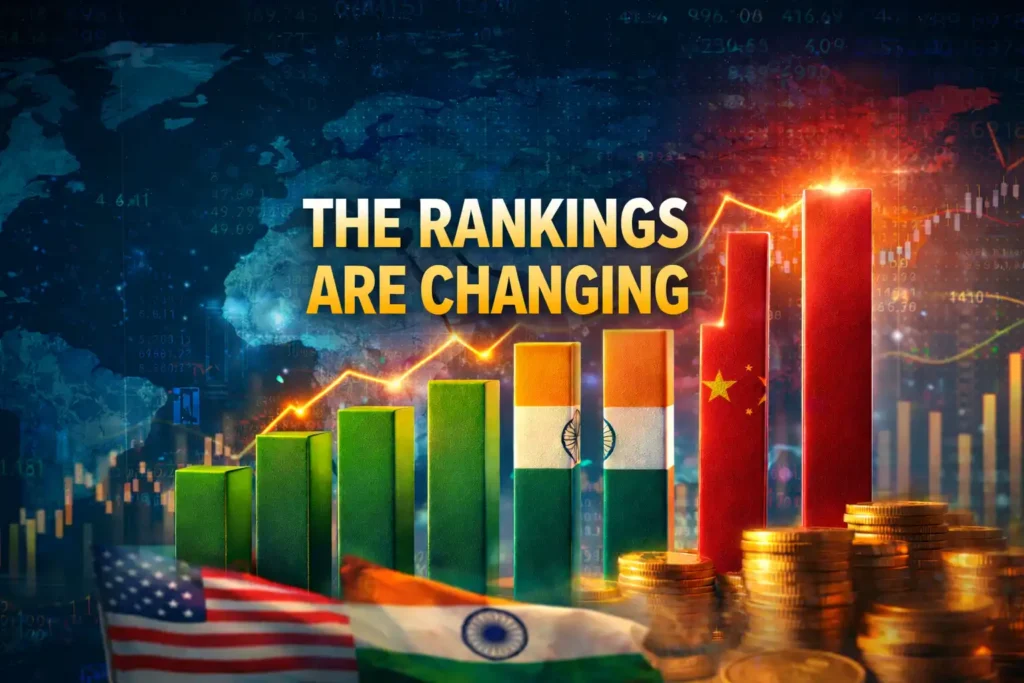
The global economic order is changing—but not in the way many expected. Beneath stable headlines about growth and recovery, a deeper transformation is unfolding. Global GDP Rankings are being quietly reshaped, and the consequences could redefine geopolitical power for decades.
What looks like incremental movement on paper is, in reality, the beginning of a new economic era.
Background: From Western Dominance to Global Competition
For most of the late 20th century and early 2000s, the global economy was dominated by the United States, Western Europe, and Japan. Economic strength was concentrated, predictable, and largely stable.
That began to change with the rapid rise of China, which surged from a developing economy into the world’s second-largest economic power within just a few decades. At the same time, countries like India began building momentum, driven by demographics, technology, and domestic demand.
According to data from the International Monetary Fund, the distribution of global output is now more dispersed than at any time in modern history.
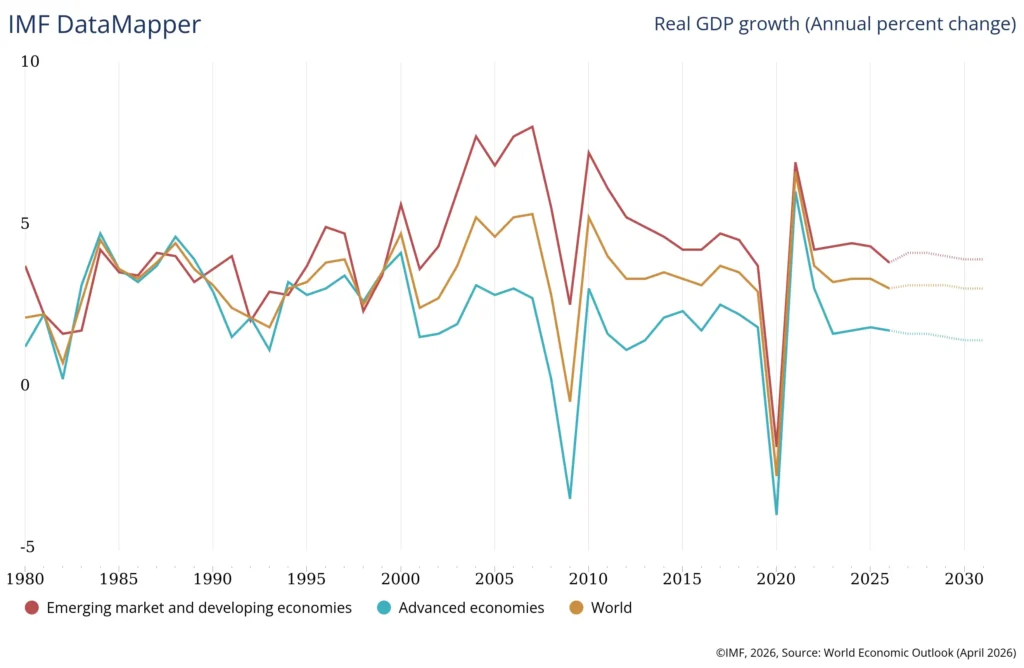
Source: International Monetary Fund (IMF), World Economic Outlook 2026
Current Developments: A New Economic Landscape
Today’s Global GDP Rankings reveal a striking pattern:
- The United States remains the largest economy, but its growth is relatively moderate.
- China continues to close the gap, driven by industrial capacity and state-led investment.
- India has surged into the top five and is on track to become the third-largest economy within the next decade.
- European powers like Germany, France, and the United Kingdom are experiencing slower growth and demographic constraints.
At the same time, a crucial distinction is gaining attention:
total GDP vs GDP per capita.
While emerging economies are rising in total output, many developed nations still maintain significantly higher income per person. This creates a dual reality—where economic power and living standards no longer align neatly.
Analysis: The Real Meaning Behind the Rankings
The shift in Global GDP Rankings is not just about economics—it is about power.
1. Economic Size vs Strategic Influence
Larger economies translate into greater geopolitical leverage. Trade agreements, military funding, technological investment—all depend on economic scale. As countries like India expand, their global influence is set to grow proportionally.
2. The Asia-Centric Future
The data increasingly points toward an Asia-centered economic system. With both China and India rising, the region is becoming the primary engine of global growth, challenging decades of Western dominance.
3. The European Slowdown
Europe’s relative stagnation is not a collapse, but a loss of momentum. Aging populations, energy challenges, and slower productivity growth are limiting expansion. This doesn’t remove Europe from the global stage—but it reduces its relative weight.
4. The GDP Illusion
Perhaps the most misunderstood aspect of this shift is the difference between wealth and power.
- Countries with large populations can achieve high total GDP without high individual prosperity.
- Smaller nations can be extremely wealthy per capita but lack global influence.
This divergence is why the current transformation feels subtle—but is, in fact, profound.
Global Consequences: What Comes Next
If current trends continue, the implications will extend far beyond economic charts.
1. A Multipolar Economic World
The era of a single dominant economic bloc is fading. Instead, multiple centers of power—North America, Asia, and parts of the Global South—will shape global policy.
2. Shifting Trade Alliances
As economic gravity moves east, trade routes and partnerships will follow. Countries will increasingly align with faster-growing markets rather than traditional partners.
3. Supply Chain Realignment
Manufacturing and services are already shifting toward emerging economies. This trend is expected to accelerate, particularly in technology and energy sectors.
4. Investment Flows Will Change
Capital tends to follow growth. Investors are increasingly looking toward emerging markets, which could further accelerate their rise.
Conclusion: A Quiet but Defining Transition
The global economy is not collapsing—it is rebalancing. And while the headlines may not yet reflect the scale of this transformation, the data is clear.
Global GDP Rankings are entering a new phase, where economic power is more distributed, more dynamic, and less predictable than ever before.
The next decade will not be defined by a single dominant economy, but by competition, convergence, and shifting influence.
In that sense, the new era has already begun.