A Diplomatic Controversy With Wider Consequences
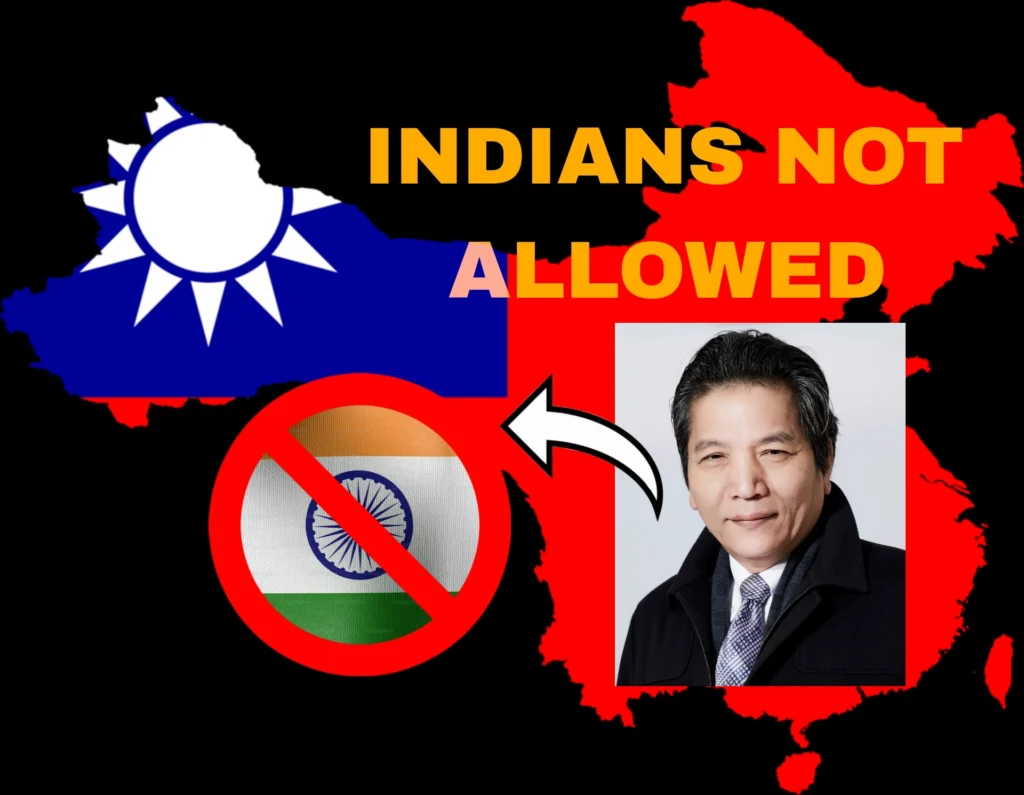
The Taiwan anti India poster controversy has evolved into more than a local political dispute. What began as a campaign message targeting Indian migrant workers has now become a sensitive geopolitical issue. As a result, the incident has sparked criticism across social media and diplomatic circles alike.
India and Taiwan have quietly strengthened economic and strategic ties in recent years. Therefore, even a local political controversy now carries wider regional implications. The issue has raised questions about Taiwan’s domestic politics, labor concerns, and its diplomatic messaging toward India.
You can check recent Asia News Network coverage for the Taiwan anti India poster controversy and regional political tensions.
How the Taiwan Anti India Poster Controversy Started
The controversy began after a local political campaign poster in southern Taiwan circulated online. The billboard reportedly featured imagery viewed as offensive toward Indians. Critics claimed the visuals portrayed Indian workers negatively and encouraged anti-immigration sentiment. The debate emerged during discussions over Taiwan’s labor shortage. Taiwan has increasingly explored foreign labor partnerships to support key industries. India became an important partner because of its large skilled workforce and expanding economic relationship with Taiwan.
However, opposition groups and some local politicians questioned the idea of importing more migrant workers. Consequently, the political rhetoric quickly became emotional and divisive. The poster triggered immediate backlash because many observers considered it racially insensitive. Indian social media users strongly criticized the imagery. At the same time, several Taiwanese commentators also condemned the campaign tactics. Importantly, the controversy arrived at a delicate moment in India–Taiwan relations. Both sides have recently expanded cooperation in technology, semiconductors, education, and trade. Therefore, the timing amplified diplomatic sensitivity.
Why the Issue Is Sensitive for India
India’s reaction to the controversy is shaped by more than national pride. The incident touches on broader concerns regarding racism, labor migration, and the treatment of Indian communities abroad. India has become increasingly active in global labor and technology markets. Indian workers now play major roles in sectors ranging from information technology to healthcare and manufacturing. Because of this, discriminatory political messaging involving Indian migrants often attracts significant public attention. Additionally, India’s strategic importance in the Indo-Pacific has grown rapidly. Countries seeking closer ties with New Delhi must now manage public diplomacy carefully. Even symbolic controversies can create reputational damage.
The issue also matters because India and Taiwan do not share formal diplomatic relations. Their engagement relies heavily on unofficial cooperation, economic trust, and political goodwill. Therefore, public controversies can affect perceptions faster than traditional diplomatic disputes. Moreover, social media intensified the reaction. Images from the campaign spread rapidly across Indian platforms. As a result, the controversy reached audiences far beyond Taiwan’s domestic political environment.
Taiwan’s Diplomatic Damage Control Efforts
Taiwanese authorities and diplomatic representatives moved quickly to limit the fallout. Officials reportedly distanced themselves from the campaign material and emphasized that the poster did not represent Taiwan’s official policy. Taiwan’s representatives stressed support for diversity and international cooperation. They also highlighted Taiwan’s long-term interest in expanding relations with India. This response aimed to reassure both Indian officials and the broader Indian public. The rapid diplomatic response reflects Taiwan’s broader strategic calculations. Taiwan increasingly sees India as an important economic and geopolitical partner. Therefore, maintaining stable public perception has become essential.
Taiwan also understands India’s growing role in global semiconductor supply chains and Indo-Pacific security discussions. Consequently, any controversy that damages mutual trust could complicate future cooperation. Even so, the damage control effort may not completely erase the negative impressions created online. Political symbolism often leaves lasting effects, especially when cultural identity becomes part of the debate.
The Strategic Importance of India–Taiwan Relations
The Taiwan anti India poster controversy comes during a period of expanding cooperation between both sides. Over the last few years, Taiwan has increased engagement with India in several sectors.
Technology and Semiconductor Cooperation
Taiwan remains a global leader in semiconductor manufacturing. Meanwhile, India aims to become a major electronics and chip production hub. Therefore, both sides have strong economic incentives to cooperate. Indian authorities have actively encouraged Taiwanese investment in manufacturing projects. Taiwanese companies also see India as a potential alternative production base amid global supply chain diversification.
Labor and Workforce Partnerships
Taiwan faces demographic pressures and labor shortages. As a result, foreign labor partnerships have become increasingly important. India offers a large pool of young and skilled workers. However, labor migration remains politically sensitive in many countries. Consequently, the poster controversy exposed underlying anxieties inside Taiwan regarding immigration and social change.
Indo-Pacific Strategic Interests
India and Taiwan share concerns about regional security and economic resilience. Although they avoid formal military alignment, both sides benefit from stronger regional cooperation. The controversy therefore risks creating unnecessary friction at a time when Indo-Pacific partnerships are becoming more important.
Could This Become a Bigger Problem for Taiwan?
At the moment, the Taiwan anti India poster controversy appears manageable diplomatically. However, it still exposes several strategic vulnerabilities for Taiwan. First, Taiwan depends heavily on international goodwill and democratic solidarity. Therefore, accusations linked to the Taiwan anti India poster issue could damage its global image. Second, Taiwan wants deeper engagement with emerging powers like India. Negative public perception surrounding the Taiwan anti India poster controversy could slow momentum in trade, education, and workforce agreements. Third, Beijing may attempt to exploit such controversies through information campaigns.
China closely monitors Taiwan’s international relationships and often highlights domestic controversies to weaken Taiwan’s soft power. Furthermore, Taiwan already faces intense diplomatic pressure globally. Because of this, even smaller incidents like the Taiwan anti India poster debate can become amplified internationally. Still, most analysts do not expect a major diplomatic rupture between India and Taiwan. Economic interests on both sides remain strong. Moreover, officials from both governments have shown interest in preventing escalation.
Global Implications of the Taiwan Anti India Poster Debate
The controversy also reflects wider global trends involving migration politics and economic insecurity. Across many countries, labor shortages are colliding with domestic anxieties about immigration. At the same time, Asian economies increasingly compete for skilled workers. Therefore, political messaging surrounding migrant communities has become more sensitive.
The debate additionally highlights how local political campaigns can quickly gain international attention. Social media now transforms regional disputes into global diplomatic conversations within hours. This trend creates new challenges for governments. Domestic political messaging can suddenly affect trade partnerships, strategic relationships, and international reputation. Consequently, governments must now manage both internal politics and external perception simultaneously.
Conclusion
The Taiwan anti India poster controversy reveals how quickly local politics can evolve into a geopolitical challenge. Although the incident began as a domestic campaign issue, it soon affected broader discussions about diplomacy, migration, and regional partnerships. India and Taiwan continue to share strong economic and strategic interests. Therefore, both sides are likely to avoid prolonged tensions. However, the controversy serves as a reminder that public perception matters deeply in modern diplomacy.
Taiwan’s swift response suggests officials understand the importance of protecting relations with India. Nevertheless, the incident has exposed political sensitivities that may continue influencing future labor and diplomatic debates. As Indo-Pacific competition intensifies, symbolic controversies could increasingly shape international relationships. For Taiwan and India alike, managing those perceptions may become just as important as economic cooperation itself.
By Sahil Koul | Geopolitical Analyst