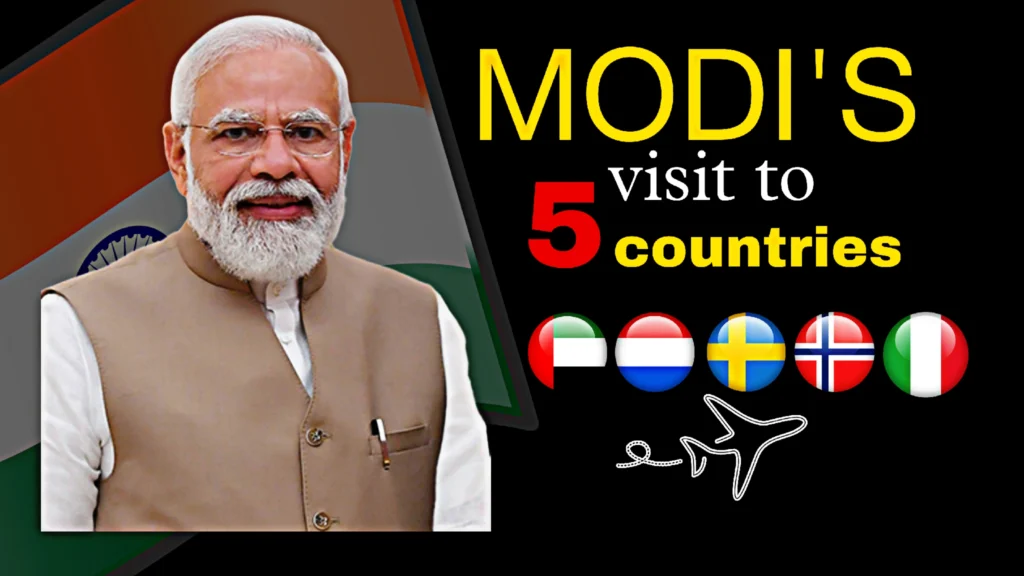
A Diplomatic Tour With Global Signals
The Modi 5 nation tour was more than a routine diplomatic visit. Instead, it signaled India’s growing ambition to shape global trade, energy, and geopolitical partnerships during a period of rising international uncertainty. From the Gulf to Northern Europe, Prime Minister Narendra Modi’s meetings carried strategic weight. The visit covered the United Arab Emirates, Netherlands, Sweden, Norway, and Italy. Together, these nations represent critical economic and geopolitical pillars for India’s future plans.
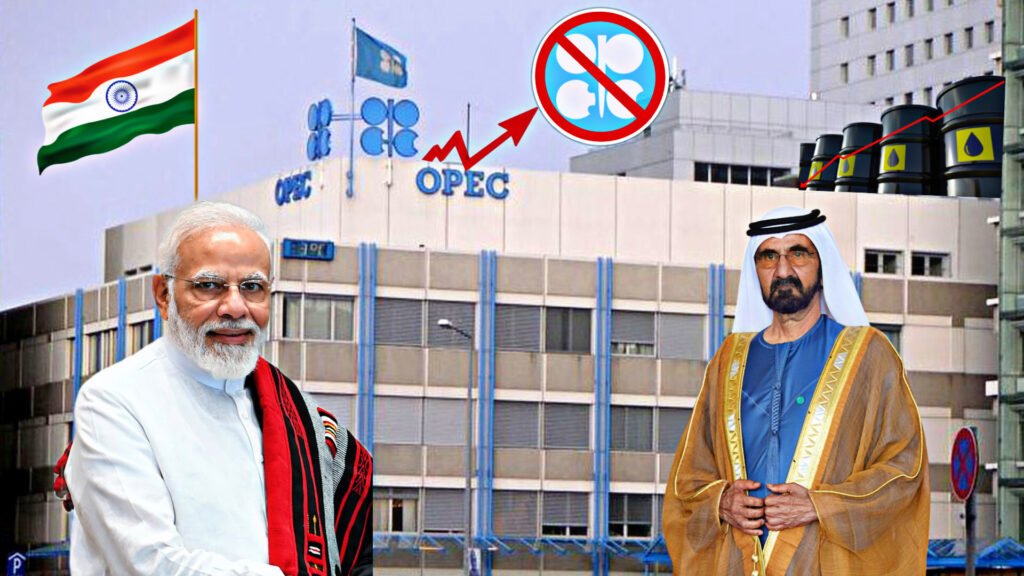
According to News On Air, India and the UAE strengthened cooperation on energy security, strategic petroleum reserves, investment partnerships, and broader economic collaboration during the high-level diplomatic engagements.
Why the Modi 5 Nation Tour Matters
India launched this diplomatic outreach at a time when the global order is undergoing a major transformation. Wars in Europe and West Asia, rising supply chain disruptions, energy insecurity, and growing technological competition are rapidly reshaping international alliances and economic priorities. Therefore, New Delhi appears determined to reduce strategic vulnerabilities while expanding long-term economic and geopolitical opportunities. The Modi 5 nation tour reflected India’s effort to secure reliable partnerships in an increasingly uncertain global environment.
The timing of the tour was especially significant because tensions in West Asia created concerns over global oil supplies, maritime trade routes, and shipping costs. India, as one of the world’s largest energy importers, cannot afford prolonged instability in the region. At the same time, Europe has been searching for trusted economic and strategic partners outside traditional dependency networks following years of geopolitical shocks and supply chain disruptions. Consequently, India positioned itself as a stable democratic partner capable of balancing economic growth with geopolitical reliability.
Additionally, the tour highlighted India’s broader ambition to become a major global manufacturing and technology hub. Discussions on semiconductors, clean energy, defence production, artificial intelligence, and infrastructure investment demonstrated that the visit was not only diplomatic but also deeply connected to India’s long-term economic transformation strategy.
Countries Included in the Tour
United Arab Emirates
The UAE visit focused heavily on energy cooperation and regional security. India relies significantly on Gulf energy imports. Therefore, maintaining close ties with Abu Dhabi remains strategically essential. Both countries discussed:
- Long-term energy cooperation
- Investment expansion
- Infrastructure partnerships
- Defence coordination
- Trade facilitation
The UAE also continues to play a major role in India’s logistics and financial connectivity plans.
Netherlands
The Netherlands emerged as a key technology partner during the visit. Discussions centered on semiconductor cooperation, clean technology, and innovation. This became especially important because India wants to reduce dependence on foreign chip supply chains. Consequently, partnerships with advanced European economies now form a major part of India’s industrial strategy.
Sweden and Norway
The Nordic leg of the Modi 5 nation tour highlighted India’s increasing focus on green technology and future industries. Sweden and Norway are globally recognized for:
- Renewable energy innovation
- Sustainable manufacturing
- Green mobility
- Advanced research ecosystems
India used the opportunity to deepen cooperation in clean energy, digital innovation, and climate technology. At the same time, the talks also reflected India’s long-term goal of attracting high-value technology investments into domestic manufacturing sectors.
Italy
Italy represented both economic and geopolitical significance. India and Italy upgraded bilateral ties through discussions on strategic cooperation across defence, trade, food security, and infrastructure. Additionally, both countries explored cooperation related to the India-Middle East-Europe Economic Corridor (IMEC). This corridor could eventually reshape trade connectivity between Asia, the Middle East, and Europe. Therefore, Italy became one of the most strategically important stops during the tour.
Investment Diplomacy at the Center
The Modi 5 nation tour was also designed to attract foreign investment during a highly competitive global environment. Reports suggested that investment discussions linked to the tour could reach nearly $40 billion across multiple sectors. The targeted sectors included:
- Semiconductors
- Artificial intelligence
- Defence manufacturing
- Renewable energy
- Logistics infrastructure
- Advanced industrial technology
Moreover, India reportedly engaged with executives from major multinational corporations throughout the trip. This investment-focused diplomacy reflects India’s broader economic ambitions. The government wants India to become a global manufacturing and technology hub while reducing overreliance on imports. Consequently, strategic diplomacy is now closely connected with India’s economic development model.
The Geopolitical Message Behind the Tour
The Modi 5 nation tour carried a deeper geopolitical message beyond trade and investment. India increasingly wants to position itself as an independent global power capable of maintaining relationships across competing geopolitical blocs. Unlike Cold War-style alignments, India now follows a multi-alignment strategy. It engages simultaneously with:
- Western democracies
- Gulf powers
- Indo-Pacific partners
- Emerging economies
This approach allows India to maximize strategic flexibility. For example, Europe currently seeks stronger partnerships in Asia to diversify trade and supply chains. Simultaneously, Gulf nations want reliable long-term economic partners outside traditional security arrangements. India fits both strategic needs. Furthermore, India’s growing economic size gives New Delhi greater leverage in global negotiations involving technology, trade, energy, and security cooperation.
Europe and West Asia Are Becoming Strategically Connected
One of the most important outcomes of the tour was the increasing linkage between Europe and West Asia in India’s foreign policy strategy. Traditionally, these regions were treated separately. However, modern trade corridors and energy networks now connect them more closely. Projects like IMEC demonstrate this changing geopolitical landscape. If successful, the corridor could:
- Reduce shipping times
- Improve trade efficiency
- Expand infrastructure connectivity
- Strengthen India-Europe commerce
- Counter competing global trade routes
Therefore, the Modi 5 nation tour highlighted India’s attempt to become a central connector between Europe, the Gulf, and Asia.
Global Reactions to the Tour
International reactions to the visit were largely positive. European leaders viewed India as an increasingly important strategic and economic partner. Meanwhile, Gulf nations reinforced their commitment to long-term cooperation with New Delhi. Global investors also reacted positively because India continues to present itself as one of the world’s fastest-growing major economies. However, some geopolitical observers also noted that India faces complex balancing challenges. For instance:
- Europe expects stronger political alignment on global conflicts
- Gulf tensions remain unpredictable
- China closely watches India’s expanding partnerships
- Supply chain competition continues intensifying
Therefore, maintaining strategic balance will remain essential for New Delhi.
Could This Tour Reshape India’s Global Position?
The broader significance of the Modi 5 nation tour may only become visible over the next several years. If investment agreements materialize successfully, India could strengthen its role in:
- Advanced manufacturing
- Clean energy
- Technology development
- Global logistics
- Strategic trade corridors
Moreover, stronger ties with Europe and West Asia could increase India’s diplomatic influence across global institutions. At the same time, India’s ability to maintain balanced relations with competing powers may define its long-term geopolitical success.
Conclusion
The Modi 5 nation tour was not simply a symbolic diplomatic exercise. Instead, it reflected India’s evolving global strategy during an era of economic uncertainty and geopolitical fragmentation. By strengthening ties across Europe and West Asia, India signaled its intention to become a major connector between regions, markets, and strategic interests. Energy security, technological cooperation, trade corridors, and investment diplomacy all formed core pillars of the visit.
Ultimately, the success of the tour will depend on whether these agreements translate into long-term economic gains and geopolitical influence. Nevertheless, the visit clearly demonstrated that India now seeks a far larger role in shaping the emerging global order.
By Sahil Koul | Geopolitical Analyst