How the IMEC Corridor Is Reshaping Global Trade
The IMEC Corridor is no longer viewed as a simple infrastructure project. Instead, it is being treated as a geopolitical strategy with global consequences. As conflicts disrupt maritime trade routes, governments are searching for safer and faster economic corridors.
At the same time, supply chains are being redesigned across Europe, Asia, and the Middle East. Therefore, the India–Middle East–Europe Economic Corridor has emerged as a powerful strategic alternative. The project is expected to influence trade, diplomacy, energy cooperation, and global power competition for years.
What Is the IMEC Corridor?
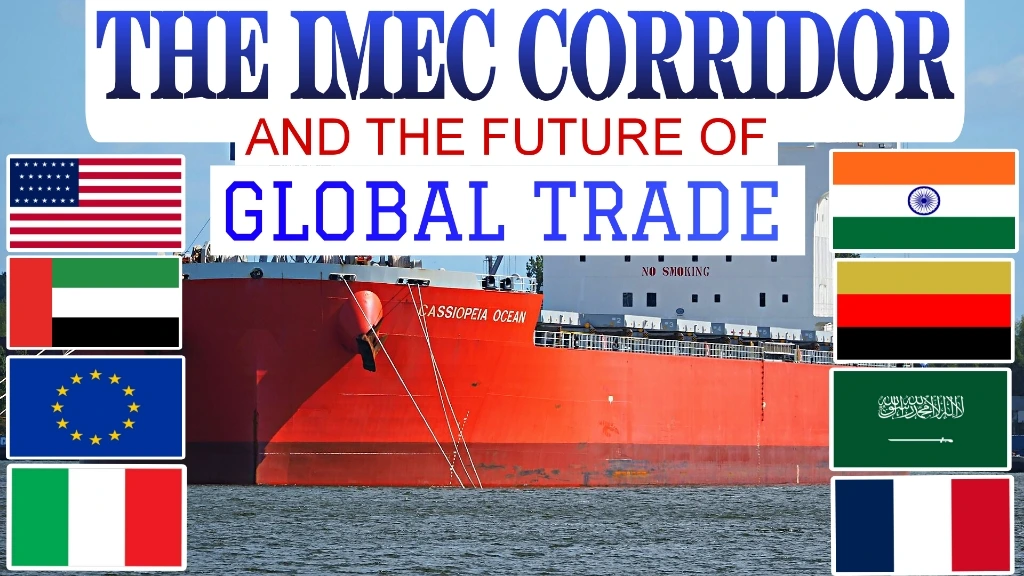
The India–Middle East–Europe Economic Corridor, commonly called the IMEC Corridor, was announced during the G20 Summit held in New Delhi in 2023. The initiative was supported by India, the United States, Saudi Arabia, the United Arab Emirates, France, Germany, Italy, and the European Union.
According to Voice of Nation organisers, the corridor is envisioned as a strategic initiative to connect India with Europe through the Gulf region. The project aims to integrate railways, ports, shipping routes, digital connectivity networks, and energy infrastructure into a seamless trade corridor, enhancing regional connectivity, boosting economic cooperation, and facilitating faster movement of goods, services, and data between participating countries.
Why the IMEC Corridor Is Important
The IMEC Corridor is important because global trade routes are becoming increasingly vulnerable. Shipping disruptions in the Red Sea exposed the fragility of international supply chains. As a result, governments and businesses started exploring alternative trade routes. The IMEC Corridor could cut transportation times between India and Europe while reducing logistics costs. It may also strengthen energy cooperation among participating countries.
In addition, governments plan to develop undersea cables and advanced communication networks to boost digital connectivity across Asia, the Middle East, and Europe. Strategically, the project is also viewed as a counterbalance to China’s Belt and Road Initiative. Western governments and regional powers are now seeking diversified connectivity models. Therefore, IMEC has gained importance beyond economics alone.
IMEC as a Strategic Trade Corridor
India, Gulf states, European partners, and the United States promote the IMEC Corridor as a modern trade and logistics network. However, its geopolitical significance extends far beyond transportation. The initiative reflects growing competition for economic influence, strategic access, and control over future trade routes. China expanded its global influence through the Belt and Road Initiative over the last decade. Many countries welcomed Chinese investments. Yet governments, analysts, and security experts increasingly questioned whether debt dependency and Chinese control over key ports could expand Beijing’s strategic influence.
Because of these concerns, governments are actively developing alternative trade frameworks. The IMEC Corridor represents a significant part of that broader geopolitical shift. Participating countries seek to strengthen economic cooperation, expand connectivity, and deepen strategic partnerships across regions. Furthermore, the corridor could reduce dependence on vulnerable maritime chokepoints. Instability in the Suez Canal and the Red Sea has highlighted the risks of relying on a limited number of trade routes. As a result, policymakers and businesses increasingly prioritize diversified trade corridors to strengthen supply-chain resilience.
Strengthening India–Gulf Relations
India’s relations with Gulf nations have steadily expanded during the last decade. Trade, energy cooperation, and investment partnerships have all been strengthened. The IMEC Corridor could accelerate this transformation by deepening economic integration across the region. Saudi Arabia and the United Arab Emirates are investing heavily to strengthen their roles as major logistics and transit hubs within the corridor.
For India, the corridor supports long-term economic ambitions. The country aims to become a major manufacturing and export centre. Faster access to European markets would support that goal significantly. Meanwhile, Gulf states are also repositioning themselves beyond oil exports. Their economies are being diversified through technology, infrastructure, and renewable energy investments. Therefore, the corridor serves the interests of both India and the Gulf region.
Europe’s Interest in Supply Chain Diversification
European governments became increasingly concerned after recent supply-chain disruptions. The COVID-19 pandemic, the Russia–Ukraine war, and the Red Sea crisis exposed major vulnerabilities in global trade systems. As a result, Europe started searching for diversified economic routes. The IMEC Corridor aligns with this objective. It offers another pathway connecting European markets with Asia.
European industries also depend heavily on stable energy imports and reliable shipping networks. Therefore, the corridor could improve long-term economic resilience. At the same time, Europe wants to reduce excessive dependence on China-centered manufacturing systems. European leaders are pursuing broader supply-chain diversification strategies, and the IMEC project offers a practical framework to advance those objectives.
Energy, Green Transition, and Digital Connectivity
The IMEC Corridor extends beyond transportation infrastructure. Participating governments are using the initiative to deepen energy cooperation and strengthen long-term economic integration. India, Gulf states, and European governments are developing green hydrogen partnerships that could transform energy trade
across the IMEC Corridor.
Clean energy exports may eventually move through corridor-linked infrastructure. Therefore, the project could contribute to global energy transition goals. Participating governments are placing digital connectivity at the center of the IMEC Corridor strategy.
They are developing undersea data cables and advanced communication networks to enhance technological cooperation, support digital trade, and improve data flows across Asia, the Middle East, and Europe. Consequently, participating governments view the IMEC Corridor as both an economic and technological platform that can strengthen trade, connectivity, and innovation. Future geopolitical competition may increasingly revolve around energy and digital infrastructure rather than military power alone.
Challenges Facing the IMEC Corridor
Despite its ambitions, the IMEC Corridor faces serious challenges. Political instability across parts of the Middle East could delay implementation. Regional tensions continue to create uncertainty for long-term infrastructure planning. Governments, financial institutions, and private companies must provide substantial funding to advance the IMEC Corridor. Building rail networks, ports, energy pipelines, and digital infrastructure will require long-term investment and coordinated planning.
Security concerns remain another obstacle. Trade routes passing through unstable regions may face disruptions during future conflicts. In addition, competition from existing trade networks could slow progress. China’s Belt and Road Initiative already operates across several strategic regions. Therefore, IMEC must prove both economically viable and politically sustainable.
IMEC and the Future of Global Geopolitics
The IMEC Corridor reflects a broader transformation in international politics. Countries are using infrastructure investments to strengthen their geopolitical influence and economic reach. Trade corridors increasingly shape diplomatic alliances and strategic partnerships. India’s role within this process is becoming more visible. The country is no longer acting only as a regional power. Instead, it is positioning itself as a major global economic connector between Asia, the Gulf, and Europe.
At the same time, Middle Eastern states are gaining new geopolitical importance. Their geographic position allows them to become critical gateways linking continents. Therefore, the future of the IMEC Corridor could influence global trade patterns for decades. The success or failure of the project may also shape the emerging balance of power in the twenty-first century.
Conclusion
The IMEC Corridor represents far more than a transportation initiative. It reflects changing global alliances, evolving trade priorities, and growing geopolitical competition. As instability disrupts traditional shipping routes, policymakers increasingly prioritize alternative corridors to strengthen supply-chain resilience and economic security.
Although major challenges remain, the project has already altered geopolitical discussions across Asia, Europe, and the Middle East. If successfully implemented, the IMEC Corridor could reshape supply chains, strengthen India’s global role, and redefine the future of international connectivity.
By Gurmeet Kour | Geopolitical Analyst