
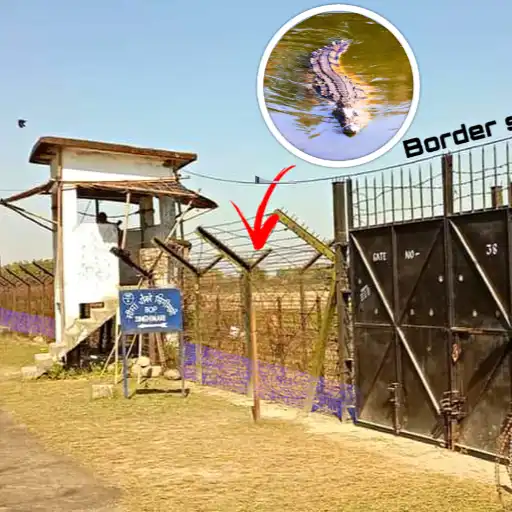
Introduction: A Proposal That Raises Eyebrows
In a region already defined by barbed wire, floodlights, and political sensitivities, the idea of using crocodiles as a border deterrent sounds almost surreal. Yet, the India crocodile border plan has sparked debate across policy circles, environmental groups, and diplomatic channels. Is this a bold innovation in border security or a risky move with unintended consequences? As India continues to grapple with illegal immigration along its eastern frontier, unconventional ideas are emerging. But not all solutions are as straightforward as they appear.
Background: A Complex and Porous Border
The India–Bangladesh border stretches over 4,000 kilometers, making it one of the longest land borders in the world. Large portions of it run through rivers, wetlands, and densely populated rural zones, complicating surveillance and enforcement. Illegal migration, smuggling, and human trafficking have long been persistent challenges. Despite extensive fencing and patrol efforts by India’s Border Security Force (BSF), gaps remain especially in riverine sections where physical barriers are difficult to maintain.
For deeper context on border management strategies, you can refer to this analysis by the Observer Research Foundation:
Against this backdrop, the idea of deploying natural predators like crocodiles in strategic river stretches has entered public discourse—though it remains highly controversial.
Current Developments: Policy Idea or Political Signal?
At present, there is no official confirmation that India has approved or implemented a crocodile-based deterrence system. However, the mere discussion of such a plan has triggered intense reactions. Supporters argue that natural deterrents could enhance security in difficult terrains where fencing is impractical. The logic is simple: a river populated with dangerous wildlife may discourage unauthorized crossings.
Critics, however, see the proposal as symbolic at best and impractical at worst. Many experts believe it could be more of a political signal demonstrating a tough stance on illegal immigration ,rather than a viable operational strategy.
Would It Work? Evaluating Effectiveness
Psychological Deterrence vs Practical Reality
The success of the India crocodile border plan hinges on whether fear alone can prevent border crossings. Historically, deterrence strategies have relied on surveillance, enforcement, and legal consequences not unpredictable natural hazards. While crocodiles may create a psychological barrier, determined individuals often find alternative routes. Smuggling networks, for instance, are highly adaptive and may simply shift operations elsewhere.
Operational Challenges
Introducing crocodiles into specific river zones raises logistical questions:
- How would their population be controlled?
- What prevents them from moving into unintended areas?
- Could they pose risks to local communities on both sides?
Without precise management, such a plan could create more problems than it solves.
Bangladesh’s Likely Reaction: Diplomatic Friction Ahead?
Any unilateral move involving shared natural resources, especially rivers, could strain bilateral relations. Bangladesh may view the India crocodile border plan as:
- A violation of ecological norms
- A potential threat to civilians living near border rivers
- An escalation in already sensitive border management policies
Given that India and Bangladesh have generally maintained cooperative ties in recent years, including agreements on security and water sharing, such a move could introduce friction into an otherwise stable relationship. Diplomatic engagement would be essential to avoid misunderstandings and potential backlash.
Impact on Border Security: Strength or Distraction?
From a strategic standpoint, modern border security increasingly relies on:
- Surveillance drones
- Thermal imaging systems
- Smart fencing technologies
Compared to these tools, a wildlife-based deterrent appears outdated and unreliable. Moreover, reliance on crocodiles could divert attention and resources away from more effective solutions. Border security is ultimately about consistency, intelligence gathering, and coordination not unpredictability.
Environmental Consequences: A Fragile Ecosystem at Risk
Perhaps the most significant concern is ecological. River ecosystems along the India–Bangladesh border are already under pressure from pollution, climate change, and human activity. Introducing or artificially increasing crocodile populations could disrupt:
- Local biodiversity
- Fish populations
- Natural predator-prey balances
Additionally, human-wildlife conflict could escalate, affecting villagers, fishermen, and farmers who depend on these rivers for their livelihoods. Environmental experts warn that such interventions often have cascading effects that are difficult to reverse.
Are There Better Alternatives?
The debate around the India crocodile border plan ultimately raises a broader question: Is this the only way? More sustainable and proven alternatives include:
- Expanding smart fencing in vulnerable zones
- Enhancing bilateral cooperation with Bangladesh
- Investing in economic development in border regions
- Strengthening legal migration frameworks
These approaches address the root causes of illegal immigration rather than relying on deterrence alone.
Global Implications: A Precedent for Unconventional Security?
If implemented, the idea could set a precedent for unconventional border strategies worldwide. Other countries facing migration challenges might explore similar “natural deterrent” concepts, raising ethical and environmental concerns on a global scale. It could also attract criticism from international human rights organizations, potentially impacting India’s global image as a responsible regional power.
Conclusion: Innovation or Miscalculation?
The India crocodile border plan sits at the intersection of security, diplomacy, and environmental policy. While it captures attention as a bold idea, its practical value remains deeply questionable. Border management is a complex challenge that demands nuanced, coordinated solutions not symbolic gestures. As debates continue, the focus may ultimately shift back to technology, cooperation, and long-term planning. Because in geopolitics, what works isn’t always what sounds dramatic, it’s what delivers results without creating new risks.
By Sahil Koul | Geopolitical Analyst