A quiet island, a loud strategic message
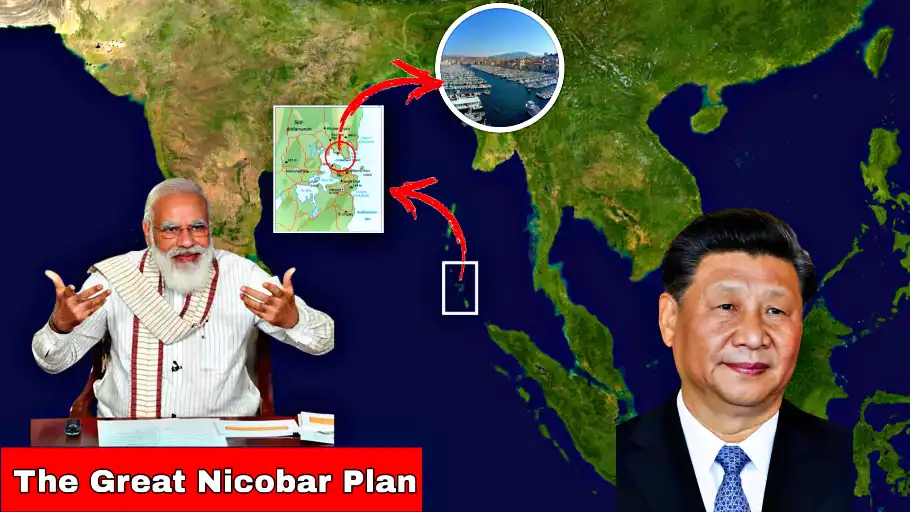
Far from the noise of mainland politics, India is laying the groundwork for what could become one of its most consequential geopolitical moves in decades. The Great Nicobar Project is not just an infrastructure plan, it is a calculated step toward reshaping power dynamics in the Indo-Pacific. Sitting near one of the world’s busiest maritime choke points, Great Nicobar Island offers India a rare opportunity: to blend economic ambition with strategic depth, quietly but decisively.
Background: Why Great Nicobar Matters
The Great Nicobar Island lies at the southernmost tip of India’s Andaman and Nicobar chain, just north of the Malacca Strait, a route through which nearly a third of global trade and a significant portion of energy supplies pass. India has long recognized the island’s strategic value, but development remained limited due to ecological concerns and logistical challenges. That changed when policymakers began to see the island as a key piece in India’s Indo-Pacific strategy. The plan envisions a massive transformation, turning the island into a transshipment hub, a logistics center, and a military vantage point.
For official project details, refer to the NITI Aayog proposal
Current Developments: Building a Strategic Hub
The Great Nicobar Project includes several ambitious components:
- A deep-draft transshipment port capable of handling large cargo vessels
- An international airport to improve connectivity
- Power plants and renewable energy integration
- Urban infrastructure to support a growing population
- Strengthened defense and surveillance installations
This development aims to reduce India’s dependence on foreign ports like Singapore for cargo transshipment, bringing economic benefits closer to home. At the same time, the dual-use nature of the infrastructure, civilian and military, signals a broader strategic intent.
Economic Growth Meets National Security
At its core, the Great Nicobar Project is about leveraging geography for economic gain. India stands to benefit in multiple ways:
Trade and Logistics
The island could become a major maritime hub, capturing a share of global shipping traffic and reducing costs for Indian exporters.
Employment and Investment
Infrastructure development is expected to attract domestic and foreign investment while creating jobs.
Strategic Security
Positioned near the Malacca Strait, India gains the ability to monitor critical shipping lanes. This enhances maritime domain awareness and strengthens deterrence capabilities.
In essence, the project merges economic ambition with national security priorities an increasingly common approach in modern geopolitics.
China and Regional Reactions
Any major Indian move near the Malacca Strait inevitably draws attention from China. China relies heavily on this route for energy imports. A vulnerability often referred to as the “Malacca Dilemma.” Increased Indian presence in the region could be seen as a strategic counterbalance to China’s expanding footprint in the Indo-Pacific. Potential reactions include:
- China may accelerate its own port and naval projects in the region or deepen ties with neighboring countries.
- ASEAN nations could adopt a cautious stance, balancing economic cooperation with strategic neutrality.
- Global powers like the United States and Japan may quietly support India’s efforts as part of a broader Indo-Pacific strategy.
The project thus fits into a larger geopolitical contest, where infrastructure becomes a tool of influence.
Sustainability: Development with Minimum Environmental Cost
One of the biggest criticisms of the Great Nicobar Project revolves around its environmental impact. The island is home to rich biodiversity and indigenous communities. To address these concerns, the government has emphasized:
- Controlled and phased development
- Use of renewable energy sources
- Conservation zones to protect ecosystems
- Environmental impact assessments and mitigation strategies
Balancing development with ecological preservation will be crucial. Failure to do so could not only harm biodiversity but also undermine the project’s legitimacy.
Handling Political Opposition
Domestically, the project has faced scrutiny from opposition groups and environmental activists. Key concerns include:
- Displacement of indigenous communities
- Ecological degradation
- Financial feasibility
India’s response is likely to focus on transparency and phased execution. By showcasing environmental safeguards, economic benefits, and strategic necessity, policymakers aim to build broader consensus. The challenge lies in convincing critics that the long-term gains outweigh the immediate risks.
The Malacca Advantage: India’s Strategic Leverage
The Malacca Strait is often described as the “lifeline” of global trade. Control or even influence over this route provides immense strategic leverage. Through the Great Nicobar Project, India can:
- Enhance surveillance of maritime traffic
- Strengthen naval presence in the eastern Indian Ocean
- Position itself as a key player in Indo-Pacific security
This does not mean direct control over the strait, but rather the ability to influence dynamics in times of crisis. In geopolitical terms, proximity equals power and Great Nicobar offers exactly that.
Global Consequences: A Shift in Indo-Pacific Dynamics
If successfully implemented, the Great Nicobar Project could trigger broader shifts:
- Increased competition between India and China in maritime infrastructure
- New trade routes and logistics networks centered around Indian ports
- Greater militarization of key sea lanes
- Enhanced role for India in regional security frameworks
It also reinforces a larger trend: infrastructure is no longer just about development, it is a strategic asset.
Conclusion
The Great Nicobar Project represents a turning point in India’s strategic thinking. It is a bold attempt to align economic growth with geopolitical ambition, using geography as a force multiplier. Yet, its success will depend on execution, balancing development with sustainability, ambition with caution, and strategy with diplomacy. In the quiet waters near the Malacca Strait, India is making a move that could echo far beyond its shores.
By Sahil Koul | Geopolitical Analyst