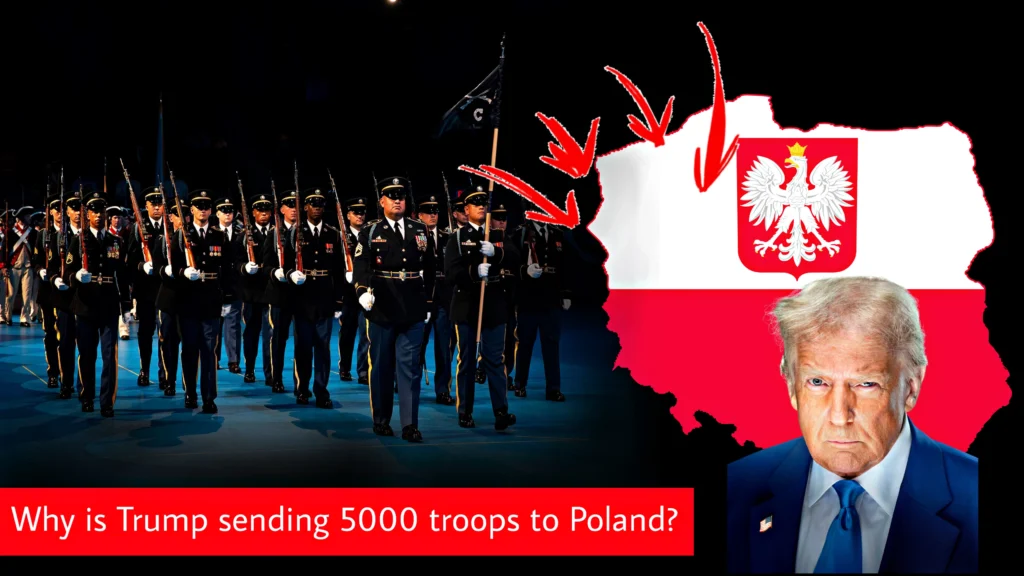
A Sudden Military Shift Raises Bigger Questions
The decision to expand US troops Poland presence has triggered intense debate across Europe and Washington. President Donald Trump’s announcement about deploying 5,000 additional American troops to Poland arrived at a tense geopolitical moment. Therefore, analysts immediately began questioning the real purpose behind the move. Supporters describe the deployment as a strong NATO deterrence strategy. Critics, however, see a politically calculated decision with wider consequences for Europe’s security balance. As Russia continues to pressure NATO’s eastern borders, the announcement could reshape military dynamics across the region.
According to reporting by National Public Radio, the unexpected U.S. decision to deploy additional troops to Poland has intensified discussions around NATO’s eastern flank security and regional deterrence strategy.
Behind the US Troops Poland Expansion
Poland has become one of Washington’s closest military partners in Europe during recent years. Since Russia launched its invasion of Ukraine in 2022, NATO has steadily increased its military presence in Eastern Europe. Poland, because of its strategic location, became central to that effort. The country already hosts thousands of American troops, missile defense systems, and military logistics hubs. Additionally, Poland has increased its own defense spending faster than many NATO members. Warsaw also purchased large amounts of American military equipment, including Abrams tanks and Patriot missile systems.
However, the latest US troops Poland deployment stands out because of its timing and political messaging. Only weeks before the announcement, reports suggested the Pentagon was considering troop reductions in Europe. Trump’s sudden reversal surprised NATO officials and defense analysts alike. Consequently, many observers now believe the move carries both military and political objectives.
Why Trump Made This Decision Now
Several geopolitical factors likely influenced Trump’s decision. First, tensions between NATO and Russia remain extremely high. Moscow continues military operations near Ukraine while expanding pressure across Eastern Europe. NATO leaders fear Russia could test alliance unity through cyberattacks, border provocations, or hybrid warfare tactics. Second, Poland’s new conservative leadership maintains strong ties with Trump’s political circle. The White House openly praised Poland’s security policies and defense cooperation with Washington. Therefore, the deployment also sends a diplomatic signal about preferred alliances inside Europe.
Third, Trump has repeatedly criticized Western European nations for depending too heavily on American defense support. Poland, unlike some NATO members, spends heavily on defense commitments. Because of this, Trump may view Warsaw as a model ally. The expansion of US troops Poland presence therefore reflects more than battlefield calculations. It also reflects broader ideological and strategic priorities within Trump’s foreign policy approach.
Is This Friendly Support or Strategic Pressure?
The deployment has sparked an important debate across Europe. Some governments view the decision as reassurance against Russian aggression. Others fear it could increase instability near NATO’s eastern borders. From Poland’s perspective, additional American forces strengthen national security. The Polish government has consistently argued that a larger U.S. military presence discourages potential Russian escalation. However, critics suggest Washington may also gain leverage through deeper military integration with Poland. Increased troop deployments often create long-term political influence over regional security decisions. Therefore, some European analysts worry Poland could become overly dependent on U.S. military strategy.
The expansion of US troops Poland operations may also widen divisions inside NATO itself. Countries such as Germany and France have supported stronger European strategic independence. Meanwhile, Poland strongly favors deeper American military involvement. As a result, the deployment could deepen internal disagreements about NATO’s future direction.
How the Deployment Could Affect Neighboring Countries
The impact of additional US troops Poland deployment will extend beyond Polish territory. Lithuania, Latvia, and Estonia will likely welcome the move because they remain deeply concerned about Russian military activity near their borders. These Baltic nations have repeatedly requested stronger NATO troop rotations and faster defense coordination. Ukraine may also benefit indirectly. Poland serves as a major logistics and supply corridor for Western military assistance heading into Ukraine. Therefore, a larger American military footprint could improve operational security and regional coordination.
However, Belarus and Russia will almost certainly view the deployment differently. Moscow has long opposed NATO expansion near its borders. Russian officials could use the deployment to justify further military buildups in Kaliningrad or Belarus. Consequently, regional tensions may rise rather than decrease. Some analysts also fear accidental escalation risks. As military forces increase near contested areas, the chance of miscalculation grows significantly. Even small incidents could rapidly trigger diplomatic crises between NATO and Russia.
Why the Decision Is Politically Controversial
The political controversy surrounding US troops Poland deployment comes from several directions. Critics inside the United States question whether expanding troop deployments abroad matches Trump’s earlier “America First” messaging. During previous campaigns, Trump often argued that allies should shoulder more defense responsibilities themselves. Now, opponents argue the deployment contradicts that approach. Others question whether Congress received sufficient consultation before the announcement. Some defense experts also worry the deployment appears reactive rather than strategically coordinated through NATO planning structures.
In Europe, critics fear the move strengthens political divisions inside the alliance. Western European governments remain cautious about actions that could provoke further confrontation with Russia. Therefore, some diplomats privately worry the deployment may complicate future diplomatic negotiations. At the same time, supporters insist deterrence only works through visible military strength. They argue weakness or hesitation could encourage further Russian pressure across Eastern Europe. The debate surrounding US troops Poland strategy therefore reflects deeper disagreements about NATO’s future role.
The Bigger Geopolitical Implications
This deployment could reshape European security policy for years. If tensions with Russia continue increasing, NATO may permanently expand its eastern military infrastructure. That would mark a major transformation from the alliance’s earlier post-Cold War posture. Additionally, Poland’s importance inside NATO could grow dramatically. Warsaw already positions itself as one of Europe’s leading military powers. Larger American deployments would further strengthen that role. China will also monitor developments carefully.
Beijing closely studies how Washington manages military alliances and regional deterrence strategies. Therefore, decisions involving US troops Poland may influence broader geopolitical calculations beyond Europe. Financial consequences could emerge as well. More military deployments usually require larger defense budgets, expanded logistics networks, and increased infrastructure investments throughout Eastern Europe. Consequently, European governments may face mounting pressure to increase defense spending during already difficult economic conditions.
What Happens Next?
The long-term outcome depends heavily on NATO-Russia relations during the coming months. If tensions escalate further, additional troop deployments across Eastern Europe remain possible. However, if diplomatic negotiations improve, NATO may avoid deeper military expansion. For now, the deployment signals one clear message: Washington intends to maintain strong military influence along NATO’s eastern frontier. Yet many unanswered questions remain. Will the troops remain permanently? Could other NATO countries request similar deployments? And most importantly, will the move deter conflict or increase geopolitical instability? The future of US troops Poland strategy may ultimately shape Europe’s security landscape for the next decade.
By Sahil Koul | Geopolitical Analyst