The Japan Mosque Permit Controversy has sparked debate far beyond Kawagoe City. Questions surrounding permits, land ownership, and diplomatic involvement have attracted attention across Japan and abroad. The case has also raised concerns about urban planning, regulatory oversight, and the future of foreign-linked religious projects in Japan.
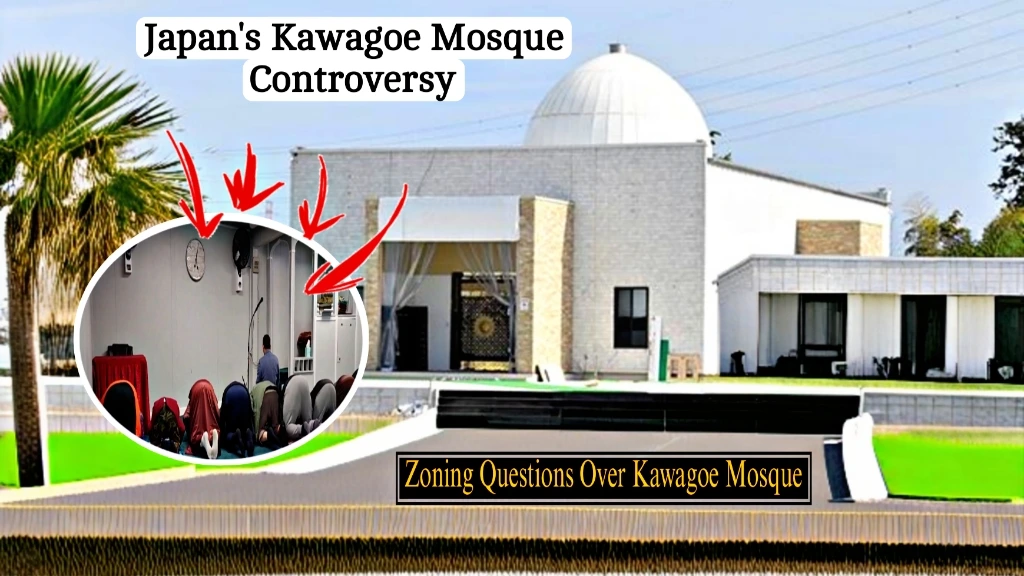
Japan Jaame Masjid Ramzan is located in Kawagoe, Saitama Prefecture. The mosque opened during a public ceremony. Later, city officials said the building lacked the permits required by law. Because of this, the case drew wider attention. People are now asking an important question. Who approved the Kawagoe mosque construction?
Background of the Japan Mosque Permit Controversy
The Japan Mosque Permit Controversy centers on a mosque built in Kawagoe City, north of Tokyo. According to Japanese media reports, the site is located inside an Urbanization Control Zone, where development rules are strict. Under Japanese law, projects in these areas usually need special approval. These rules help prevent uncontrolled urban growth and support local planning goals.
According to reports by Japan Forward , the mosque building was constructed without obtaining the required permits in an Urbanization Control Zone. Authorities later concluded that the project violated local zoning regulations and development rules governing restricted areas
How the Japan Mosque Permit Controversy Unfolded
Reports suggest that builders started construction before the mosque officially opened. However, the controversy grew after the inauguration ceremony attracted international attention. The event reportedly included Pakistan’s Ambassador to Japan, which raised questions about whether diplomatic representatives knew the project’s permit status. Later, Pakistan’s Embassy urged overseas Pakistanis to follow Japanese laws and regulations. The embassy also said it assumed organizers had already secured all necessary approvals. Therefore, the diplomatic role appeared ceremonial rather than administrative.
How Local Authorities Handled the Japan Mosque Permit Controversy
The Japan Mosque Permit Controversy mainly involves urban planning rules rather than religious policy. Kawagoe City officials reportedly issued corrective guidance after determining that the structure violated development regulations. Authorities could eventually seek removal of the building if legal requirements remain unmet. The case has also triggered wider discussions about regulatory enforcement and administrative oversight.
Importantly, local officials have not described the matter as an issue involving Islam. Instead, they have consistently focused on permit procedures and land-use rules. This distinction is significant because Japan protects freedom of religion while enforcing strict construction standards. Officials have therefore emphasized that the dispute concerns legal compliance rather than religious identity.
How the Urbanization Control Zone Became Part of the Japan Mosque Permit Controversy
One of the biggest unanswered questions in the Japan Mosque Permit Controversy concerns the land itself. Urbanization Control Zones help limit excessive development, and major projects in these areas usually require special approval. Critics argue that authorities should examine how construction reached such an advanced stage before they introduced enforcement measures. Meanwhile, supporters of the mosque believe communication gaps and administrative misunderstandings contributed to the dispute. As a result, the case has raised broader concerns about regulatory oversight, transparency, and the effectiveness of local planning procedures.
Geopolitical Implications of the Japan Mosque Permit Controversy
Although the dispute began locally, it now carries wider geopolitical significance. The controversy highlights the challenges facing countries experiencing demographic change. Japan’s Muslim population has gradually increased over recent decades. As a result, more mosques and Islamic centers have appeared across the country. The case also reflects broader debates over immigration, social integration, and the management of diverse communities.
In addition, the issue shows how local administrative decisions can quickly gain international attention. The presence of foreign diplomats turned a municipal dispute into a topic discussed across several countries. The controversy may also shape future interactions between Japanese authorities and overseas religious organizations. Governments increasingly seek to balance multicultural integration with strict legal compliance. Therefore, the Kawagoe case could become an important reference point for similar projects in the future.
Possible Global Consequences
The Japan Mosque Permit Controversy may encourage other countries to review how authorities oversee religious infrastructure projects. It may also prompt governments to strengthen permit procedures and improve regulatory transparency.It could also prompt governments to strengthen permit procedures, improve transparency, and increase coordination between local authorities and foreign-linked organizations involved in community development projects.
Several consequences could emerge:
- Stricter verification procedures for religious construction projects.
- Greater scrutiny of foreign-funded institutions.
- Increased emphasis on local zoning compliance.
- Stronger communication between embassies and local authorities.
- Renewed debates over multicultural integration policies.
However, the final outcome will depend on Japan’s legal process. Future decisions by local authorities and courts will determine whether the project can be regularized, modified, or ultimately removed under existing regulations.
Is There a Religious Angle Behind the Removal Order?
This question remains central to public debate. Many observers continue to examine whether the dispute is purely legal or whether broader social and political factors have also influenced public perceptions of the case. As discussions continue, the controversy has sparked wider conversations about integration, transparency, and the role of local authorities in managing sensitive issues.
Based on statements released by local authorities, the dispute concerns permits and zoning laws rather than religious identity. Officials have repeatedly stated that they enforce regulatory compliance and land-use rules, rather than target the religious nature of the building itself. Nevertheless, controversies involving religious structures often generate emotional responses. Therefore, officials may face pressure to ensure that enforcement actions remain transparent and legally consistent. Maintaining that balance will be essential for preserving public trust.
Conclusion
The Japan Mosque Permit Controversy has raised difficult questions about governance, transparency, and diplomacy. While the dispute centre on construction permits, its implications extend much further. The case has also highlighted concerns about regulatory oversight, community relations, and the challenges of balancing legal requirements with social diversity in modern societies.
The case illustrates how local planning decisions can quickly evolve into international issues. It also highlights the importance of regulatory clarity in increasingly diverse societies. Moreover, the controversy demonstrates how local disputes can influence diplomatic discussions and shape future approaches to multicultural development projects.
Ultimately, the answer to who approved the Kawagoe mosque construction remains unclear. That question may shape how people remember the controversy and influence the reforms that follow in the future.. It could also influence future oversight of similar development projects.
By Simran Verma | Geopolitical Analyst