When Symbolism Becomes the Story
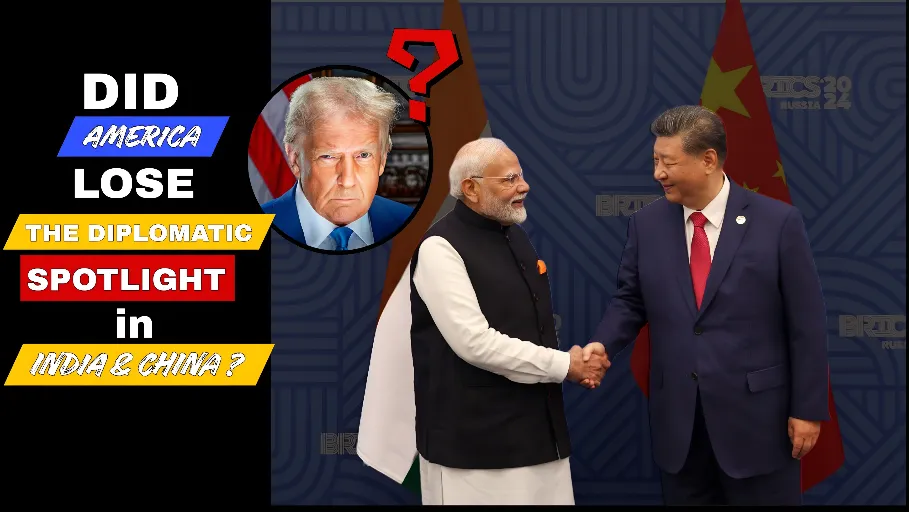
In international diplomacy, perception often matters as much as policy. The recent debate surrounding US Diplomatic Optics in India and China illustrates how seemingly minor protocol details can dominate headlines and shape public opinion. While U.S. Secretary of State Marco Rubio’s visit to the Taj Mahal attracted attention because no senior Indian official accompanied him, President Donald Trump’s China visit generated discussion over a seating arrangement that appeared to place him lower than Chinese President Xi Jinping. These incidents were very different in nature. However, both raised questions about how America is perceived abroad and whether diplomatic symbolism is increasingly influencing geopolitical narratives.
Why These Visits Mattered
Both visits occurred during a period of intense geopolitical competition and strategic realignment across Asia. India remains one of Washington’s most important partners in the Indo-Pacific region. Meanwhile, China continues to be America’s primary strategic competitor on economic, military, and technological fronts. Marco Rubio traveled to India to strengthen bilateral cooperation on security, trade, and regional stability. At the same time, Donald Trump’s China visit aimed to maintain dialogue between the world’s two largest economies despite ongoing tensions.
Both engagements reflected broader U.S. efforts to maintain influence in Asia, strengthen key partnerships, and address emerging geopolitical challenges in an increasingly competitive international environment. Given the importance of both countries to U.S. foreign policy, every aspect of these visits attracted significant scrutiny.
US Diplomatic Optics and the Taj Mahal Visit
Why Did Rubio’s Visit Draw Attention?
During his May 2026 visit, Rubio toured the Taj Mahal, one of India’s most recognizable landmarks. The visit itself was largely cultural. However, observers quickly noticed that no senior Indian political figure appeared alongside him. Critics argued that the absence of a high-ranking host sent an unintended signal. Some commentators suggested that the optics diminished the significance of the visit. Others disagreed.
According to official U.S. Embassy information regarding Secretary Rubio’s travel to India, the visit formed part of broader diplomatic engagements focused on strengthening bilateral cooperation and advancing U.S. strategic interests in the region.
Diplomatic experts pointed out that Rubio serves as Secretary of State rather than head of state. Cultural visits often follow different protocol standards than official state meetings. Therefore, the lack of a senior political escort may have reflected routine procedure rather than a diplomatic message. Nevertheless, the episode demonstrated how US Diplomatic Optics can become a news story even when no official disagreement exists.
Perception Versus Reality
The key issue was not what happened. Instead, it was how the event appeared to audiences. Images and visuals travel faster than policy discussions. As a result, public interpretation often shapes media narratives before officials provide context. That reality continues to influence modern diplomacy.
US Diplomatic Optics and Trump’s China Visit
The Seating Arrangement Debate
A different controversy emerged during Donald Trump’s visit to China. Photographs and video footage appeared to show Trump seated slightly lower than Xi Jinping during a public event. Social media users quickly highlighted the visual difference. Soon afterward, analysts and commentators began debating whether the arrangement carried symbolic meaning. China has long placed importance on ceremonial presentation and political symbolism. Therefore, even small visual details can attract significant attention.
According to the White House, Trump’s visit focused on securing major economic agreements and advancing U.S. interests through high-level engagement with Chinese leadership. However, public discussion often centered on ceremonial details rather than the substantive outcomes of the trip.
Some observers viewed the seating arrangement as a deliberate effort to reinforce Xi’s status. Others argued that camera angles, furniture design, and posture could explain the perceived difference. Importantly, no official evidence confirmed that China intentionally sought to diminish Trump. Still, the discussion became another example of how US Diplomatic Optics can dominate international coverage.
Why Protocol Matters
Diplomatic protocol serves practical and symbolic purposes. Leaders carefully monitor details such as speaking order, flag placement, arrival ceremonies, and seating arrangements. These elements communicate respect, status, and political messaging. Consequently, even minor deviations can generate major headlines. In today’s digital environment, visual symbolism often reaches larger audiences than official policy statements.
The Geopolitical Implications
A Changing Information Environment
The two incidents reveal a broader trend in international relations. Governments no longer compete solely through military power or economic strength. They also compete through narratives, imagery, and public perception. This shift has elevated the importance of US Diplomatic Optics across global diplomacy. Every public appearance now carries strategic significance. Political opponents, media organizations, and social media users routinely analyze visual details that once received little attention. As a result, governments must manage both substance and symbolism.
India’s Strategic Importance
Despite protocol debates, India remains central to American foreign policy. Washington views New Delhi as a critical partner in maintaining regional stability and balancing China’s influence. Defense cooperation continues to expand. Economic ties also remain strong. Therefore, the long-term relationship is unlikely to be affected by a single cultural visit or a temporary media controversy.
China’s Strategic Messaging
China, meanwhile, places considerable emphasis on ceremonial diplomacy. Beijing often uses state visits to project national confidence and leadership. For that reason, analysts frequently examine visual details during meetings involving Chinese leaders. Whether intentional or not, the seating debate reinforced discussions about symbolism and strategic messaging. Again, US Diplomatic Optics became part of a larger conversation about global influence and prestige.
Did America Achieve Its Objectives?
Rubio’s India Visit
From a policy perspective, the visit largely achieved its goals. The United States continued discussions on security cooperation, economic engagement, and regional challenges. The protocol debate generated headlines. However, it did not appear to disrupt bilateral relations.
Trump’s China Visit
Trump’s visit also achieved an important objective. The meeting preserved communication between Washington and Beijing during a period of strategic competition. Yet media attention often focused on visual symbolism rather than substantive discussions. As a result, the public conversation shifted away from policy outcomes. That shift demonstrates the growing power of US Diplomatic Optics in shaping international narratives.
Possible Global Consequences
The broader consequences are more about perception than policy. First, repeated protocol controversies can create narratives about changing power dynamics. Second, rivals may use symbolic moments to strengthen their own messaging. Third, public audiences increasingly judge diplomatic success through visual impressions.
However, symbolism alone rarely determines geopolitical outcomes. Military capabilities, economic partnerships, and strategic alliances continue to drive international influence. Still, policymakers cannot ignore the growing impact of US Diplomatic Optics on global public opinion.
Conclusion
The controversies surrounding Marco Rubio’s India visit and Donald Trump’s China trip highlight a modern diplomatic reality. Optics now travel faster than policy. Images often shape perceptions before governments explain context. Neither incident provides clear evidence of a diplomatic snub. Nor do they indicate a major decline in American influence. However, both episodes show why US Diplomatic Optics has become an increasingly important component of international statecraft. In an era dominated by social media and instant analysis, symbolic moments can influence narratives just as powerfully as formal agreements. The real lesson is not that America lost the diplomatic spotlight. Rather, it demonstrates that today’s geopolitical competition extends beyond negotiations and into the realm of perception itself.
By Sahil Koul | Geopolitical Analyst