
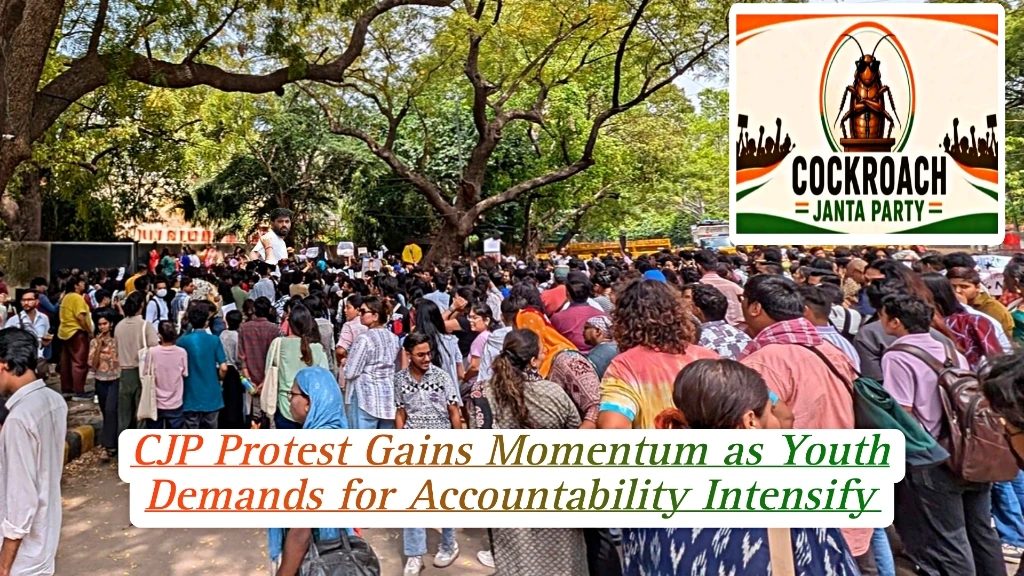
Growing Momentum Behind the CJP Protest
The CJP Protest has rapidly evolved from a campaign over alleged exam irregularities into a broader expression of youth frustration. Initially, protesters demanded accountability, but the movement soon attracted national attention. As a result, many observers now question whether the campaign could eventually pose a larger political challenge.
In recent weeks, thousands of students and supporters have participated in demonstrations. The issue has also been amplified through social media campaigns and public gatherings. Consequently, the protest has moved beyond educational concerns and entered the wider political conversation.
What Triggered the Movement?
The protests were triggered by allegations surrounding examination management and concerns over transparency. Organizers argued that repeated controversies had weakened public confidence in the system. Therefore, they called for greater accountability and structural reforms. The movement was organized by the Cockroach Janta Party (CJP), which presented itself as a platform representing frustrated students and young citizens. Its demands included the resignation of Education Minister Dharmendra Pradhan and stronger safeguards against future irregularities.
According to India Today, supporters from across the country assembled at New Delhi’s Jantar Mantar after Delhi Police approved the CJP demonstration. Led by founder Abhijeet Dipke, the protest focused on demands for Education Minister Dharmendra Pradhan’s resignation and concerns surrounding examination controversies
Current Developments in the CJP Protest
The demonstrations have continued to gain visibility. Moreover, several youth groups and independent activists have expressed support for the movement.Climate activist Sonam Wangchuk also appeared at the protest venue. Addressing participants, he emphasized the importance of peaceful democratic engagement. According to media reports, Wangchuk urged young people to protect constitutional values and continue raising issues through non-violent means. He reportedly stated:
“This is not just about one examination. Young people are demanding accountability and a better future. Their voices should be heard peacefully and democratically.”
His remarks added symbolic weight to the event. Consequently, the protest attracted broader media attention. Meanwhile, organizers described the rally as only the beginning of a larger campaign. They warned that they would organize further demonstrations if authorities failed to address their demands.
What Are the Key Demands?
CJP leaders have presented several key demands, saying that meaningful reforms and greater accountability are essential to address student grievances and rebuild confidence in India’s education system.
Greater Accountability
Protesters have demanded thorough investigations into alleged examination irregularities and have called for stronger oversight mechanisms to improve transparency, prevent future controversies, and restore public confidence in the education system. They have also urged authorities to establish stricter accountability measures for institutions responsible for conducting national examinations.
Ministerial Responsibility
CJP leaders and their supporters have called on Education Minister Dharmendra Pradhan to step down, arguing that accepting political responsibility would help rebuild public trust and demonstrate the government’s commitment to addressing concerns over examination controversies.
Long-Term Reforms
Participants have argued that India needs comprehensive systemic reforms to restore trust in examinations and educational institutions. They have called for greater transparency in the conduct of national exams, stronger accountability for testing agencies, faster responses to complaints, and improved safeguards to prevent future irregularities. However, evidence supporting every allegation remains a matter of public debate. Therefore, official investigations and government responses will likely shape future developments.
Government Response and Public Reaction
Authorities have not accepted the allegations made by protesters. At the same time, government representatives have defended existing systems and highlighted previous reform efforts. Nevertheless, concerns among students have continued to resonate. Many young people view examination controversies as part of broader anxieties surrounding employment and opportunities. As a result, support for the movement has extended beyond those directly affected by examinations. Parents, civil society members, and online communities have also joined discussions.
Meanwhile, the Education Ministry has maintained that existing mechanisms already address irregularities and safeguard the integrity of examinations. However, critics argue that recurring controversies have weakened public confidence and intensified debates over accountability, youth aspirations, job prospects, and the need for institutional reforms. Consequently, many observers believe the government’s response will determine whether public concerns gradually subside or develop into a broader national debate.
Could the CJP Protest Carry Wider Political Implications?
Although the movement centers on education, its underlying themes carry significant political implications. Youth dissatisfaction has historically shaped political narratives. Therefore, prolonged unrest could place additional pressure on policymakers. Furthermore, opposition parties may seek to capitalize on public frustration. Consequently, educational issues could become part of broader electoral debates. The protest also reflects younger generations’ growing demand for transparency and institutional accountability. If authorities fail to address these concerns, public confidence in institutions could decline.
Possible Global Consequences
India’s education system supports one of the world’s largest student populations. Therefore, developments within the sector are closely observed internationally. Foreign universities and global employers often monitor educational standards and policy stability. Consequently, prolonged controversies could affect perceptions regarding institutional credibility. Moreover, many countries are experiencing similar youth-driven movements. Thus, the CJP Protest reflects broader global trends involving transparency, governance, and citizen participation
In addition, concerns over examination integrity and policy consistency could influence international academic partnerships and student exchange programs. As India continues to position itself as a global knowledge and innovation hub, maintaining confidence in its educational institutions will remain important. Therefore, international observers may view the movement as part of a wider debate about how governments address the aspirations of younger generations in rapidly changing societies.
What Happens Next?
Several scenarios remain possible. If negotiations are initiated, tensions could gradually decline. However, if demands remain unmet, organizers may expand demonstrations nationwide. In that case, pressure on policymakers could increase. Moreover, public discussions about education reforms may become even more intense. The movement’s future will largely depend on government responses, public support, and the ability of organizers to maintain momentum.
Conclusion
The CJP Protest has grown beyond concerns over examination controversies and now reflects broader issues affecting India’s younger generation. Questions surrounding transparency, accountability, employment opportunities, and institutional reforms have brought the movement into the national spotlight. Although its long-term political impact remains uncertain, the protests have already sparked wider debates about public trust and the future of education governance. Ultimately, the government’s response and its willingness to address these concerns could determine whether the movement gradually loses momentum or evolves into a larger campaign for reform.
By Gurmeet kour| Geopolitical Analyst